
淀粉样β肽与含有胆固醇和褪黑素的阴离子脂质膜之间的相互作用。
The interaction between amyloid-β peptides and anionic lipid membranes containing cholesterol and melatonin.
作者信息
Dies Hannah, Toppozini Laura, Rheinstädter Maikel C
机构信息
Department of Physics and Astronomy, McMaster University, Hamilton, Ontario, Canada.
出版信息
PLoS One. 2014 Jun 10;9(6):e99124. doi: 10.1371/journal.pone.0099124. eCollection 2014.
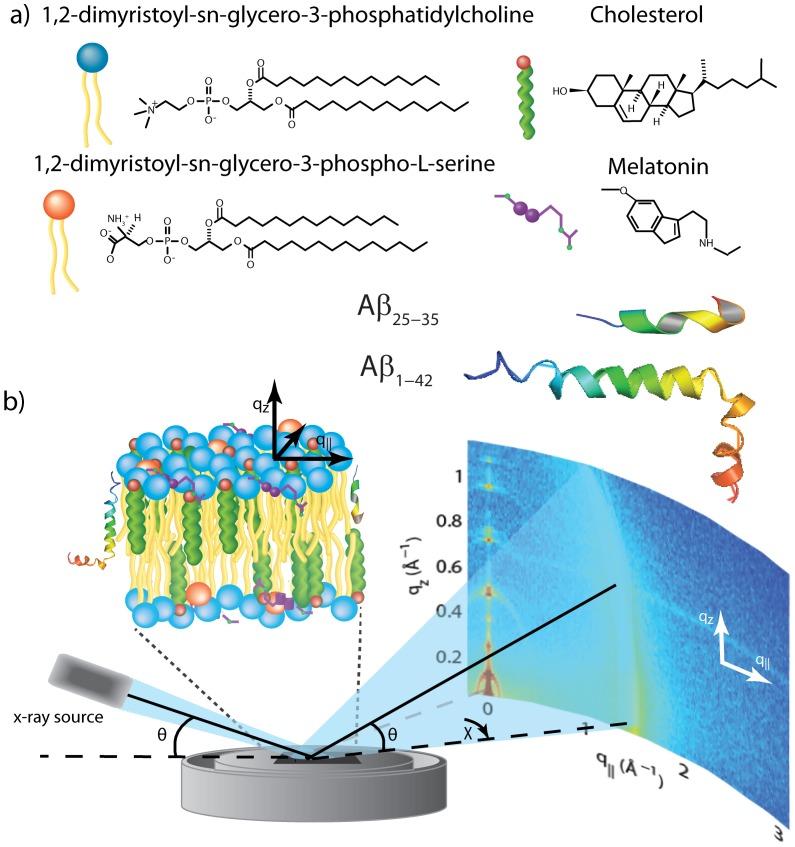
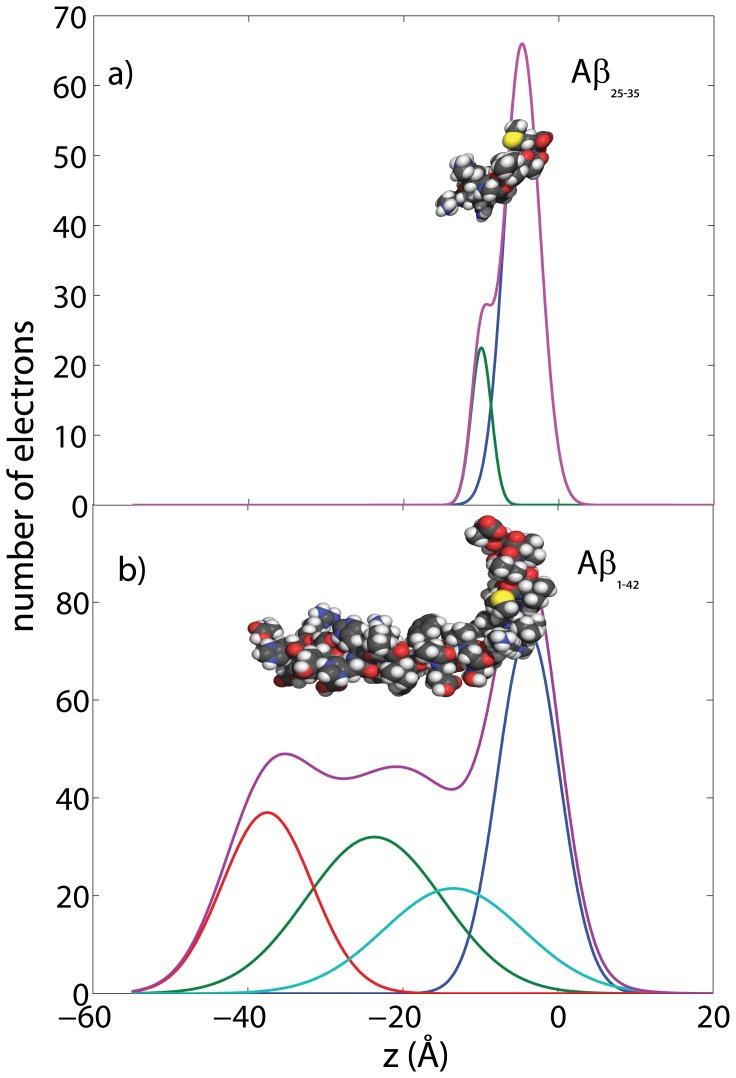
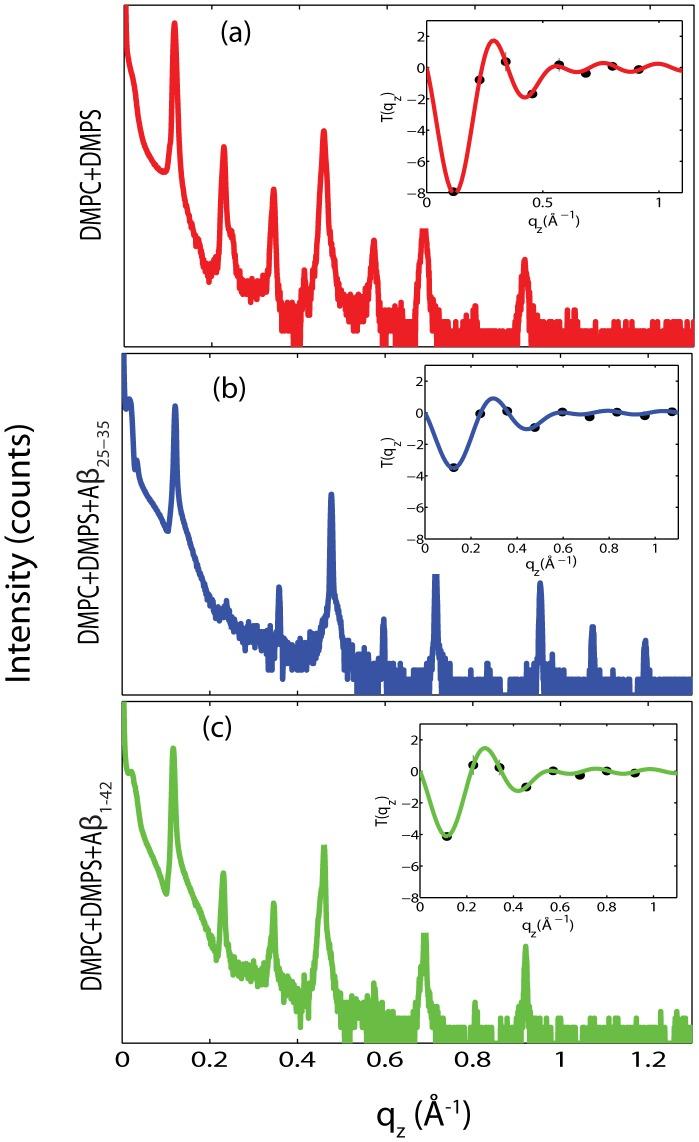
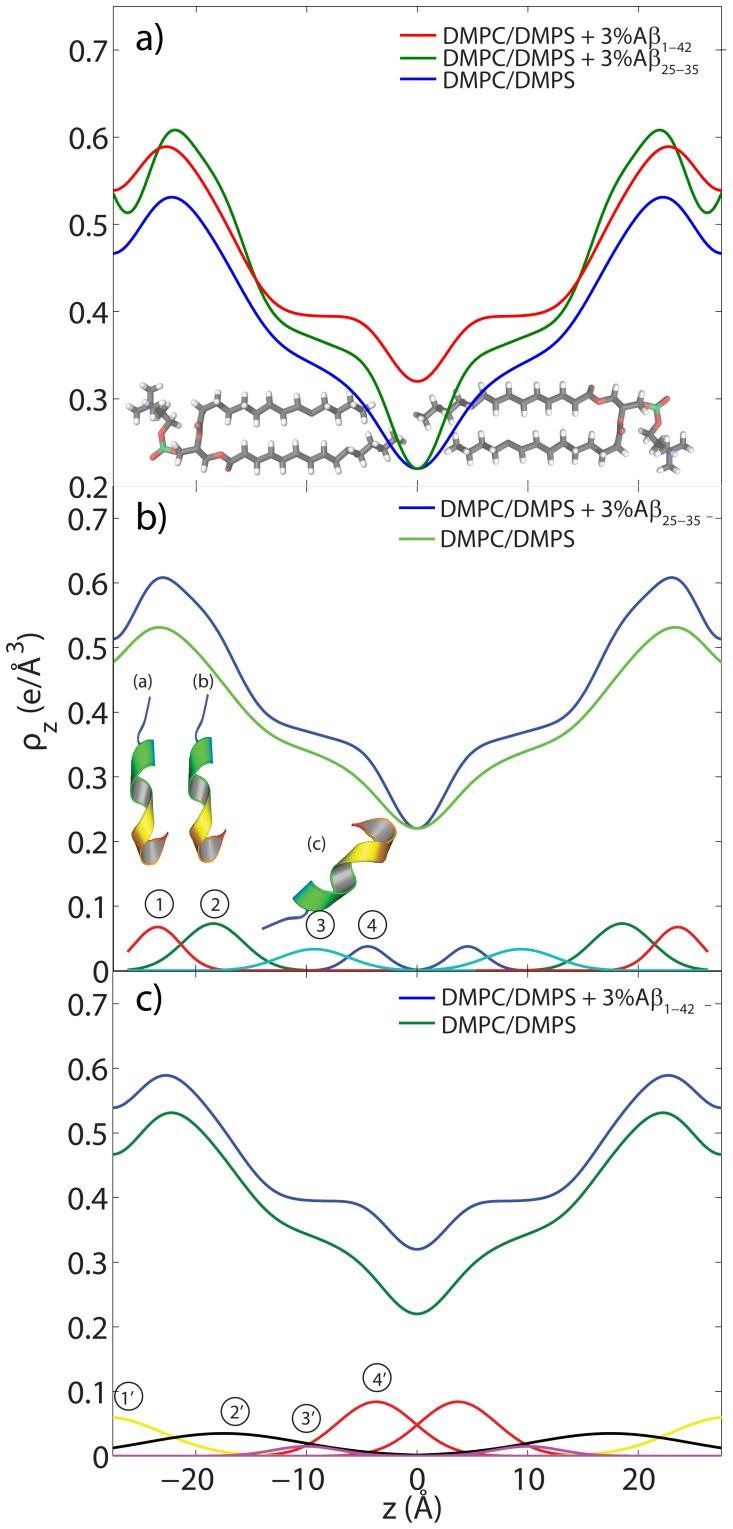
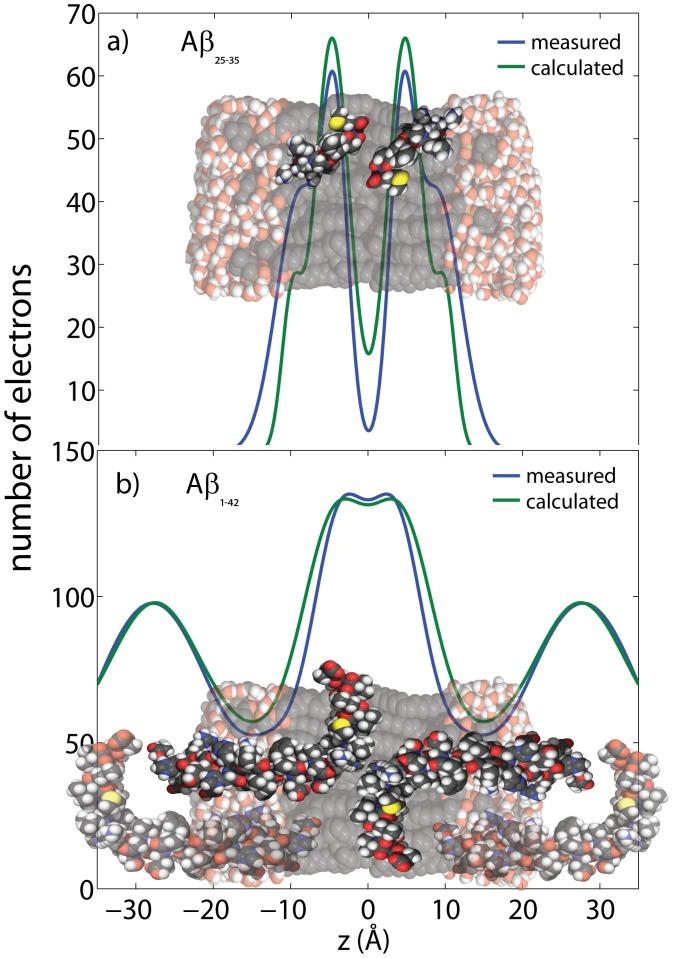
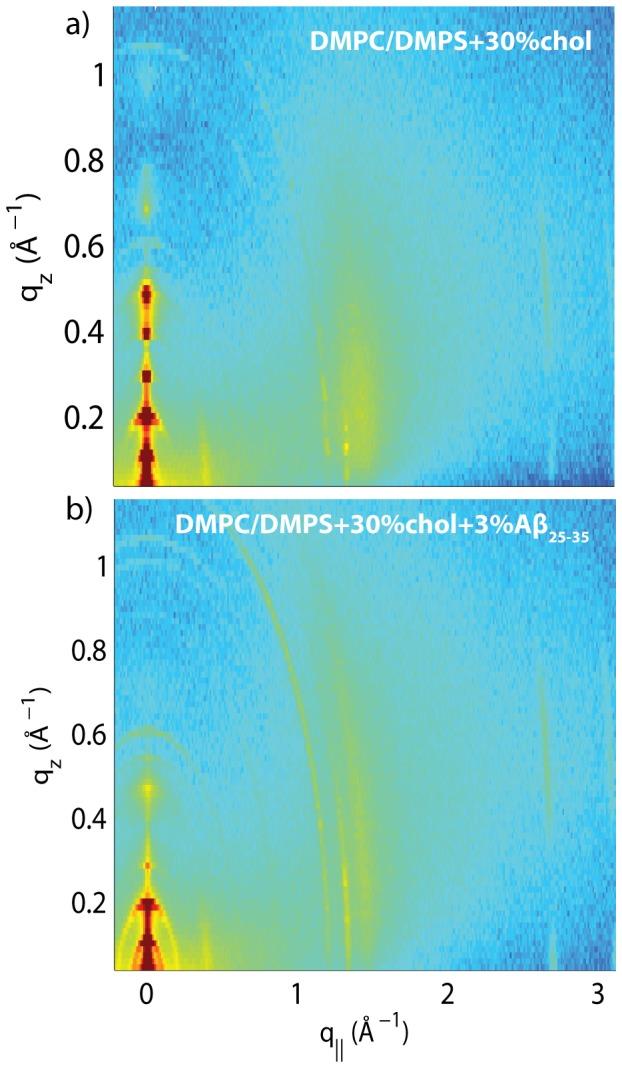
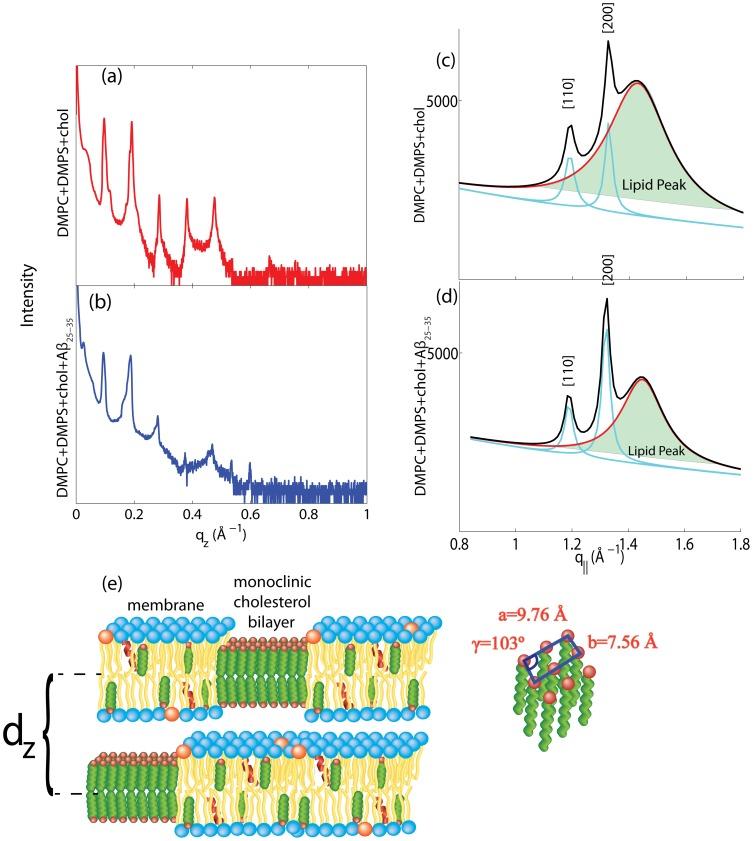
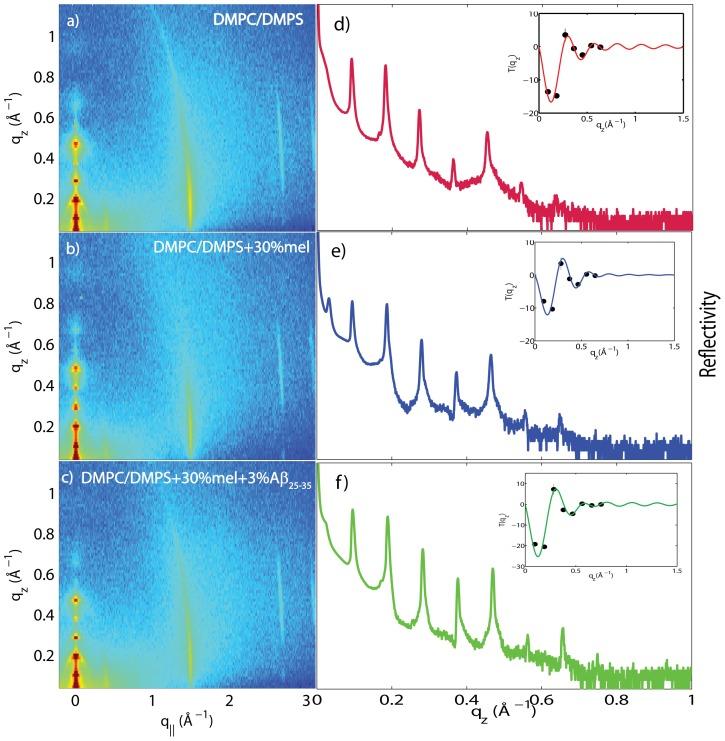
One of the hallmarks of Alzheimer's disease is the formation of senile plaques, primarily consisting of amyloid-β (Aβ) peptides. Peptide-membrane and peptide-lipid interactions are thought to be crucial in this process. We studied the interaction of Aβ₁₋₄₂ and Aβ₂₅₋₃₅ peptides with anionic lipid membranes made of dimyristoylphosphatidylcholine (DMPC) and dimyristoylphosphoserine (DMPS) using X-ray diffraction. We compare the experimentally determined electron densities in the gel state of the membranes with density calculations from peptide structures reported in the Protein Data Bank in order to determine the position of the peptide in the bilayers. The full length peptide Aβ₁₋₄₂ was found to embed in the hydrocarbon core of the anionic lipid bilayers. Two populations were found for the Aβ₂₅₋₃₅ peptide: (1) membrane-bound states in the hydrophilic head group region of the bilayers, where the peptides align parallel to the membranes, and (2) an embedded state in the bilayer center. Aging plays an important role in the development of Alzheimer's, in particular with respect to changes in cholesterol and melatonin levels in the brain tissue. Immiscible cholesterol plaques were created by addition of 30 mol% cholesterol to the anionic membranes. The Aβ₂₅₋₃₅ peptides were found to strongly interact with the lipid bilayers, displacing further cholesterol molecules into the plaques, effectively lowering the cholesterol concentration in the membranes and increasing the total fraction of cholesterol plaques. Addition of 30 mol% melatonin molecules to the anionic membranes drastically reduced the population of the membrane-embedded Aβ state. These results present experimental evidence for an interaction between Aβ peptides, melatonin and cholesterol in lipid membranes.
阿尔茨海默病的一个标志性特征是老年斑的形成,其主要由β-淀粉样蛋白(Aβ)肽组成。肽与膜以及肽与脂质的相互作用被认为在这个过程中至关重要。我们使用X射线衍射研究了Aβ₁₋₄₂和Aβ₂₅₋₃₅肽与由二肉豆蔻酰磷脂酰胆碱(DMPC)和二肉豆蔻酰磷脂丝氨酸(DMPS)制成的阴离子脂质膜的相互作用。我们将实验测定的膜凝胶态电子密度与蛋白质数据库中报道的肽结构的密度计算结果进行比较,以确定肽在双层膜中的位置。发现全长肽Aβ₁₋₄₂嵌入阴离子脂质双层的烃核中。对于Aβ₂₅₋₃₅肽发现了两种状态:(1)双层膜亲水头部基团区域的膜结合状态,其中肽与膜平行排列,以及(2)双层膜中心的嵌入状态。衰老在阿尔茨海默病的发展中起重要作用,特别是在脑组织中胆固醇和褪黑素水平的变化方面。通过向阴离子膜中添加30摩尔%的胆固醇形成了不混溶的胆固醇斑块。发现Aβ₂₅₋₃₅肽与脂质双层强烈相互作用,将更多胆固醇分子置换到斑块中,有效降低膜中的胆固醇浓度并增加胆固醇斑块的总比例。向阴离子膜中添加30摩尔%的褪黑素分子极大地减少了膜嵌入Aβ状态的数量。这些结果为脂质膜中Aβ肽、褪黑素和胆固醇之间的相互作用提供了实验证据。


 Zotero 插件