
mtlD基因的稳定表达赋予了黍稷多重胁迫耐受性。
Stable expression of mtlD gene imparts multiple stress tolerance in finger millet.
作者信息
Hema Ramanna, Vemanna Ramu S, Sreeramulu Shivakumar, Reddy Chandrasekhara P, Senthil-Kumar Muthappa, Udayakumar Makarla
机构信息
Department of Crop Physiology, University of Agricultural Sciences, GKVK, Bangalore, India.
Department of Crop Physiology, University of Agricultural Sciences, GKVK, Bangalore, India; National Institute of Plant Genome Research (NIPGR), Aruna Asaf Ali Marg, New Delhi, India.
出版信息
PLoS One. 2014 Jun 12;9(6):e99110. doi: 10.1371/journal.pone.0099110. eCollection 2014.
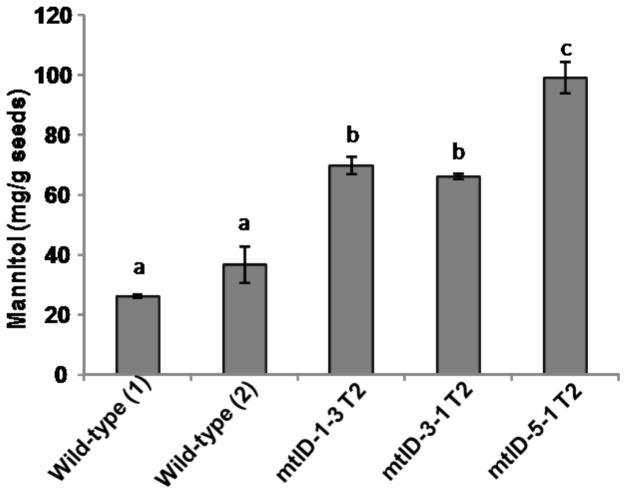
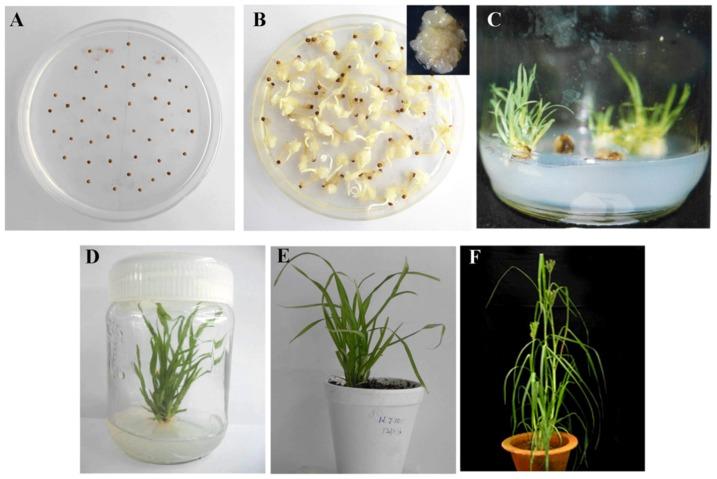
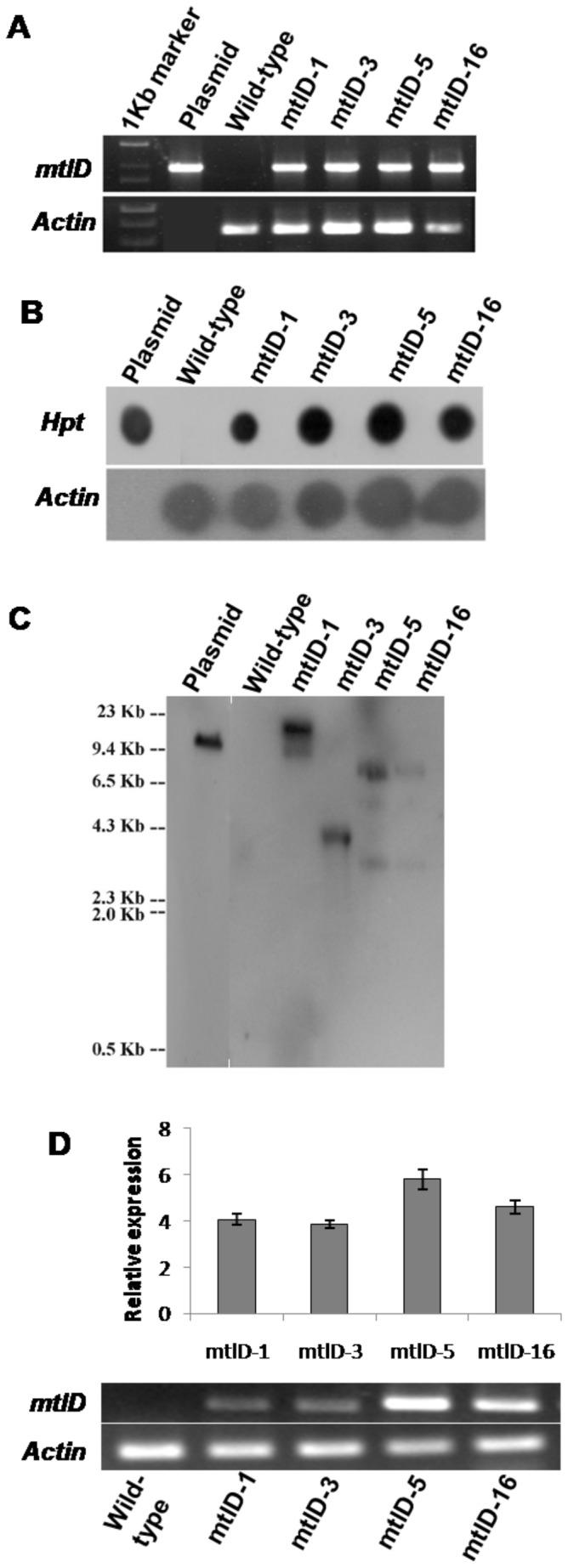
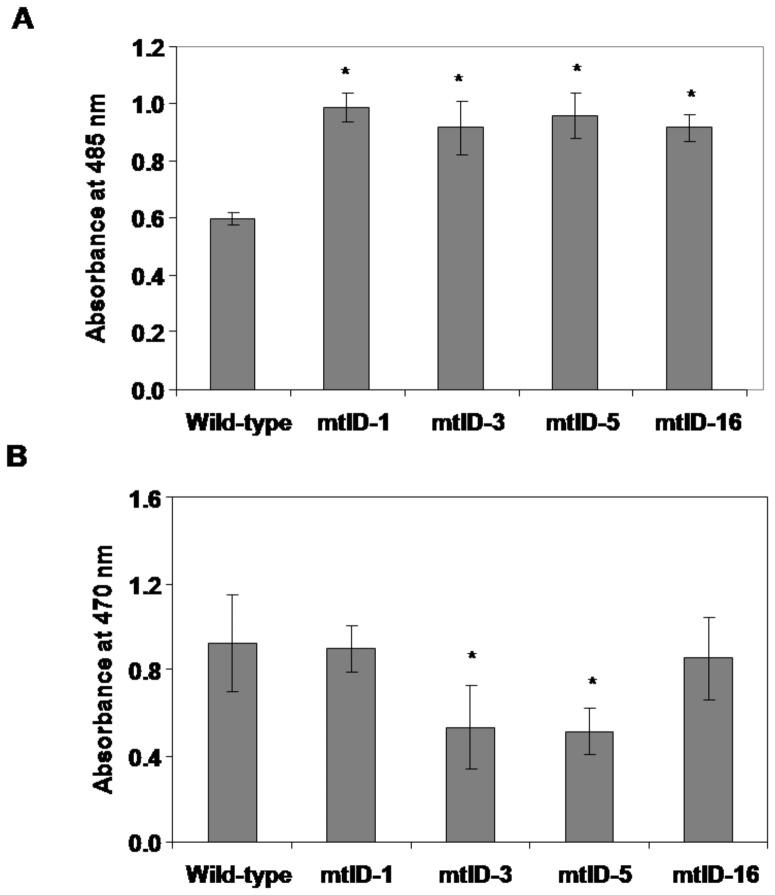
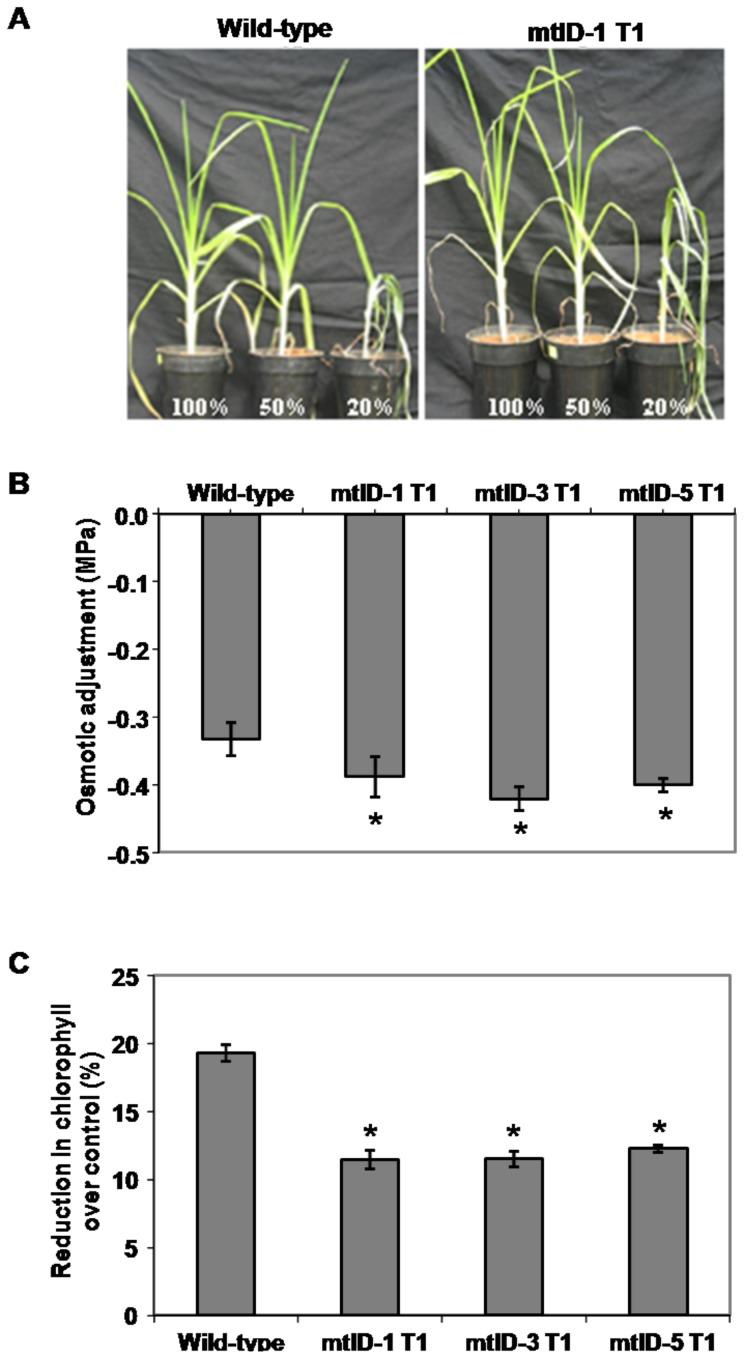
Finger millet is susceptible to abiotic stresses, especially drought and salinity stress, in the field during seed germination and early stages of seedling development. Therefore developing stress tolerant finger millet plants combating drought, salinity and associated oxidative stress in these two growth stages is important. Cellular protection through osmotic adjustment and efficient free radical scavenging ability during abiotic stress are important components of stress tolerance mechanisms in plants. Mannitol, an osmolyte, is known to scavenge hydroxyl radicals generated during various abiotic stresses and thereby minimize stress damage in several plant species. In this study transgenic finger millet plants expressing the mannitol biosynthetic pathway gene from bacteria, mannitol-1-phosphate dehydrogenase (mtlD), were developed through Agrobacterium tumefaciens-mediated genetic transformation. mtlD gene integration in the putative transgenic plants was confirmed by Southern blot. Further, performance of transgenic finger millet under drought, salinity and oxidative stress was studied at plant level in T1 generation and in T1 and T2 generation seedlings. Results from these experiments showed that transgenic finger millet had better growth under drought and salinity stress compared to wild-type. At plant level, transgenic plants showed better osmotic adjustment and chlorophyll retention under drought stress compared to the wild-type. However, the overall increase in stress tolerance of transgenics for the three stresses, especially for oxidative stress, was only marginal compared to other mtlD gene expressing plant species reported in the literature. Moreover, the Agrobacterium-mediated genetic transformation protocol developed for finger millet in this study can be used to introduce diverse traits of agronomic importance in finger millet.
在田间种子萌发和幼苗发育早期,黍对非生物胁迫敏感,尤其是干旱和盐胁迫。因此,培育在这两个生长阶段能抵御干旱、盐胁迫及相关氧化胁迫的耐胁迫黍植株很重要。在非生物胁迫期间,通过渗透调节和高效清除自由基能力实现细胞保护是植物耐胁迫机制的重要组成部分。甘露醇作为一种渗透调节物质,已知能清除各种非生物胁迫期间产生的羟基自由基,从而使几种植物物种的胁迫损伤最小化。在本研究中,通过根癌农杆菌介导的遗传转化培育出了表达来自细菌的甘露醇生物合成途径基因——甘露醇-1-磷酸脱氢酶(mtlD)的转基因黍植株。通过Southern杂交证实了假定转基因植株中mtlD基因的整合。此外,在T1代植株水平以及T1和T2代幼苗中研究了转基因黍在干旱、盐胁迫和氧化胁迫下的表现。这些实验结果表明,与野生型相比,转基因黍在干旱和盐胁迫下生长更好。在植株水平上,与野生型相比,转基因植株在干旱胁迫下表现出更好的渗透调节和叶绿素保留能力。然而,与文献中报道的其他表达mtlD基因的植物物种相比,转基因植株对这三种胁迫,尤其是氧化胁迫的耐胁迫能力总体提升幅度较小。此外,本研究中为黍开发的根癌农杆菌介导的遗传转化方案可用于在黍中引入各种具有农艺重要性的性状。

 Zotero 插件