
治疗性抑制过早终止密码子:机制与临床考量(综述)
Therapeutic suppression of premature termination codons: mechanisms and clinical considerations (review).
作者信息
Karijolich John, Yu Yi-Tao
机构信息
Department of Plant and Microbial Biology, University of California, Berkeley, CA 94720, USA.
Department of Biochemistry and Biophysics, University of Rochester School of Medicine and Dentistry, Rochester, NY 14642, USA.
出版信息
Int J Mol Med. 2014 Aug;34(2):355-62. doi: 10.3892/ijmm.2014.1809. Epub 2014 Jun 17.
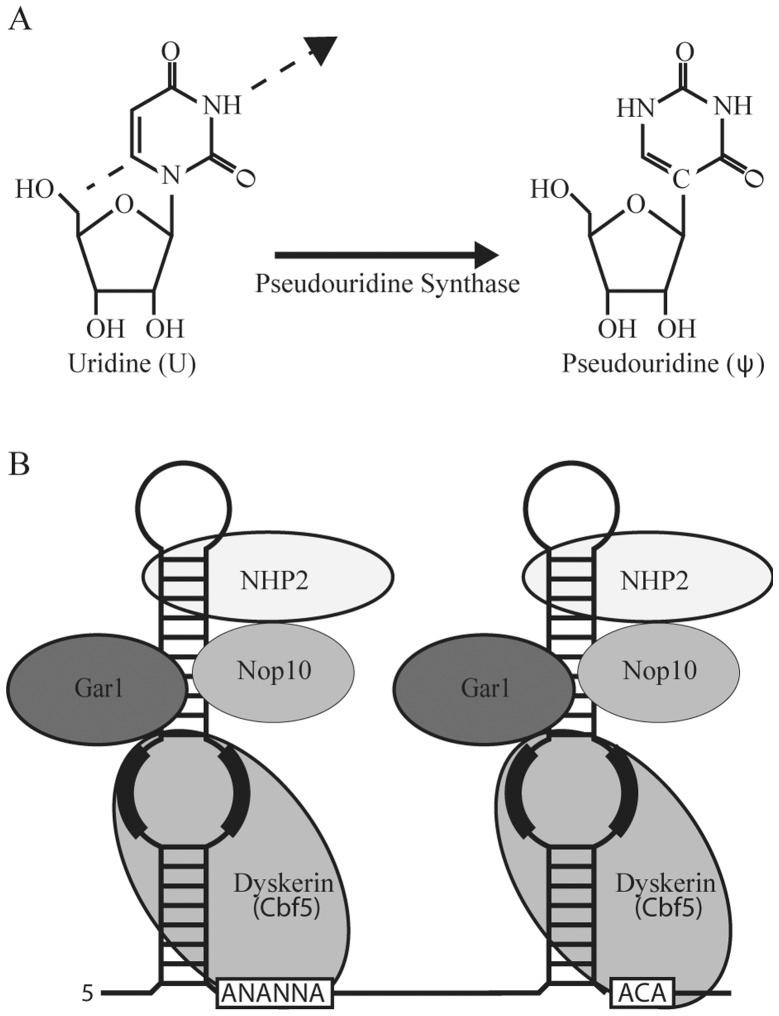
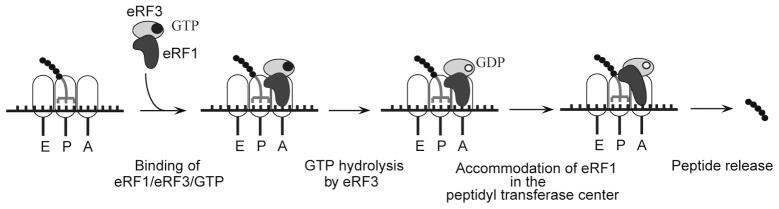
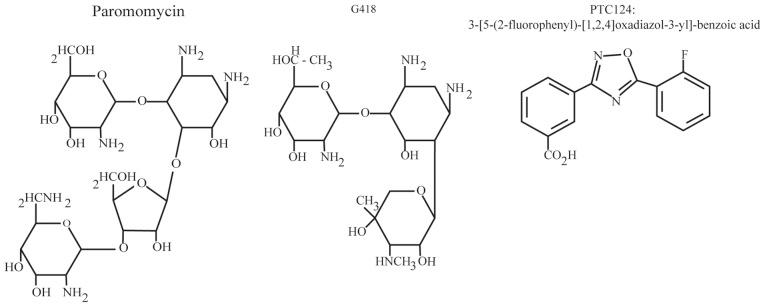
An estimated one-third of genetic disorders are the result of mutations that generate premature termination codons (PTCs) within protein coding genes. These disorders are phenotypically diverse and consist of diseases that affect both young and old individuals. Various small molecules have been identified that are capable of modulating the efficiency of translation termination, including select antibiotics of the aminoglycoside family and multiple novel synthetic molecules, including PTC124. Several of these agents have proved their effectiveness at promoting nonsense suppression in preclinical animal models, as well as in clinical trials. In addition, it has recently been shown that box H/ACA RNA-guided peudouridylation, when directed to modify PTCs, can also promote nonsense suppression. In this review, we summarize our current understanding of eukaryotic translation termination and discuss various methods for promoting the read-through of disease-causing PTCs, as well as the current obstacles that stand in the way of using the discussed agents broadly in clinical practice.
据估计,三分之一的遗传疾病是由蛋白质编码基因内产生过早终止密码子(PTC)的突变所致。这些疾病在表型上具有多样性,涵盖了影响年轻人和老年人的各类疾病。已鉴定出多种能够调节翻译终止效率的小分子,包括氨基糖苷类家族的某些抗生素以及多种新型合成分子,如PTC124。其中一些药物已在临床前动物模型以及临床试验中证明了它们在促进无义抑制方面的有效性。此外,最近的研究表明,当引导盒H/ACA RNA指导的假尿苷化修饰PTC时,也能促进无义抑制。在本综述中,我们总结了目前对真核生物翻译终止的理解,讨论了促进致病PTC通读的各种方法,以及在临床实践中广泛使用所讨论药物面临的当前障碍。
 Zotero 插件