
不存在蜜蜂微孢子虫真菌和狄斯瓦螨的情况下的意大利蜜蜂寄生虫。
Honey bee Apis mellifera parasites in the absence of Nosema ceranae fungi and Varroa destructor mites.
作者信息
Shutler Dave, Head Krista, Burgher-MacLellan Karen L, Colwell Megan J, Levitt Abby L, Ostiguy Nancy, Williams Geoffrey R
机构信息
Department of Biology, Acadia University, Wolfville, Nova Scotia, Canada.
Agri-Foods Branch, Forestry and Agri-Foods Agency, Department of Natural Resources, Government of Newfoundland and Labrador, Corner Brook, Newfoundland and Labrador, Canada.
出版信息
PLoS One. 2014 Jun 23;9(6):e98599. doi: 10.1371/journal.pone.0098599. eCollection 2014.
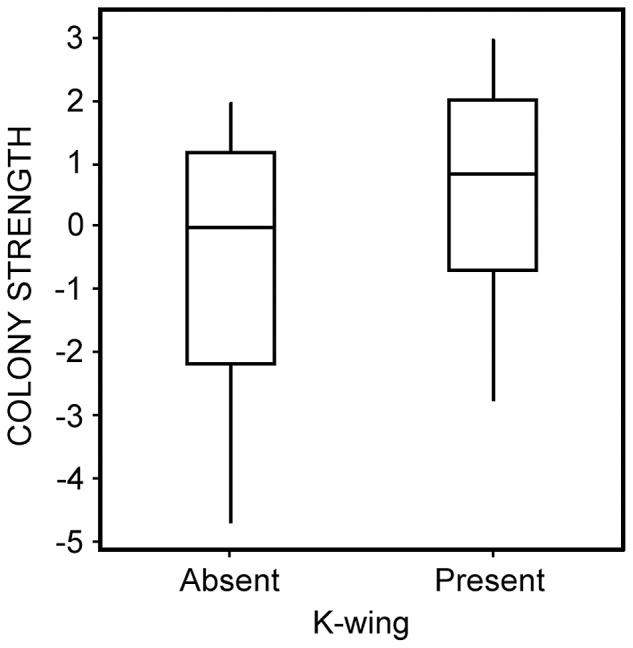
Few areas of the world have western honey bee (Apis mellifera) colonies that are free of invasive parasites Nosema ceranae (fungi) and Varroa destructor (mites). Particularly detrimental is V. destructor; in addition to feeding on host haemolymph, these mites are important vectors of several viruses that are further implicated as contributors to honey bee mortality around the world. Thus, the biogeography and attendant consequences of viral communities in the absence of V. destructor are of significant interest. The island of Newfoundland, Province of Newfoundland and Labrador, Canada, is free of V. destructor; the absence of N. ceranae has not been confirmed. Of 55 Newfoundland colonies inspected visually for their strength and six signs of disease, only K-wing had prevalence above 5% (40/55 colonies = 72.7%). Similar to an earlier study, screenings again confirmed the absence of V. destructor, small hive beetles Aethina tumida (Murray), tracheal mites Acarapis woodi (Rennie), and Tropilaelaps spp. ectoparasitic mites. Of a subset of 23 colonies screened molecularly for viruses, none had Israeli acute paralysis virus, Kashmir bee virus, or sacbrood virus. Sixteen of 23 colonies (70.0%) were positive for black queen cell virus, and 21 (91.3%) had some evidence for deformed wing virus. No N. ceranae was detected in molecular screens of 55 colonies, although it is possible extremely low intensity infections exist; the more familiar N. apis was found in 53 colonies (96.4%). Under these conditions, K-wing was associated (positively) with colony strength; however, viruses and N. apis were not. Furthermore, black queen cell virus was positively and negatively associated with K-wing and deformed wing virus, respectively. Newfoundland honey bee colonies are thus free of several invasive parasites that plague operations in other parts of the world, and they provide a unique research arena to study independent pathology of the parasites that are present.
世界上很少有地区的西方蜜蜂(意大利蜜蜂)蜂群没有侵入性寄生虫——东方蜜蜂微孢子虫(真菌)和狄斯瓦螨(螨虫)。狄斯瓦螨尤其有害;除了取食宿主血淋巴外,这些螨虫还是几种病毒的重要传播媒介,这些病毒被进一步认为是导致全球蜜蜂死亡的因素。因此,在没有狄斯瓦螨的情况下病毒群落的生物地理学及相关后果备受关注。加拿大纽芬兰与拉布拉多省的纽芬兰岛没有狄斯瓦螨;东方蜜蜂微孢子虫的缺失尚未得到证实。在对55个纽芬兰蜂群的蜂群强度和六种疾病迹象进行目视检查时,只有K翅病的患病率高于5%(40/55个蜂群 = 72.7%)。与早期研究相似,筛查再次证实没有狄斯瓦螨、小蜂螨(默里小蜂)、气管螨(伍氏蜂螨)和热厉螨属外寄生螨。在对23个蜂群进行病毒分子筛查的子集中,没有一个蜂群感染以色列急性麻痹病毒、克什米尔蜜蜂病毒或囊状幼虫病毒。23个蜂群中有16个(70.0%)黑蜂王台病毒呈阳性,21个(91.3%)有一些感染翅脉变形病毒的证据。在对55个蜂群的分子筛查中未检测到东方蜜蜂微孢子虫,尽管可能存在极低强度的感染;在53个蜂群(96.4%)中发现了更常见的蜜蜂微孢子虫。在这些条件下,K翅病与蜂群强度呈正相关;然而,病毒和蜜蜂微孢子虫与蜂群强度无关。此外,黑蜂王台病毒分别与K翅病呈正相关,与翅脉变形病毒呈负相关。因此,纽芬兰的蜜蜂蜂群没有困扰世界其他地区养蜂业的几种侵入性寄生虫,它们为研究现存寄生虫的独立病理学提供了一个独特的研究领域。


 Zotero 插件