
针对异质性乳腺癌干细胞的生物标志物。
Biomarkers to Target Heterogeneous Breast Cancer Stem Cells.
作者信息
Hwang-Verslues Wendy W, Lee Wen-Hwa, Lee Eva Y-H P
机构信息
Genomics Research Center, Academia Sinica, No. 128, Sec. 2, Academia Road, Taipei 115, Taiwan.
Department of Biological Chemistry, University of California, Irvine, CA 92697, USA.
出版信息
J Mol Biomark Diagn. 2012;Suppl 8:6. doi: 10.4172/2155-9929.S8-006.
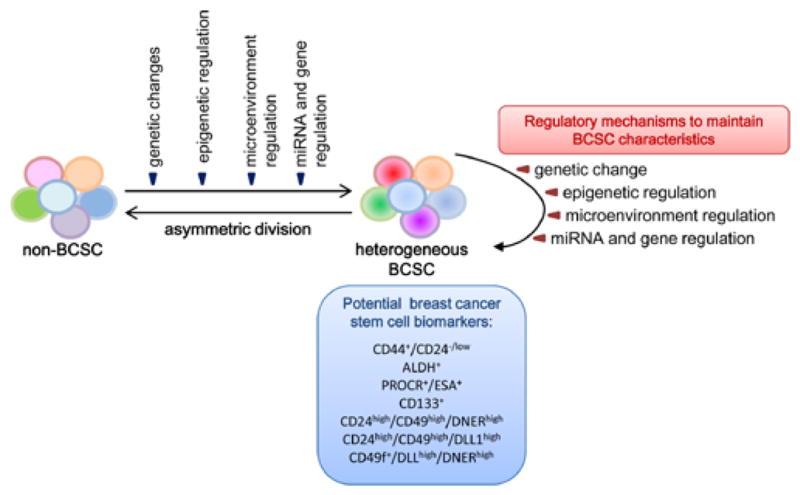
Breast cancer is the most common cancer and the second leading cause of death in U.S. women. Due to early detection and advanced treatment, the breast cancer death rate has been declining since 1990. However, disease recurrence is still the major obstacle in moving from therapy to truly curative treatments. Recent evidence has indicated that breast cancer recurrence is often caused by a subpopulation of breast cancer cells. This subset of cancer cells, usually referred to as breast cancer stem cells (BCSCs), exhibits stem cell phenotypes. They can self-renew and asymmetrically divide to more differentiated cancer cells. These cells are also highly resistant to conventional therapeutic reagents. Therefore, identifying and characterizing these BCSC subpopulations within the larger population of breast cancer cells is essential for developing new strategies to treat breast cancer and prevent recurrence. In this review article, we discuss the current proposed model for the origin of tumor heterogeneity, summarize the recent findings of cell surface and cytoplasmic markers for BCSC identification, review the regulatory mechanisms by which BCSCs maintain or non-cancer stem cells acquire BCSC characteristics, describe the proposed strategies to eliminate BCSCs, and highlight the current limitations and challenges to translate basic BCSC research to clinical application including establishment of clinical biomarkers and therapeutic treatments specifically targeting BCSCs.
乳腺癌是美国女性中最常见的癌症,也是第二大死因。由于早期检测和先进治疗,自1990年以来乳腺癌死亡率一直在下降。然而,疾病复发仍然是从治疗转向真正治愈性治疗的主要障碍。最近的证据表明,乳腺癌复发通常由乳腺癌细胞亚群引起。这一癌细胞亚群通常被称为乳腺癌干细胞(BCSCs),表现出干细胞表型。它们可以自我更新并不对称分裂为更具分化性的癌细胞。这些细胞对传统治疗试剂也具有高度抗性。因此,在更大的乳腺癌细胞群体中识别和表征这些BCSC亚群对于开发治疗乳腺癌和预防复发的新策略至关重要。在这篇综述文章中,我们讨论了当前提出的肿瘤异质性起源模型,总结了用于BCSC识别的细胞表面和细胞质标志物的最新发现,回顾了BCSCs维持或非癌症干细胞获得BCSC特征的调控机制,描述了消除BCSCs的提议策略,并强调了将基础BCSC研究转化为临床应用的当前局限性和挑战,包括建立临床生物标志物和专门针对BCSCs的治疗方法。
 Zotero 插件