
靶向组蛋白去乙酰化酶用于癌症治疗:从分子机制到临床意义
Targeting histone deacetylases for cancer therapy: from molecular mechanisms to clinical implications.
作者信息
Li Zhiming, Zhu Wei-Guo
机构信息
1. Key Laboratory of Carcinogenesis and Translational Research (Ministry of Education), Beijing 100191, China. ; 2. Department of Biochemistry and Molecular Biology, Peking University Health Science Center, Beijing, 100191, China.
1. Key Laboratory of Carcinogenesis and Translational Research (Ministry of Education), Beijing 100191, China. ; 2. Department of Biochemistry and Molecular Biology, Peking University Health Science Center, Beijing, 100191, China. ; 3. Peking-Tsinghua University Center for Life Sciences, Peking University, Beijing 100871, China.
出版信息
Int J Biol Sci. 2014 Jul 2;10(7):757-70. doi: 10.7150/ijbs.9067. eCollection 2014.
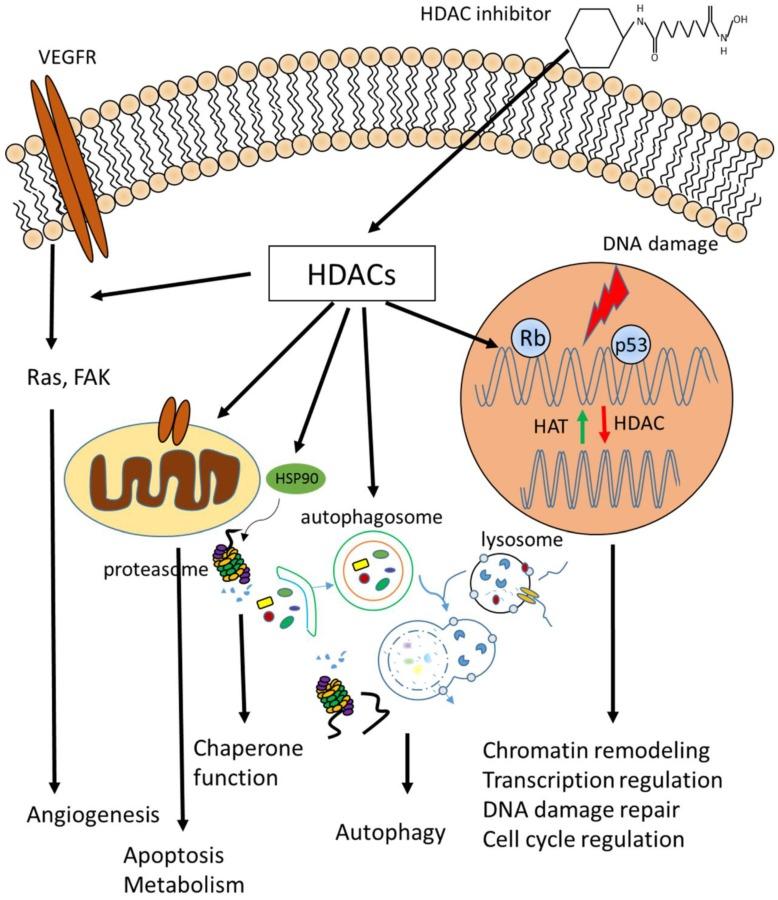
Genetic abnormalities have been conventionally considered as hallmarks of cancer. However, studies over the past decades have demonstrated that epigenetic regulation also participates in the development of cancer. The fundamental patterns of epigenetic components, such as DNA methylation and histone modifications, are frequently altered in tumor cells. Acetylation is one of the best characterized modifications of histones, which is controlled by histone acetyltransferases (HATs) and histone deacetylases (HDACs). HDACs are a group of enzymes which catalyze the removal of the acetyl groups of both histones and non-histone proteins. HDACs are involved in modulating most key cellular processes, including transcriptional regulation, apoptosis, DNA damage repair, cell cycle control, autophagy, metabolism, senescence and chaperone function. Because HDACs have been found to function incorrectly in cancer, various HDAC inhibitors are being investigated to act as cancer chemotherapeutics. The primary purpose of this paper is to summarize recent studies of the links between HDACs and cancer, and further discuss the underlying mechanisms of anti-tumor activities of HDAC inhibitors and clinical implications.
遗传异常一直被传统地视为癌症的标志。然而,过去几十年的研究表明,表观遗传调控也参与了癌症的发展。表观遗传成分的基本模式,如DNA甲基化和组蛋白修饰,在肿瘤细胞中经常发生改变。乙酰化是组蛋白最具特征的修饰之一,它由组蛋白乙酰转移酶(HATs)和组蛋白去乙酰化酶(HDACs)控制。HDACs是一类催化去除组蛋白和非组蛋白蛋白质乙酰基的酶。HDACs参与调节大多数关键的细胞过程,包括转录调控、细胞凋亡、DNA损伤修复、细胞周期控制、自噬、代谢、衰老和伴侣功能。由于已发现HDACs在癌症中功能异常,正在研究各种HDAC抑制剂作为癌症化疗药物。本文的主要目的是总结最近关于HDACs与癌症之间联系的研究,并进一步讨论HDAC抑制剂抗肿瘤活性的潜在机制和临床意义。

 Zotero 插件