
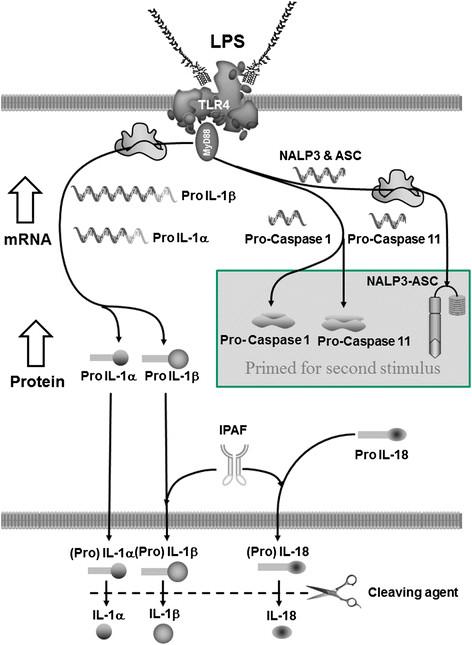
在肺中,Toll样受体4(TLR4)激活通过一种依赖于含冰结合蛋白(IPAF)但不依赖于半胱天冬酶1/11/8的途径诱导白细胞介素-1β(IL-1β)释放。
TLR4 activation induces IL-1β release via an IPAF dependent but caspase 1/11/8 independent pathway in the lung.
作者信息
Eltom Suffwan, Belvisi Maria G, Yew-Booth Liang, Dekkak Bilel, Maher Sarah A, Dubuis Eric D, Jones Victoria, Fitzgerald Kate A, Birrell Mark A
机构信息
Respiratory Pharmacology, National Heart and Lung Institute, Faculty of Medicine, Imperial College London, Exhibition Road, London, SW7 2AZ, UK.
University of Massachusetts, Division of Infectious Diseases & Immunology, Worcester, MA, 01605, USA.
出版信息
Respir Res. 2014 Aug 2;15(1):87. doi: 10.1186/s12931-014-0087-0.
BACKGROUND
The IL-1 family of cytokines is known to play an important role in inflammation therefore understanding the mechanism by which they are produced is paramount. Despite the recent plethora of publications dedicated to the study of these cytokines, the mechanism by which they are produced in the airway following endotoxin, Lipopolysaccharide (LPS), exposure is currently unclear. The aim was to determine the mechanism by which the IL-1 cytokines are produced after LPS inhaled challenge.
METHODS
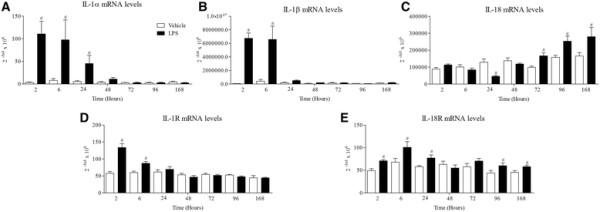
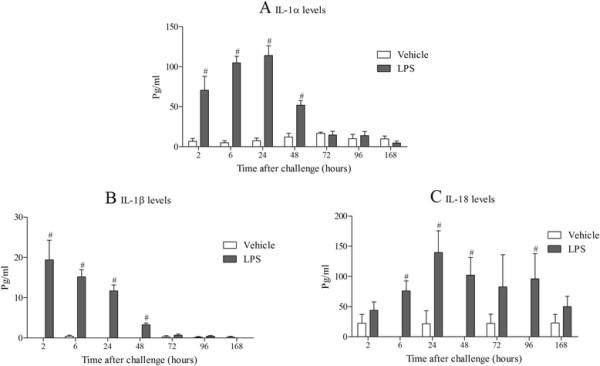
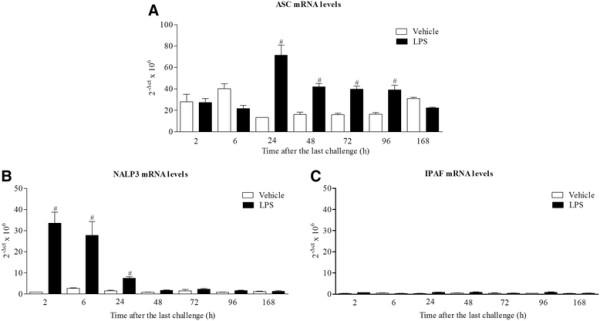
Mice were challenged with aerosolised LPS, and lung tissue and bronchiolar lavage fluid (BALF) collected. Targets were measured at the mRNA and protein level; caspase activity was determined using specific assays.
RESULTS
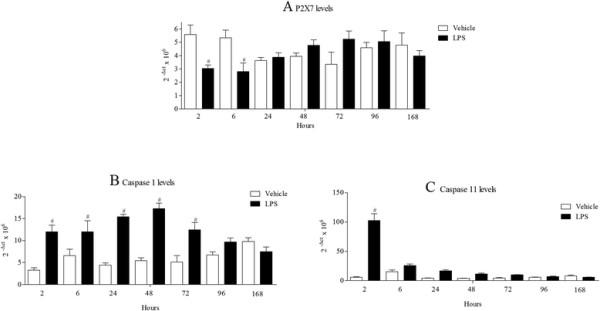
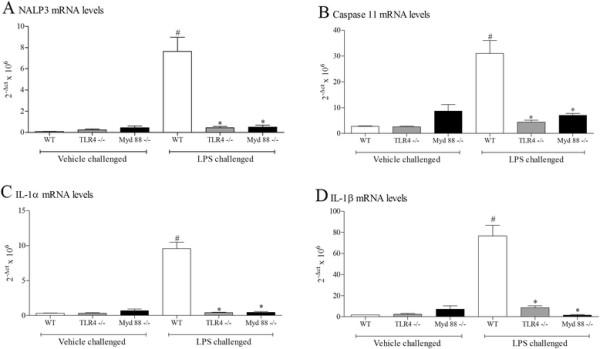
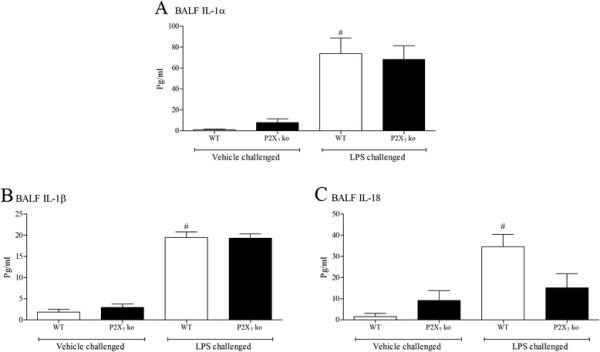
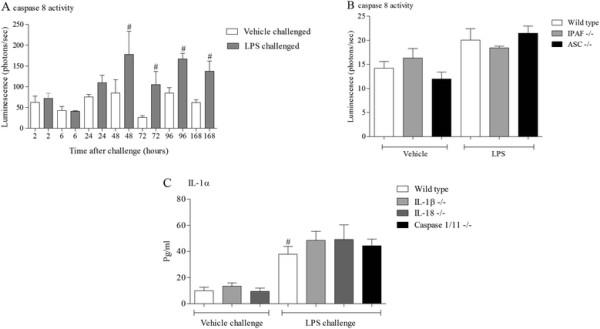
BALF IL-1b/IL-18, but not IL-1a, was dependent on Ice Protease-Activating Factor (IPAF), and to a lesser extent Apoptosis-associated Speck-like protein containing a CARD (ASC). Interestingly, although we measured an increase in mRNA expression for caspase 1 and 11, we could not detect an increase in lung enzyme activity or a role for them in IL-1a/b production. Further investigations showed that whilst we could detect an increase in caspase 8 activity at later points in the time course (during resolution of inflammation), it appeared to play no role in the production of IL-1 cytokines in this model system.
CONCLUSIONS
TLR4 activation increases levels of BALF IL-1b/IL-18 via an IPAF dependent and caspase 1/11/8 independent pathway. Furthermore, it would appear that the presence of IL-1a in the BALF is independent of these pathways. This novel data sheds light on innate signalling pathways in the lung that control the production of these key inflammatory cytokines.
背景
细胞因子白细胞介素-1(IL-1)家族在炎症中发挥重要作用,因此了解其产生机制至关重要。尽管近期有大量关于这些细胞因子的研究报道,但内毒素脂多糖(LPS)暴露后气道中IL-1细胞因子的产生机制目前尚不清楚。本研究旨在确定LPS吸入激发后IL-1细胞因子的产生机制。
方法
用雾化LPS对小鼠进行激发,收集肺组织和支气管肺泡灌洗液(BALF)。在mRNA和蛋白质水平检测目标物;使用特定检测方法测定半胱天冬酶活性。
结果
BALF中的IL-1β/IL-18而非IL-1α依赖于冰蛋白酶激活因子(IPAF),且在较小程度上依赖含半胱天冬酶激活和招募结构域的凋亡相关斑点样蛋白(ASC)。有趣的是,尽管我们检测到半胱天冬酶1和11的mRNA表达增加,但未检测到肺酶活性增加,也未发现它们在IL-1α/β产生中的作用。进一步研究表明,虽然在时间进程后期(炎症消退期间)我们能检测到半胱天冬酶8活性增加,但在该模型系统中它似乎在IL-1细胞因子的产生中不起作用。
结论
Toll样受体4(TLR4)激活通过依赖IPAF且不依赖半胱天冬酶1/11/8的途径增加BALF中IL-1β/IL-18的水平。此外,BALF中IL-1α的存在似乎与这些途径无关。这些新数据揭示了肺中控制这些关键炎症细胞因子产生的固有信号通路。


 Zotero 插件