
α-茄碱通过抑制上皮-间质转化和基质金属蛋白酶的表达来抑制人前列腺癌细胞的侵袭。
α-Solanine inhibits invasion of human prostate cancer cell by suppressing epithelial-mesenchymal transition and MMPs expression.
作者信息
Shen Kun-Hung, Liao Alex Chien-Hwa, Hung Jui-Hsiang, Lee Wei-Jiunn, Hu Kai-Chieh, Lin Pin-Tsen, Liao Ruei-Fang, Chen Pin-Shern
机构信息
Division of Urology, Department of Surgery, Chi Mei Medical Center, Tainan 710, Taiwan.
Department of Biotechnology, Chia Nan University of Pharmacy & Science, Tainan 717, Taiwan.
出版信息
Molecules. 2014 Aug 11;19(8):11896-914. doi: 10.3390/molecules190811896.
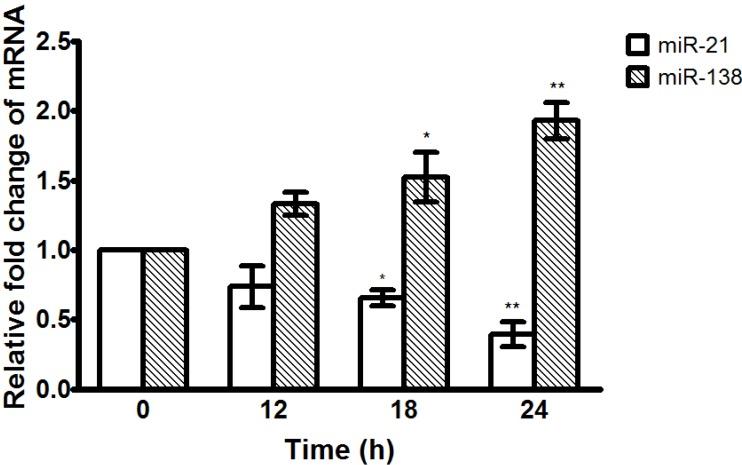
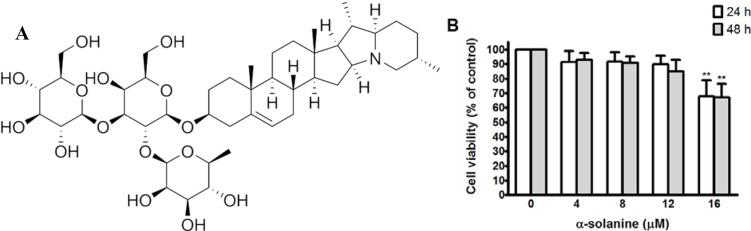
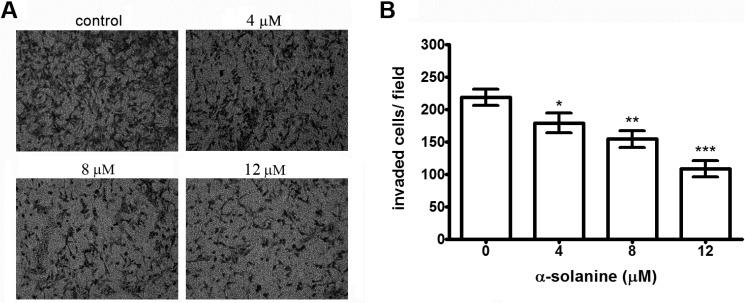
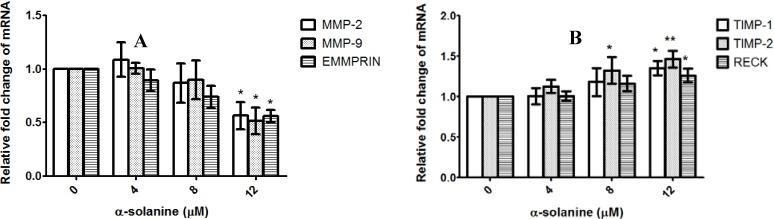
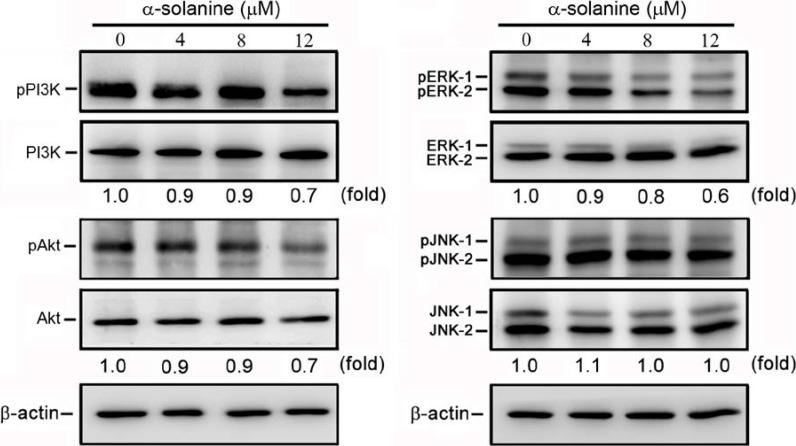
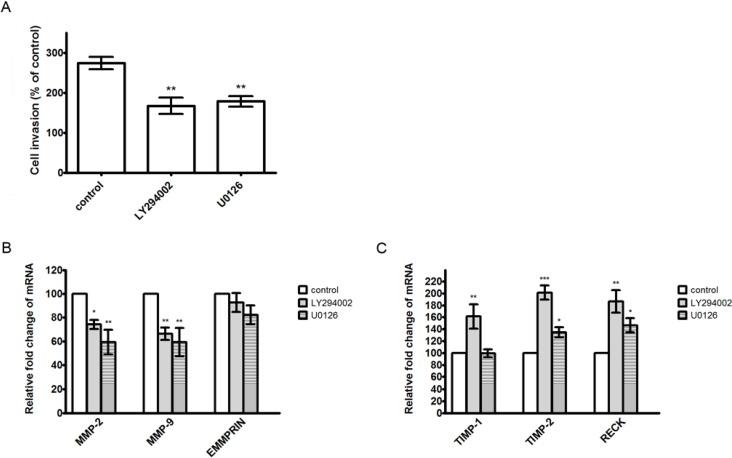
α-Solanine, a naturally occurring steroidal glycoalkaloid found in nightshade (Solanum nigrum Linn.), was found to inhibit proliferation and induce apoptosis of tumor cells. However, the mechanism involved in suppression of cancer cell metastasis by α-solanine remains unclear. This study investigates the suppression mechanism of α-solanine on motility of the human prostate cancer cell PC-3. Results show that α-solanine reduces the viability of PC-3 cells. When treated with non-toxic doses of α-solanine, cell invasion is markedly suppressed by α-solanine. α-Solanine also significantly elevates epithelial marker E-cadherin expression, while it concomitantly decreases mesenchymal marker vimentin expression, suggesting it suppresses epithelial-mesenchymal transition (EMT). α-Solanine reduces the mRNA level of matrix metalloproteinase-2 (MMP-2), MMP-9 and extracellular inducer of matrix metalloproteinase (EMMPRIN), but increases the expression of reversion-inducing cysteine-rich protein with kazal motifs (RECK), and tissue inhibitor of metalloproteinase-1 (TIMP-1) and TIMP-2. Immunoblotting assays indicate α-solanine is effective in suppressing the phosphorylation of phosphatidylinositide-3 kinase (PI3K), Akt and ERK. Moreover, α-solanine downregulates oncogenic microRNA-21 (miR-21) and upregulates tumor suppressor miR-138 expression. Taken together, the results suggest that inhibition of PC-3 cell invasion by α-solanine may be, at least in part, through blocking EMT and MMPs expression. α-Solanine also reduces ERK and PI3K/Akt signaling pathways and regulates expression of miR-21 and miR-138. These findings suggest an attractive therapeutic potential of α-solanine for suppressing invasion of prostate cancer cell.
α-茄碱是一种存在于龙葵(龙葵)中的天然甾体糖苷生物碱,被发现可抑制肿瘤细胞的增殖并诱导其凋亡。然而,α-茄碱抑制癌细胞转移的机制仍不清楚。本研究探讨了α-茄碱对人前列腺癌细胞PC-3运动性的抑制机制。结果表明,α-茄碱降低了PC-3细胞的活力。当用无毒剂量的α-茄碱处理时,α-茄碱显著抑制细胞侵袭。α-茄碱还显著提高上皮标志物E-钙黏蛋白的表达,同时降低间充质标志物波形蛋白的表达,表明它抑制上皮-间质转化(EMT)。α-茄碱降低基质金属蛋白酶-2(MMP-2)、MMP-9和基质金属蛋白酶细胞外诱导剂(EMMPRIN)的mRNA水平,但增加含kazal基序的富含半胱氨酸的逆转诱导蛋白(RECK)以及金属蛋白酶组织抑制剂-1(TIMP-1)和TIMP-2的表达。免疫印迹分析表明,α-茄碱可有效抑制磷脂酰肌醇-3激酶(PI3K)、Akt和ERK的磷酸化。此外,α-茄碱下调致癌性微小RNA-21(miR-21)并上调肿瘤抑制性miR-138的表达。综上所述,结果表明α-茄碱对PC-3细胞侵袭的抑制作用可能至少部分是通过阻断EMT和MMPs表达实现的。α-茄碱还降低ERK和PI3K/Akt信号通路,并调节miR-21和miR-138的表达。这些发现表明α-茄碱在抑制前列腺癌细胞侵袭方面具有诱人的治疗潜力。



 Zotero 插件