
线粒体去乙酰化酶的过表达改变了HEK293细胞中的糖酵解和线粒体功能。
Overexpression of mitochondrial sirtuins alters glycolysis and mitochondrial function in HEK293 cells.
作者信息
de Moura Michelle Barbi, Uppala Radha, Zhang Yuxun, Van Houten Bennett, Goetzman Eric S
机构信息
Department of Pharmacology and Chemical Biology, University of Pittsburgh, Pittsburgh, Pennsylvania, United States of America; University of Pittsburgh Cancer Institute, Pittsburgh, Pennsylvania, United States of America.
Division of Medical Genetics, Department of Pediatrics, Children's Hospital of Pittsburgh of The University of Pittsburgh Medical Center, Pittsburgh, Pennsylvania, United States of America.
出版信息
PLoS One. 2014 Aug 28;9(8):e106028. doi: 10.1371/journal.pone.0106028. eCollection 2014.
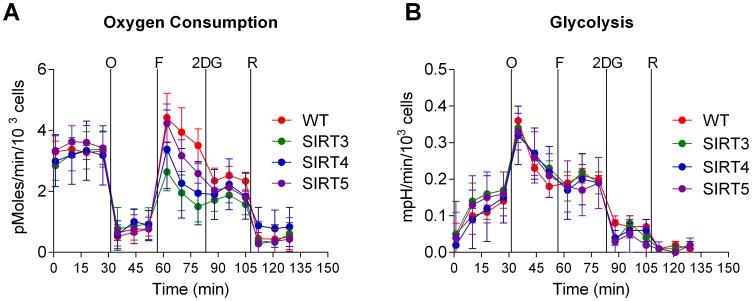
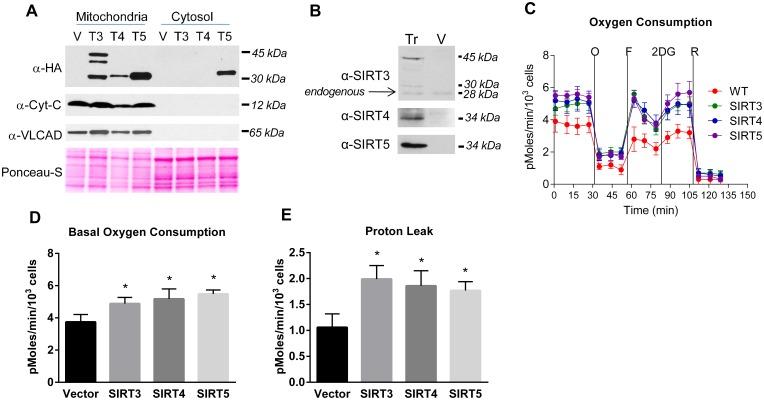
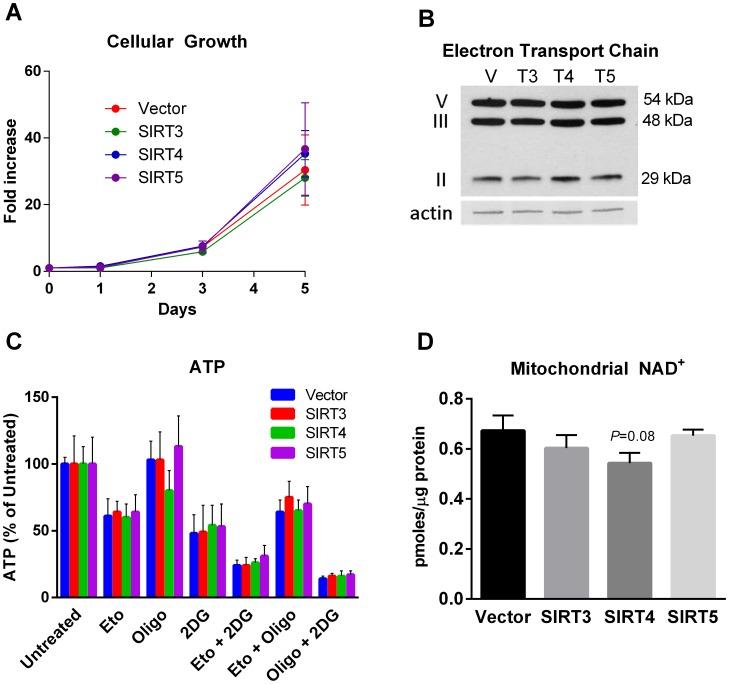
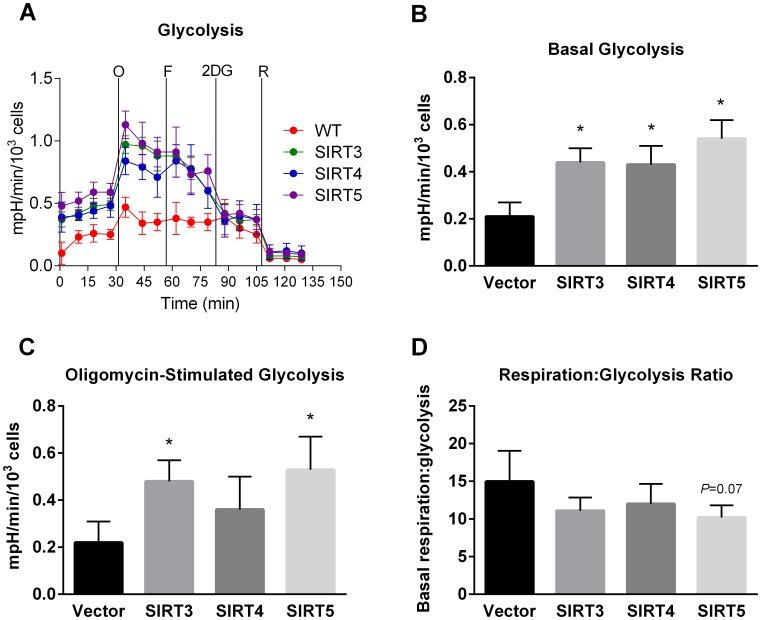
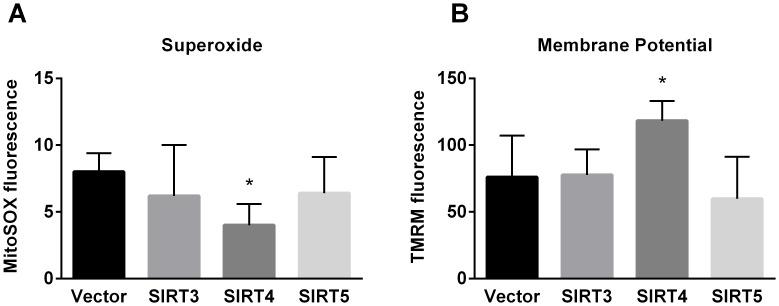
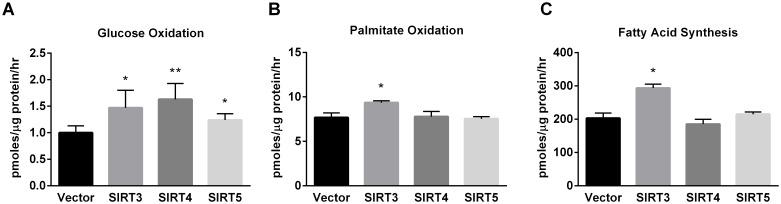
SIRT3, SIRT4, and SIRT5 are mitochondrial deacylases that impact multiple facets of energy metabolism and mitochondrial function. SIRT3 activates several mitochondrial enzymes, SIRT4 represses its targets, and SIRT5 has been shown to both activate and repress mitochondrial enzymes. To gain insight into the relative effects of the mitochondrial sirtuins in governing mitochondrial energy metabolism, SIRT3, SIRT4, and SIRT5 overexpressing HEK293 cells were directly compared. When grown under standard cell culture conditions (25 mM glucose) all three sirtuins induced increases in mitochondrial respiration, glycolysis, and glucose oxidation, but with no change in growth rate or in steady-state ATP concentration. Increased proton leak, as evidenced by oxygen consumption in the presence of oligomycin, appeared to explain much of the increase in basal oxygen utilization. Growth in 5 mM glucose normalized the elevations in basal oxygen consumption, proton leak, and glycolysis in all sirtuin over-expressing cells. While the above effects were common to all three mitochondrial sirtuins, some differences between the SIRT3, SIRT4, and SIRT5 expressing cells were noted. Only SIRT3 overexpression affected fatty acid metabolism, and only SIRT4 overexpression altered superoxide levels and mitochondrial membrane potential. We conclude that all three mitochondrial sirtuins can promote increased mitochondrial respiration and cellular metabolism. SIRT3, SIRT4, and SIRT5 appear to respond to excess glucose by inducing a coordinated increase of glycolysis and respiration, with the excess energy dissipated via proton leak.
SIRT3、SIRT4和SIRT5是线粒体去酰基酶,它们影响能量代谢和线粒体功能的多个方面。SIRT3激活多种线粒体酶,SIRT4抑制其靶标,并且已证明SIRT5既能激活也能抑制线粒体酶。为了深入了解线粒体沉默调节蛋白在控制线粒体能量代谢中的相对作用,对过表达SIRT3、SIRT4和SIRT5的HEK293细胞进行了直接比较。在标准细胞培养条件(25 mM葡萄糖)下生长时,所有三种沉默调节蛋白均诱导线粒体呼吸、糖酵解和葡萄糖氧化增加,但生长速率或稳态ATP浓度没有变化。如在寡霉素存在下的氧气消耗所证明的,质子泄漏增加似乎可以解释基础氧利用增加的大部分原因。在5 mM葡萄糖中生长使所有过表达沉默调节蛋白的细胞的基础氧消耗、质子泄漏和糖酵解升高恢复正常。虽然上述作用对所有三种线粒体沉默调节蛋白都是共同的,但在表达SIRT3、SIRT4和SIRT5的细胞之间也注意到了一些差异。只有过表达SIRT3影响脂肪酸代谢,只有过表达SIRT4改变超氧化物水平和线粒体膜电位。我们得出结论,所有三种线粒体沉默调节蛋白都可以促进线粒体呼吸和细胞代谢增加。SIRT3、SIRT4和SIRT5似乎通过诱导糖酵解和呼吸的协同增加来应对过量葡萄糖,多余的能量通过质子泄漏耗散。
 Zotero 插件