
西方蜜蜂(意大利蜜蜂)和东方蜜蜂(中华蜜蜂)下咽腺的转录组差异
Transcriptome differences in the hypopharyngeal gland between Western Honeybees (Apis mellifera) and Eastern Honeybees (Apis cerana).
作者信息
Liu Hao, Wang Zi-Long, Tian Liu-Qing, Qin Qiu-Hong, Wu Xiao-Bo, Yan Wei-Yu, Zeng Zhi-Jiang
机构信息
Honeybee Research Institute, Jiangxi Agricultural University, Nanchang, Jiangxi 330045, China.
出版信息
BMC Genomics. 2014 Aug 30;15(1):744. doi: 10.1186/1471-2164-15-744.
BACKGROUND
Apis mellifera and Apis cerana are two sibling species of Apidae. Apis cerana is adept at collecting sporadic nectar in mountain and forest region and exhibits stiffer hardiness and acarid resistance as a result of natural selection, whereas Apis mellifera has the advantage of producing royal jelly. To identify differentially expressed genes (DEGs) that affect the development of hypopharyngeal gland (HG) and/or the secretion of royal jelly between these two honeybee species, we performed a digital gene expression (DGE) analysis of the HGs of these two species at three developmental stages (newly emerged worker, nurse and forager).
RESULTS
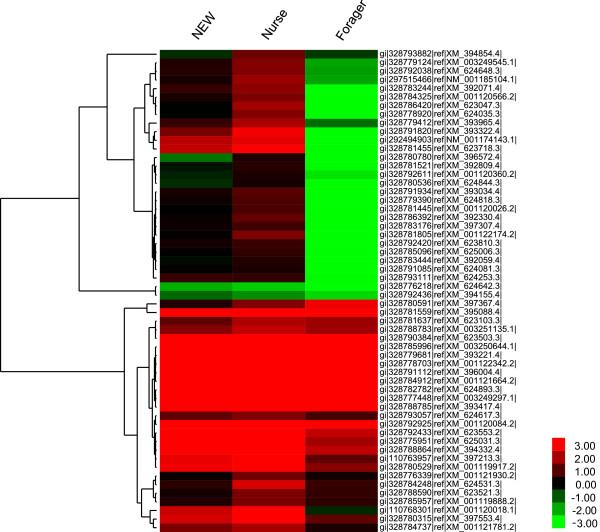
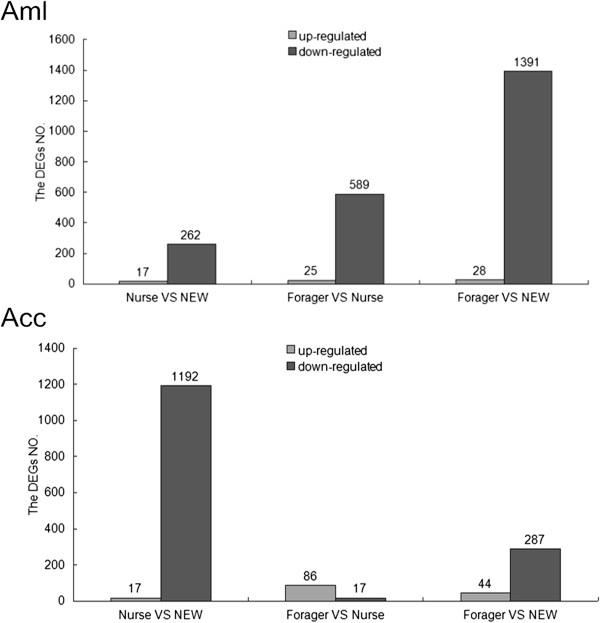
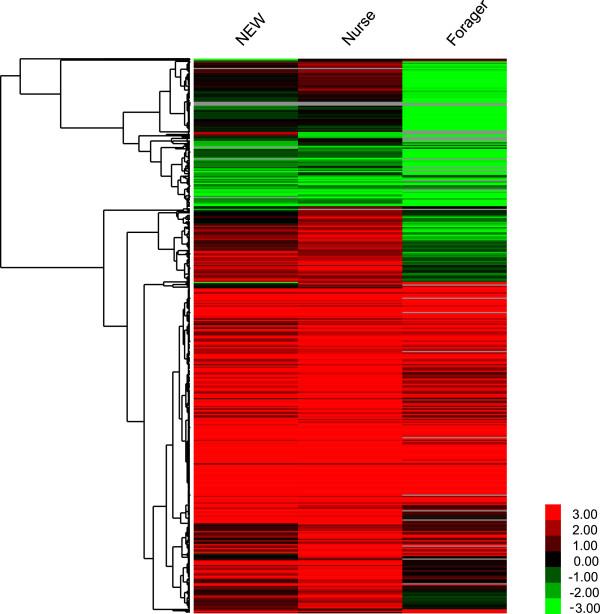
Twelve DGE-tag libraries were constructed and sequenced using the total RNA extracted from the HGs of newly emerged workers, nurses, and foragers of Apis mellifera and Apis cerana. Finally, a total of 1482 genes in Apis mellifera and 1313 in Apis cerana were found to exhibit an expression difference among the three developmental stages. A total of 1417 DEGs were identified between these two species. Of these, 623, 1072, and 462 genes showed an expression difference at the newly emerged worker, nurse, and forager stages, respectively. The nurse stage exhibited the highest number of DEGs between these two species and most of these were found to be up-regulated in Apis mellifera. These results suggest that the higher yield of royal jelly in Apis mellifera may be due to the higher expression level of these DEGs.
CONCLUSIONS
In this study, we investigated the DEGs between the HGs of two sibling honeybee species (Apis mellifera and Apis cerana). Our results indicated that the gene expression difference was associated with the difference in the royal jelly yield between these two species. These results provide an important clue for clarifying the mechanisms underlying hypopharyngeal gland development and the production of royal jelly.
背景
西方蜜蜂和中华蜜蜂是蜜蜂科的两个姐妹种。中华蜜蜂擅长在山区和森林地区采集零星花蜜,经过自然选择,表现出更强的耐寒性和抗螨性,而西方蜜蜂具有生产蜂王浆的优势。为了鉴定影响这两种蜜蜂咽下腺(HG)发育和/或蜂王浆分泌的差异表达基因(DEG),我们对这两个物种在三个发育阶段(新羽化工蜂、哺育蜂和采集蜂)的咽下腺进行了数字基因表达(DGE)分析。
结果
使用从西方蜜蜂和中华蜜蜂新羽化工蜂、哺育蜂和采集蜂的咽下腺中提取的总RNA构建并测序了12个DGE标签文库。最终,发现西方蜜蜂共有1482个基因,中华蜜蜂共有1313个基因在三个发育阶段表现出表达差异。在这两个物种之间共鉴定出1417个DEG。其中,分别有623、1072和462个基因在新羽化工蜂期、哺育蜂期和采集蜂期表现出表达差异。在这两个物种之间,哺育蜂期的DEG数量最多,其中大多数在西方蜜蜂中上调。这些结果表明西方蜜蜂蜂王浆产量较高可能是由于这些DEG的表达水平较高。
结论
在本研究中,我们调查了两种姐妹蜜蜂物种(西方蜜蜂和中华蜜蜂)咽下腺之间的DEG。我们的结果表明,基因表达差异与这两个物种蜂王浆产量的差异有关。这些结果为阐明咽下腺发育和蜂王浆生产的潜在机制提供了重要线索。


 Zotero 插件