
一种在体内具有长效作用的强效GLP-1α/β肽类似物。
A potent α/β-peptide analogue of GLP-1 with prolonged action in vivo.
作者信息
Johnson Lisa M, Barrick Stacey, Hager Marlies V, McFedries Amanda, Homan Edwin A, Rabaglia Mary E, Keller Mark P, Attie Alan D, Saghatelian Alan, Bisello Alessandro, Gellman Samuel H
机构信息
Department of Chemistry, University of Wisconsin , Madison, Wisconsin 53706, United States.
出版信息
J Am Chem Soc. 2014 Sep 17;136(37):12848-51. doi: 10.1021/ja507168t. Epub 2014 Sep 5.
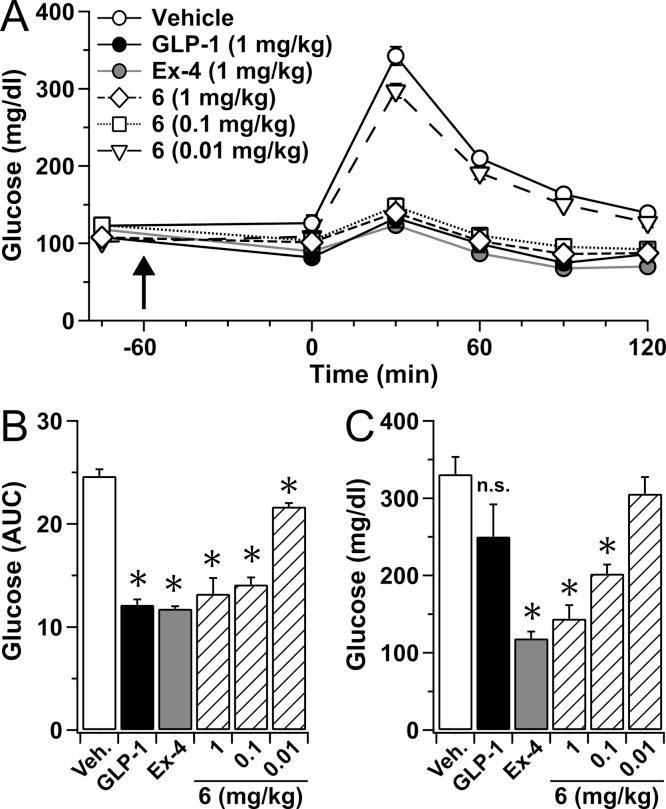
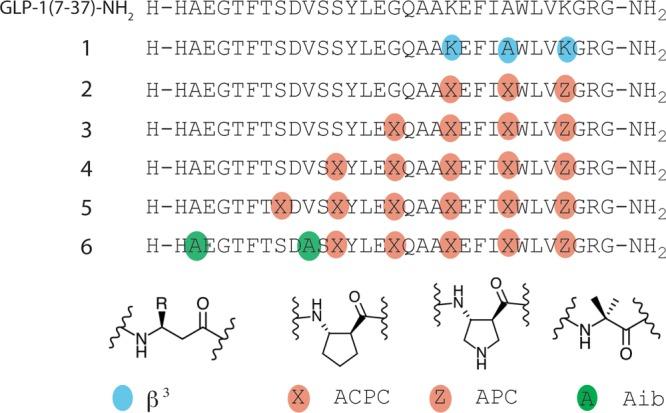
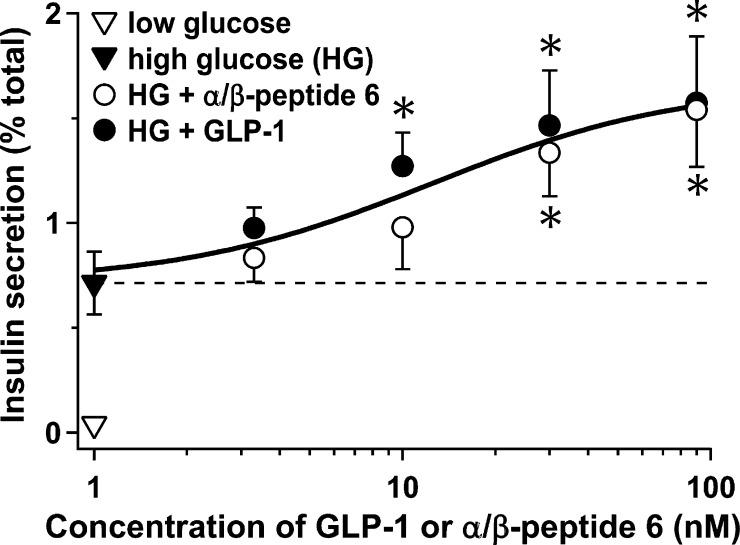
Glucagon-like peptide-1 (GLP-1) is a natural agonist for GLP-1R, a G protein-coupled receptor (GPCR) on the surface of pancreatic β cells. GLP-1R agoinsts are attractive for treatment of type 2 diabetes, but GLP-1 itself is rapidly degraded by peptidases in vivo. We describe a design strategy for retaining GLP-1-like activity while engendering prolonged activity in vivo, based on strategic replacement of native α residues with conformationally constrained β-amino acid residues. This backbone-modification approach may be useful for developing stabilized analogues of other peptide hormones.
胰高血糖素样肽-1(GLP-1)是胰高血糖素样肽-1受体(GLP-1R)的天然激动剂,GLP-1R是胰腺β细胞表面的一种G蛋白偶联受体(GPCR)。GLP-1R激动剂对2型糖尿病的治疗具有吸引力,但GLP-1本身在体内会被肽酶迅速降解。我们描述了一种设计策略,通过用构象受限的β-氨基酸残基战略性地取代天然α残基,在保持GLP-1样活性的同时在体内产生延长的活性。这种主链修饰方法可能有助于开发其他肽类激素的稳定类似物。
 Zotero 插件