
中心粒成熟需要在两个连续的细胞周期中调节Plk1活性。
Centriole maturation requires regulated Plk1 activity during two consecutive cell cycles.
作者信息
Kong Dong, Farmer Veronica, Shukla Anil, James Jana, Gruskin Richard, Kiriyama Shigeo, Loncarek Jadranka
机构信息
Laboratory of Protein Dynamics and Signaling, Center for Cancer Research-Frederick, National Cancer Institute, National Institutes of Health, Frederick, MD 21702.
Laboratory of Protein Dynamics and Signaling, Center for Cancer Research-Frederick, National Cancer Institute, National Institutes of Health, Frederick, MD 21702
出版信息
J Cell Biol. 2014 Sep 29;206(7):855-65. doi: 10.1083/jcb.201407087. Epub 2014 Sep 22.
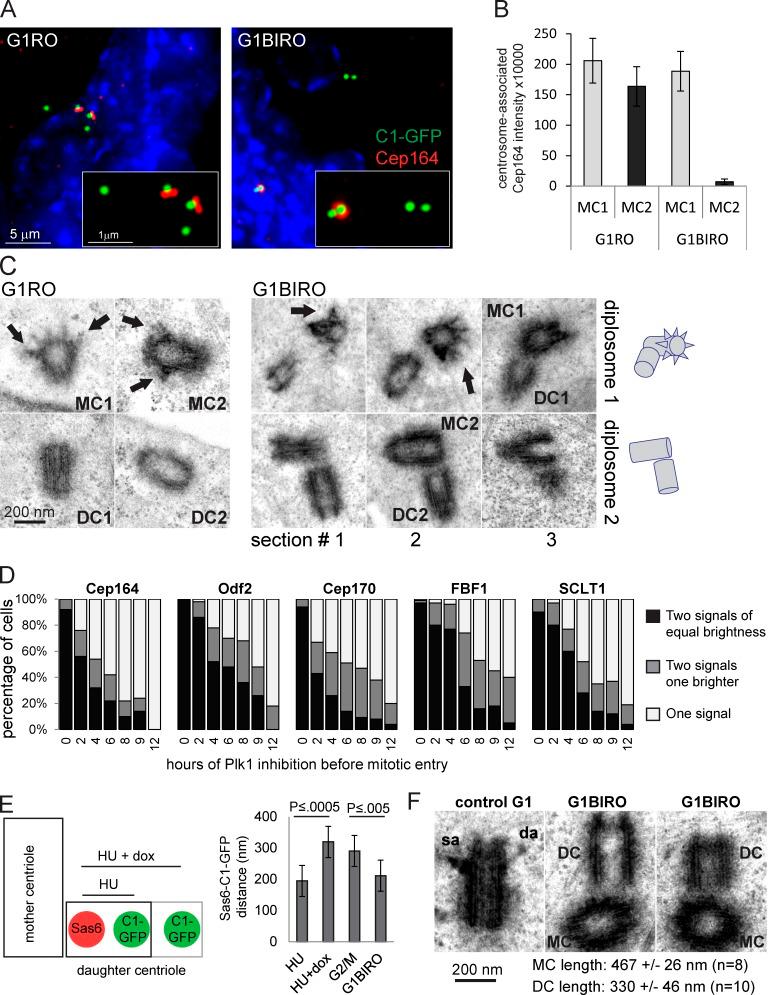
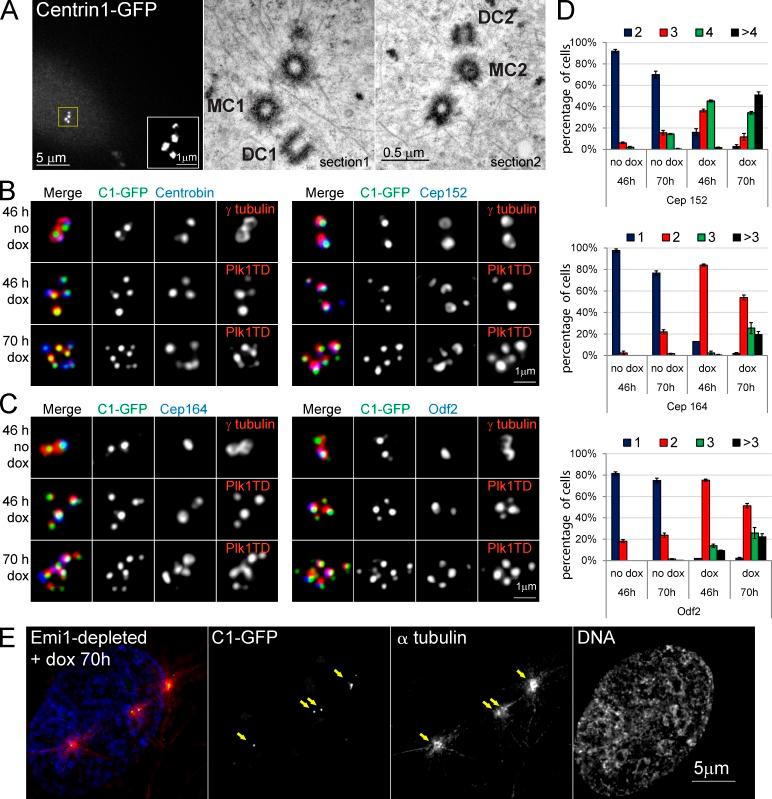
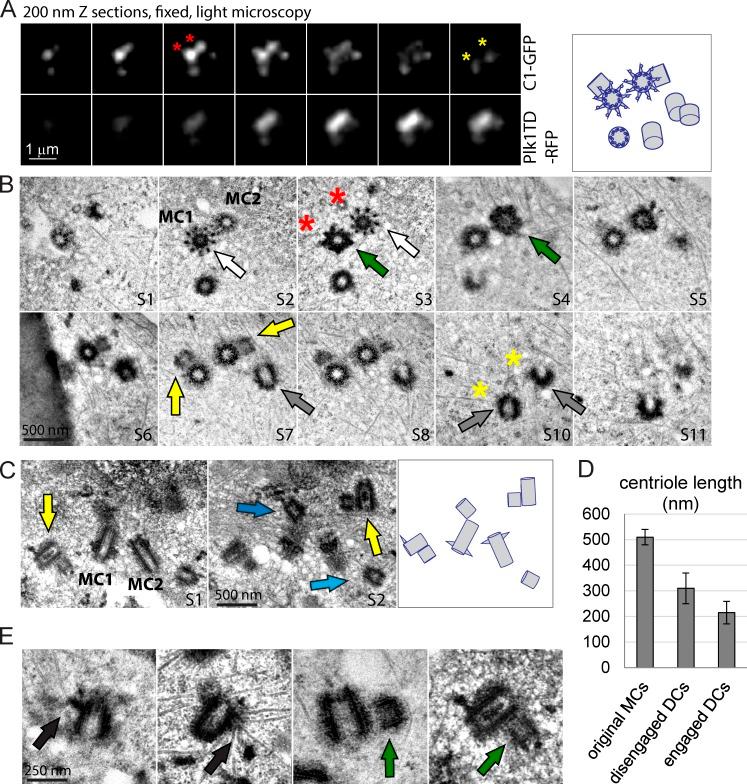
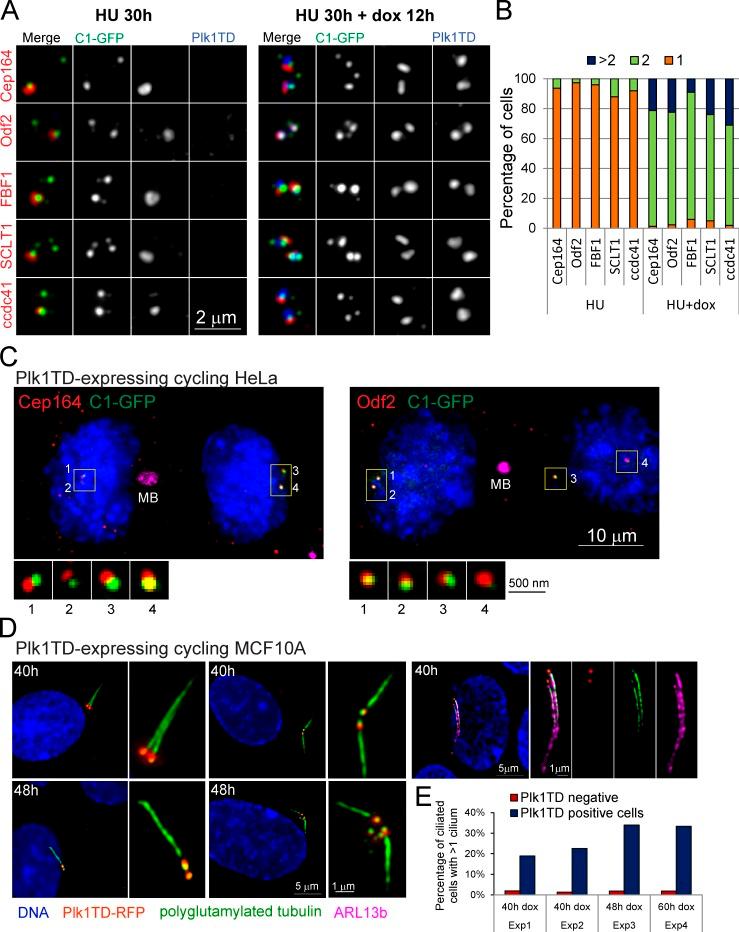
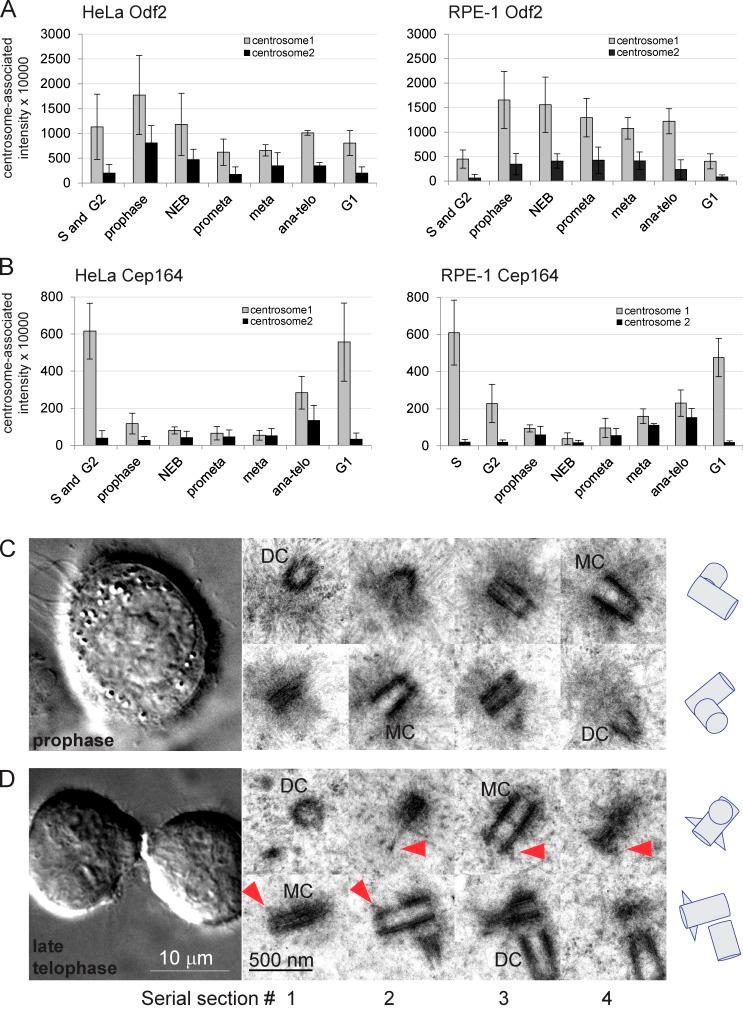
Newly formed centrioles in cycling cells undergo a maturation process that is almost two cell cycles long before they become competent to function as microtubule-organizing centers and basal bodies. As a result, each cell contains three generations of centrioles, only one of which is able to form cilia. It is not known how this long and complex process is regulated. We show that controlled Plk1 activity is required for gradual biochemical and structural maturation of the centrioles and timely appendage assembly. Inhibition of Plk1 impeded accumulation of appendage proteins and appendage formation. Unscheduled Plk1 activity, either in cycling or interphase-arrested cells, accelerated centriole maturation and appendage and cilia formation on the nascent centrioles, erasing the age difference between centrioles in one cell. These findings provide a new understanding of how the centriole cycle is regulated and how proper cilia and centrosome numbers are maintained in the cells.
处于细胞周期中的新生中心粒会经历一个成熟过程,这个过程长达近两个细胞周期,之后它们才能具备作为微管组织中心和基体发挥功能的能力。因此,每个细胞含有三代中心粒,其中只有一代能够形成纤毛。目前尚不清楚这个漫长而复杂的过程是如何被调控的。我们发现,中心粒的渐进性生化和结构成熟以及附属结构的及时组装需要受到控制的Plk1活性。抑制Plk1会阻碍附属蛋白的积累和附属结构的形成。在处于细胞周期或间期停滞的细胞中,Plk1的异常活性会加速新生中心粒的成熟以及附属结构和纤毛的形成,消除一个细胞中中心粒之间的年龄差异。这些发现为理解中心粒周期如何被调控以及细胞中如何维持适当的纤毛和中心体数量提供了新的认识。
 Zotero 插件