
印度尼西亚西苏拉威西省马穆朱区针对三种恶性疟原虫裂殖子抗原的抗体反应。
Antibody response against three Plasmodium falciparum merozoite antigens in Mamuju District, West Sulawesi Province, Indonesia.
作者信息
Sennang Nurhayana, Rogerson Stephen, Wahyuni Sitti, Yusuf Irawan, Syafruddin Din
机构信息
Department of Parasitology, Faculty of Medicine, Hasanuddin University, Makassar 90245, South Sulawesi, Indonesia.
出版信息
Malar J. 2014 Sep 25;13:381. doi: 10.1186/1475-2875-13-381.
BACKGROUND
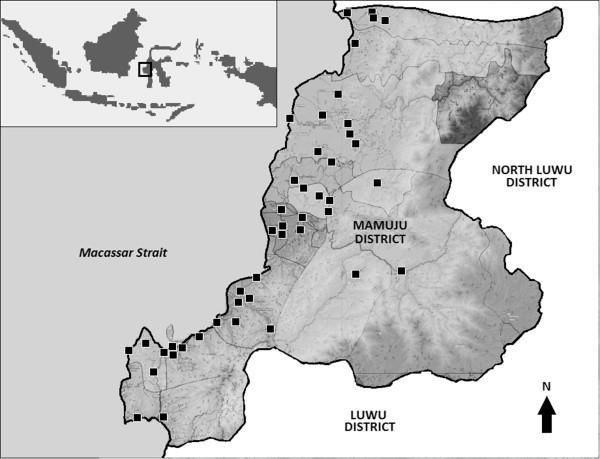
Malaria endemicity in the archipelago of Indonesia varies substantially across regions. Following the government's plan for a malaria elimination programme in Indonesia, baseline malaria surveys were conducted in Mamuju District, West Sulawesi Province, Indonesia to re-assess the malaria situation prior to the establishment of an evidence-based malaria elimination programme in the area. The present study aims to determine the antibody response to three merozoite antigens among the inhabitants of the district.
METHODS
Antibodies were measured following elution from filter-paper blood spots collected during cross-sectional surveys in the dry and wet season in 2010. Enzyme-linked immunosorbent assays using three merozoite antigens, MSP2, EBA175 and PfRh2a were conducted. A positivity threshold was determined by samples from unexposed individuals and the difference in antibody level against each antigen and correlation of antibody level in different age groups and seasons were statistically analysed.
RESULTS
A total of 497 subjects, 248 in dry and 249 in wet season, aged between 0.6 and 78 years were included. The prevalence of positive antibody responses to MSP2, EBA175 and PfRh2a antigens in dry season were 27.82, 27.42 and 25.81%, respectively. In wet season, the antibody prevalences were 64.26, 64.66 and 61.45%. The antibody levels to the three antigens were all higher in older age groups and also significantly higher in the wet season. The antibody levels also correlated positively with the Plasmodium falciparum infection status of the subjects.
CONCLUSION
MSP2, EBA175 and PfRh2a induce antibody responses among the subjects in Mamuju District, and the prevalence is significantly higher in wet season. The level of antibody also correlates significantly with age and malaria positivity. The overall results indicate the antigens might be used as a target for vaccines against P. falciparum infection and as markers for malaria exposure.
背景
印度尼西亚群岛各地区的疟疾流行程度差异很大。按照印度尼西亚政府的疟疾消除计划,在印度尼西亚西苏拉威西省马穆朱区开展了基线疟疾调查,以便在该地区建立基于证据的疟疾消除计划之前重新评估疟疾状况。本研究旨在确定该地区居民对三种裂殖子抗原的抗体反应。
方法
对2010年旱季和雨季横断面调查期间采集的滤纸血斑进行洗脱后测量抗体。使用三种裂殖子抗原,即MSP2、EBA175和PfRh2a进行酶联免疫吸附测定。通过未接触个体的样本确定阳性阈值,并对针对每种抗原的抗体水平差异以及不同年龄组和季节的抗体水平相关性进行统计分析。
结果
共纳入497名受试者,年龄在0.6至78岁之间,旱季248名,雨季249名。旱季对MSP2、EBA175和PfRh2a抗原的阳性抗体反应患病率分别为27.82%、27.42%和25.81%。雨季的抗体患病率分别为64.26%、64.66%和61.45%。三个年龄组对这三种抗原的抗体水平均较高,且在雨季也显著更高。抗体水平还与受试者的恶性疟原虫感染状况呈正相关。
结论
MSP2、EBA175和PfRh2a在马穆朱区受试者中诱导抗体反应,且雨季患病率显著更高。抗体水平也与年龄和疟疾阳性率显著相关。总体结果表明,这些抗原可能用作抗恶性疟原虫感染疫苗的靶点以及疟疾暴露的标志物。
 Zotero 插件