
雌激素受体β1:雌激素受体α阳性和阴性乳腺癌的特征、预后及治疗策略评估
ERβ1: characterization, prognosis, and evaluation of treatment strategies in ERα-positive and -negative breast cancer.
作者信息
Reese Jordan M, Suman Vera J, Subramaniam Malayannan, Wu Xianglin, Negron Vivian, Gingery Anne, Pitel Kevin S, Shah Sejal S, Cunliffe Heather E, McCullough Ann E, Pockaj Barbara A, Couch Fergus J, Olson Janet E, Reynolds Carol, Lingle Wilma L, Spelsberg Thomas C, Goetz Matthew P, Ingle James N, Hawse John R
机构信息
Department of Biochemistry and Molecular Biology, Mayo Clinic, 16-01B Guggenheim Building, 200 First St, SW, Rochester, MN 55905, USA.
出版信息
BMC Cancer. 2014 Oct 7;14:749. doi: 10.1186/1471-2407-14-749.
BACKGROUND
The role and clinical value of ERβ1 expression is controversial and recent data demonstrates that many ERβ antibodies are insensitive and/or non-specific. Therefore, we sought to comprehensively characterize ERβ1 expression across all sub-types of breast cancer using a validated antibody and determine the roles of this receptor in mediating response to multiple forms of endocrine therapy both in the presence and absence of ERα expression.
METHODS
Nuclear and cytoplasmic expression patterns of ERβ1 were analyzed in three patient cohorts, including a retrospective analysis of a prospective adjuvant tamoxifen study and a triple negative breast cancer cohort. To investigate the utility of therapeutically targeting ERβ1, we generated multiple ERβ1 expressing cell model systems and determined their proliferative responses following anti-estrogenic or ERβ-specific agonist exposure.
RESULTS
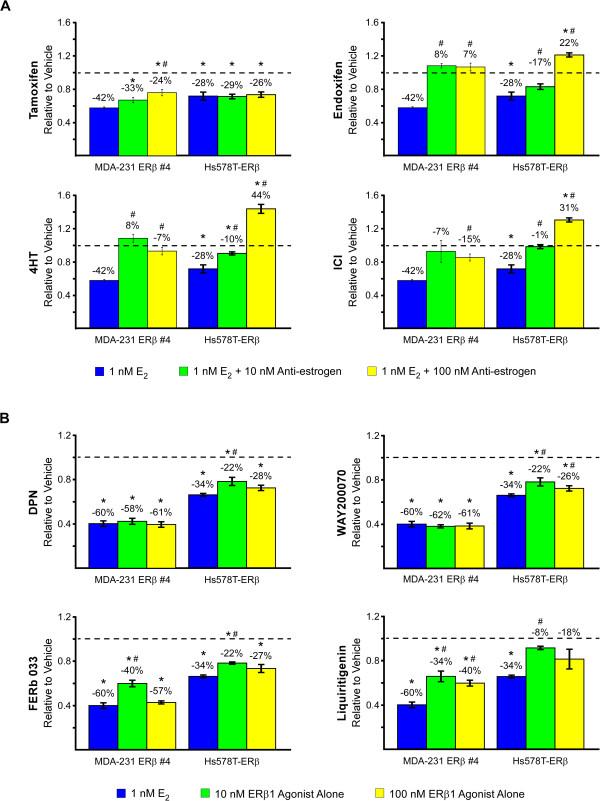
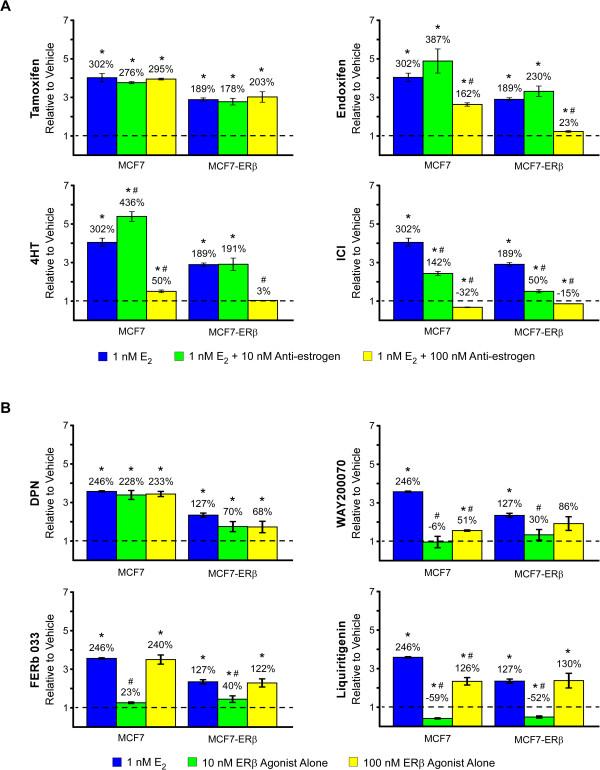
Nuclear ERβ1 was shown to be expressed across all major sub-types of breast cancer, including 25% of triple negative breast cancers and 33% of ER-positive tumors, and was associated with significantly improved outcomes in ERα-positive tamoxifen-treated patients. In agreement with these observations, ERβ1 expression sensitized ERα-positive breast cancer cells to the anti-cancer effects of selective estrogen receptor modulators (SERMs). However, in the absence of ERα expression, ERβ-specific agonists potently inhibited cell proliferation rates while anti-estrogenic therapies were ineffective.
CONCLUSIONS
Using a validated antibody, we have confirmed that nuclear ERβ1 expression is commonly present in breast cancer and is prognostic in tamoxifen-treated patients. Using multiple breast cancer cell lines, ERβ appears to be a novel therapeutic target. However, the efficacy of SERMs and ERβ-specific agonists differ as a function of ERα expression.
背景
雌激素受体β1(ERβ1)表达的作用和临床价值存在争议,近期数据表明许多ERβ抗体不敏感和/或非特异性。因此,我们试图使用一种经过验证的抗体全面表征所有乳腺癌亚型中ERβ1的表达情况,并确定该受体在介导多种内分泌治疗反应中的作用,无论是否存在ERα表达。
方法
在三个患者队列中分析了ERβ1的核和细胞质表达模式,包括对一项前瞻性辅助他莫昔芬研究和一个三阴性乳腺癌队列的回顾性分析。为了研究靶向ERβ1治疗的效用,我们构建了多个表达ERβ1的细胞模型系统,并确定了它们在抗雌激素或ERβ特异性激动剂作用后的增殖反应。
结果
核ERβ1在所有主要乳腺癌亚型中均有表达,包括25%的三阴性乳腺癌和33%的ER阳性肿瘤,并且与ERα阳性他莫昔芬治疗患者的显著改善的预后相关。与这些观察结果一致,ERβ1表达使ERα阳性乳腺癌细胞对选择性雌激素受体调节剂(SERM)的抗癌作用敏感。然而,在没有ERα表达的情况下,ERβ特异性激动剂可有效抑制细胞增殖率,而抗雌激素疗法无效。
结论
使用经过验证的抗体,我们证实核ERβ1表达在乳腺癌中普遍存在,并且在他莫昔芬治疗的患者中具有预后价值。使用多个乳腺癌细胞系,ERβ似乎是一个新的治疗靶点。然而,SERM和ERβ特异性激动剂的疗效因ERα表达情况而异。


 Zotero 插件