
单体GTP结合蛋白在酿酒酵母巨自噬中的作用。
The roles of monomeric GTP-binding proteins in macroautophagy in Saccharomyces cerevisiae.
作者信息
Yang Shu, Rosenwald Anne G
机构信息
Department of Biology, Georgetown University, Washington, DC 20057, USA.
出版信息
Int J Mol Sci. 2014 Oct 9;15(10):18084-101. doi: 10.3390/ijms151018084.
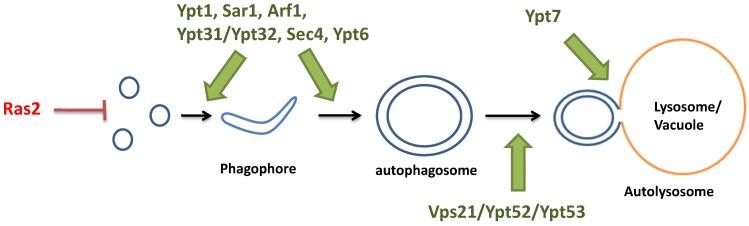
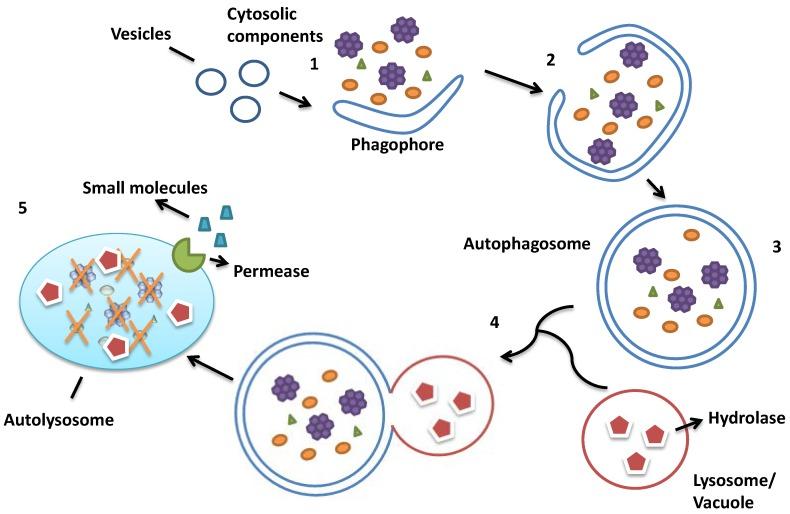
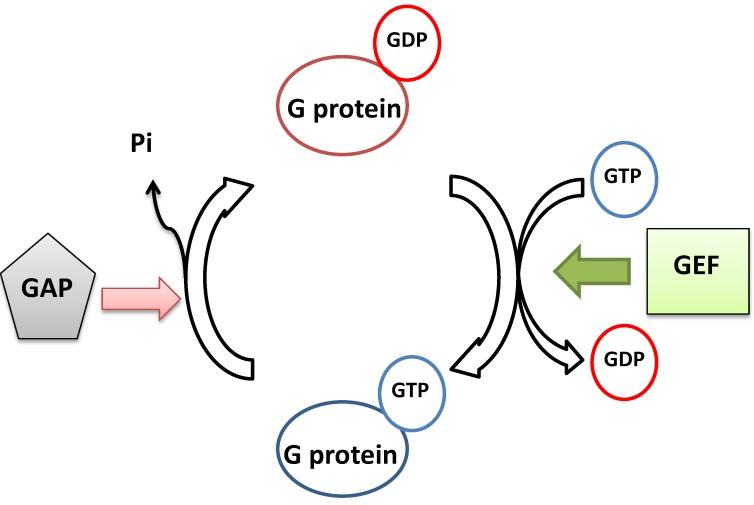
Autophagy is a cellular degradation process that sequesters components into a double-membrane structure called the autophagosome, which then fuses with the lysosome or vacuole for hydrolysis and recycling of building blocks. Bulk phase autophagy, also known as macroautophagy, controlled by specific Atg proteins, can be triggered by a variety of stresses, including starvation. Because autophagy relies extensively on membrane traffic to form the membranous structures, factors that control membrane traffic are essential for autophagy. Among these factors, the monomeric GTP-binding proteins that cycle between active and inactive conformations form an important group. In this review, we summarize the functions of the monomeric GTP-binding proteins in autophagy, especially with reference to experiments in Saccharomyces cerevisiae.
自噬是一种细胞降解过程,它将成分隔离到一种称为自噬体的双膜结构中,然后自噬体与溶酶体或液泡融合,进行水解和构建模块的循环利用。巨自噬,也称为大自噬,由特定的自噬相关蛋白(Atg蛋白)控制,可由包括饥饿在内的多种应激触发。由于自噬广泛依赖膜运输来形成膜结构,因此控制膜运输的因子对自噬至关重要。在这些因子中,在活性和非活性构象之间循环的单体GTP结合蛋白形成了一个重要的类别。在本综述中,我们总结了单体GTP结合蛋白在自噬中的功能,特别是参考了酿酒酵母中的实验。



 Zotero 插件