
预防性地塞米松对甲状腺切除术后恶心呕吐的影响:一项系统评价和荟萃分析。
The impact of prophylactic dexamethasone on nausea and vomiting after thyroidectomy: a systematic review and meta-analysis.
作者信息
Zou Zhenhong, Jiang Yuming, Xiao Mingjia, Zhou Ruiyao
机构信息
Department of General Surgery, Nanfang Hospital, Southern Medical University, Guangzhou City, Guangdong Province, China.
Department of Hepatobiliary Surgery, Wuxi People's Hospital of Nanjing Medical University, Wuxi, Jiangsu Province, China.
出版信息
PLoS One. 2014 Oct 16;9(10):e109582. doi: 10.1371/journal.pone.0109582. eCollection 2014.
BACKGROUND
We carried out a systematic review and meta-analysis to evaluate the impact of prophylactic dexamethasone on post-operative nausea and vomiting (PONV), post-operative pain, and complications in patients undergoing thyroidectomy.
METHODS
We searched Pubmed, Embase, and Cochrane Library databases for randomized controlled trials (RCTs) that evaluated the prophylactic effect of dexamethasone versus placebo with or without other antiemetics for PONV in patients undergoing thyroidectomy. Meta-analyses were performed using RevMan 5.0 software.
RESULTS
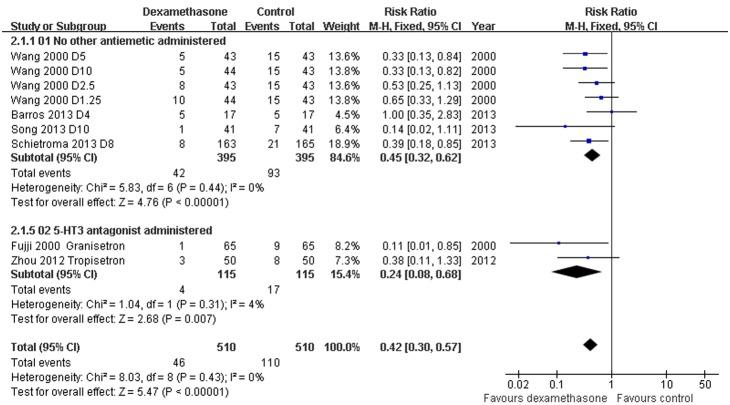
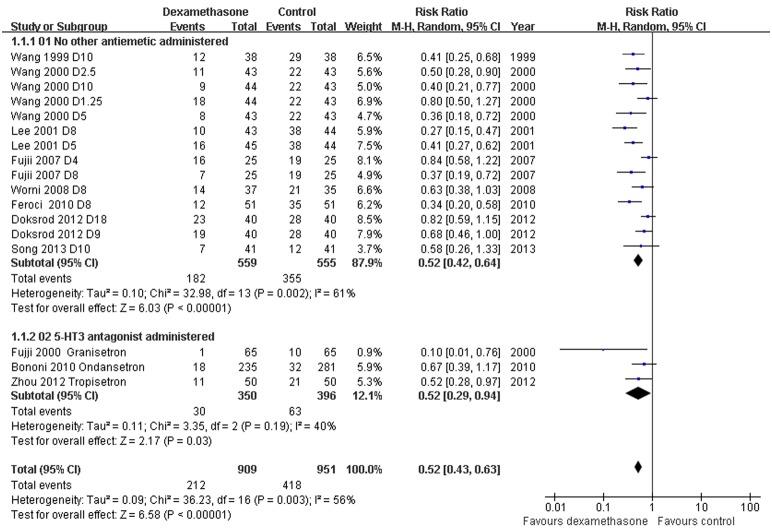
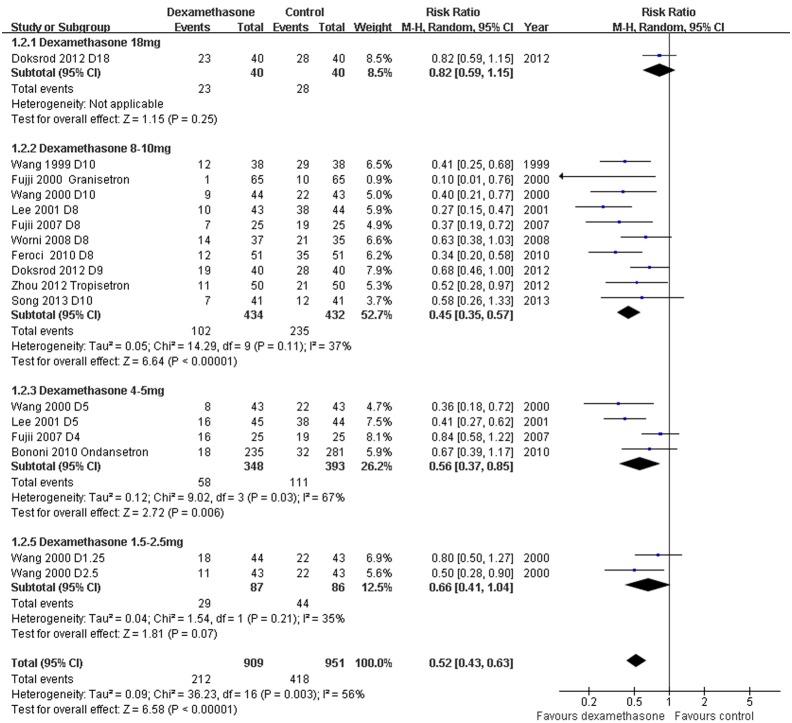
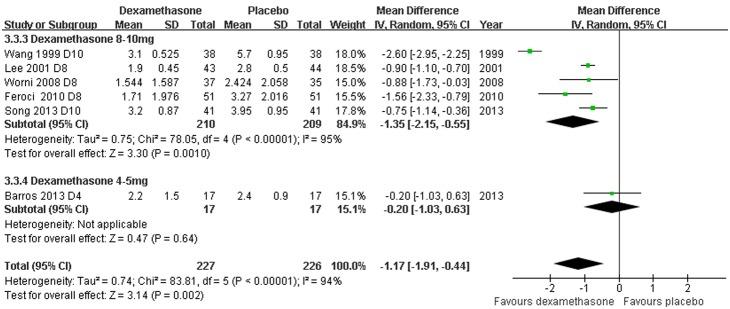
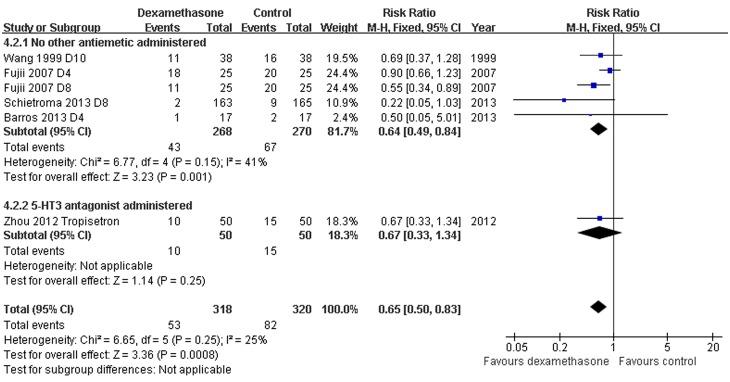
Thirteen RCTs that considered high quality evidence including 2,180 patients were analyzed. The meta-analysis demonstrated a significant decrease in the incidence of PONV (RR 0.52, 95% CI 0.43 to 0.63, P < 0.00001), the need for rescue anti-emetics (RR 0.42, 95% CI 0.30 to 0.57, P<0.00001), post-operative pain scores (WMD -1.17, 95% CI -1.91 to -0.44, P = 0.002), and the need for rescue analgesics (RR 0.65, 95% CI 0.50-0.83, P = 0.0008) in patients receiving dexamethasone compared to placebo, with or without concomitant antiemetics. Dexamethasone 8-10mg had a significantly greater effect for reducing the incidence of PONV than dexamethasone 1.25-5mg. Dexamethasone was as effective as other anti-emetics for reducing PONV (RR 1.25, 95% CI 0.86-1.81, P = 0.24). A significantly higher level of blood glucose during the immediate post-operative period in patients receiving dexamethasone compared to controls was the only adverse event.
CONCLUSIONS
Prophylactic dexamethasone 8-10mg administered intravenously before induction of anesthesia should be recommended as a safe and effective strategy for reducing the incidence of PONV, the need for rescue anti-emetics, post-operative pain, and the need for rescue analgesia in thyroidectomy patients, except those that are pregnant, have diabetes mellitus, hyperglycemia, or contraindications for dexamethasone. More high quality trials are warranted to define the benefits and risks of prophylactic dexamethasone in potential patients with a high risk for PONV.
背景
我们进行了一项系统评价和荟萃分析,以评估预防性使用地塞米松对甲状腺切除术后恶心呕吐(PONV)、术后疼痛及并发症的影响。
方法
我们在PubMed、Embase和Cochrane图书馆数据库中检索了随机对照试验(RCT),这些试验评估了地塞米松与安慰剂相比,在有或没有其他止吐药的情况下对甲状腺切除患者PONV的预防效果。使用RevMan 5.0软件进行荟萃分析。
结果
分析了13项纳入高质量证据的RCT,共2180例患者。荟萃分析表明,与安慰剂相比,无论是否同时使用止吐药,接受地塞米松治疗的患者PONV发生率显著降低(RR 0.52,95%CI 0.43至0.63,P<0.00001),使用补救性止吐药的需求降低(RR 0.42,95%CI 0.30至0.57,P<0.00001),术后疼痛评分降低(WMD -1.17,95%CI -1.91至-0.44,P = 0.002),以及使用补救性镇痛药的需求降低(RR 0.65,95%CI 0.50 - 0.83,P = 0.0008)。8 - 10mg地塞米松在降低PONV发生率方面的效果显著优于1.25 - 5mg地塞米松。地塞米松在降低PONV方面与其他止吐药效果相当(RR 1.25,95%CI 0.86 - 1.81,P = 0.24)。与对照组相比,接受地塞米松治疗的患者术后即刻血糖水平显著升高是唯一的不良事件。
结论
对于甲状腺切除患者,除孕妇、糖尿病患者、高血糖患者或有地塞米松禁忌证者外,建议在麻醉诱导前静脉注射8 - 10mg预防性地塞米松,作为降低PONV发生率、补救性止吐药使用需求、术后疼痛及补救性镇痛需求的安全有效策略。需要更多高质量试验来明确预防性地塞米松在PONV高风险潜在患者中的益处和风险。


 Zotero 插件