
利用高通量测序和降解组分析鉴定和表征茶树(Camellia sinensis)中的冷响应微小RNA及其靶标
Identification and characterization of cold-responsive microRNAs in tea plant (Camellia sinensis) and their targets using high-throughput sequencing and degradome analysis.
作者信息
Zhang Yue, Zhu Xujun, Chen Xuan, Song Changnian, Zou Zhongwei, Wang Yuhua, Wang Mingle, Fang Wanping, Li Xinghui
出版信息
BMC Plant Biol. 2014 Oct 21;14:271. doi: 10.1186/s12870-014-0271-x.
BACKGROUND
MicroRNAs (miRNAs) are approximately 19 ~ 21 nucleotide noncoding RNAs produced by Dicer-catalyzed excision from stem-loop precursors. Many plant miRNAs have critical functions in development, nutrient homeostasis, abiotic stress responses, and pathogen responses via interaction with specific target mRNAs. Camellia sinensis is one of the most important commercial beverage crops in the world. However, miRNAs associated with cold stress tolerance in C. sinensis remains unexplored. The use of high-throughput sequencing can provide a much deeper understanding of miRNAs. To obtain more insight into the function of miRNAs in cold stress tolerance, Illumina sequencing of C. sinensis sRNA was conducted.
RESULT
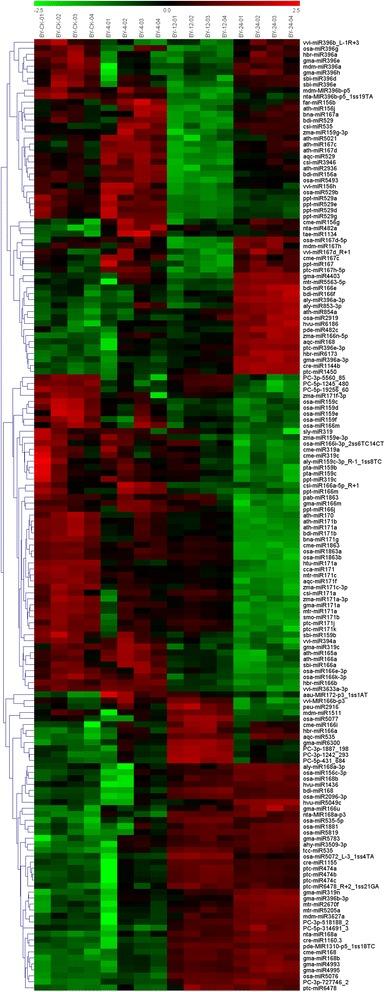
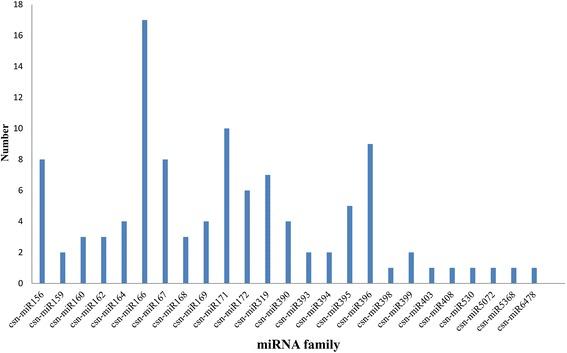
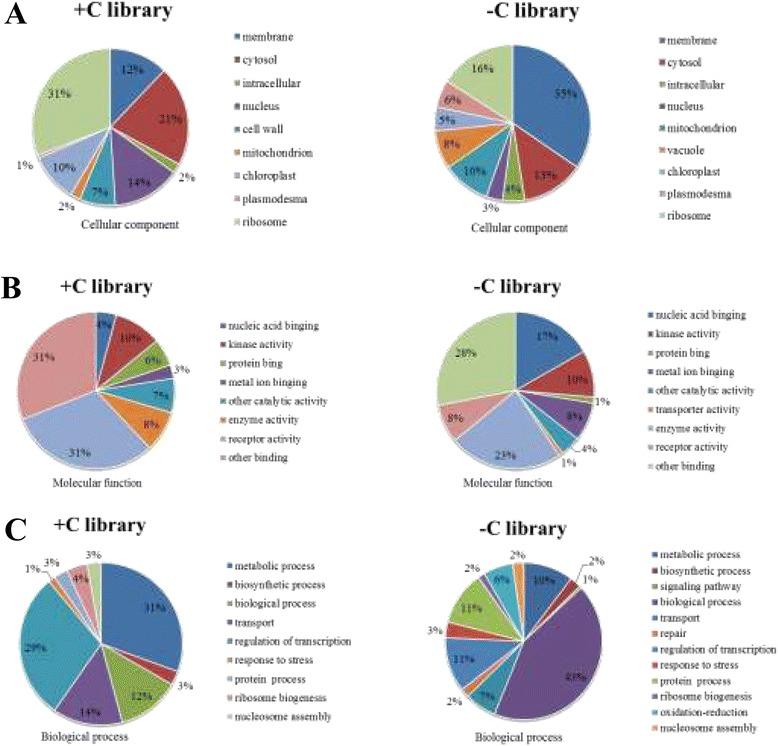
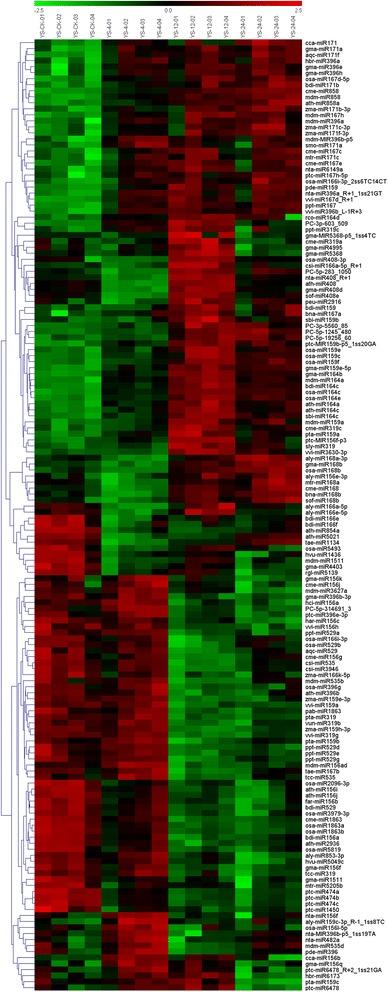
Solexa sequencing technology was used for high-throughput sequencing of the small RNA library from the cold treatment of tea leaves. To align the sequencing data with known plant miRNAs, we characterized 106 conserved C. sinensis miRNAs. In addition, 215 potential candidate miRNAs were found, among, which 98 candidates with star sequences were chosen as novel miRNAs. Both congruously and differentially regulated miRNAs were obtained, and cultivar-specific miRNAs were identified by microarray-based hybridization in response to cold stress. The results were also confirmed by quantitative real-time polymerase chain reaction. To confirm the targets of miRNAs, two degradome libraries from two treatments were constructed. According to degradome sequencing, 455 and 591 genes were identified as cleavage targets of miRNAs from cold treatments and control libraries, respectively, and 283 targets were present in both libraries. Functional analysis of these miRNA targets indicated their involvement in important activities, such as development, regulation of transcription, and stress response.
CONCLUSIONS
We discovered 31 up-regulated miRNAs and 43 down-regulated miRNAs in 'Yingshuang', and 46 up-regulated miRNA and 45 down-regulated miRNAs in 'Baiye 1' in response to cold stress, respectively. A total of 763 related target genes were detected by degradome sequencing. The RLM-5'RACE procedure was successfully used to map the cleavage sites in six target genes of C. sinensis. These findings reveal important information about the regulatory mechanism of miRNAs in C. sinensis, and promote the understanding of miRNA functions during the cold response. The miRNA genotype-specific expression model might explain the distinct cold sensitivities between tea lines.
背景
微小RNA(miRNA)是由Dicer催化从茎环前体切除产生的约19至21个核苷酸的非编码RNA。许多植物miRNA通过与特定靶mRNA相互作用,在发育、营养稳态、非生物胁迫响应和病原体响应中发挥关键作用。茶树是世界上最重要的商业饮料作物之一。然而,与茶树耐冷性相关的miRNA仍未被探索。高通量测序的应用可以更深入地了解miRNA。为了更深入了解miRNA在耐冷性中的功能,对茶树小RNA进行了Illumina测序。
结果
采用Solexa测序技术对经冷处理的茶叶小RNA文库进行高通量测序。为了将测序数据与已知植物miRNA进行比对,我们鉴定了106个保守的茶树miRNA。此外,还发现了215个潜在的候选miRNA,其中98个带有星序列的候选miRNA被选为新的miRNA。获得了共表达和差异表达的miRNA,并通过基于微阵列的杂交鉴定了响应冷胁迫的品种特异性miRNA。结果也通过定量实时聚合酶链反应得到证实。为了确认miRNA的靶标,构建了来自两种处理的两个降解组文库。根据降解组测序,分别从冷处理文库和对照文库中鉴定出455个和591个基因作为miRNA的切割靶标,两个文库中共有283个靶标。对这些miRNA靶标的功能分析表明它们参与了重要活动,如发育、转录调控和胁迫响应。
结论
我们分别在‘迎霜’中发现31个上调的miRNA和43个下调的miRNA,在‘白叶1号’中发现46个上调的miRNA和45个下调的miRNA响应冷胁迫。通过降解组测序共检测到763个相关靶基因。RLM-5'RACE程序成功用于定位茶树六个靶基因中的切割位点。这些发现揭示了关于茶树中miRNA调控机制的重要信息,并促进了对冷响应过程中miRNA功能的理解。miRNA基因型特异性表达模型可能解释了茶系之间不同的冷敏感性。



 Zotero 插件