
肾小球疾病中可溶性尿激酶型纤溶酶原激活物受体的重新评估
A reassessment of soluble urokinase-type plasminogen activator receptor in glomerular disease.
作者信息
Spinale Joann M, Mariani Laura H, Kapoor Shiv, Zhang Jidong, Weyant Robert, Song Peter X, Wong Hetty N, Troost Jonathan P, Gadegbeku Crystal A, Gipson Debbie S, Kretzler Matthias, Nihalani Deepak, Holzman Lawrence B
机构信息
Division of Nephrology, The Children's Hospital of Philadelphia, Philadelphia, Pennsylvania, USA.
1] Arbor Research for Collaborative for Health, Ann Arbor, Michigan, USA [2] Division of Nephrology, University of Michigan School of Medicine, Ann Arbor, Michigan, USA.
出版信息
Kidney Int. 2015 Mar;87(3):564-74. doi: 10.1038/ki.2014.346. Epub 2014 Oct 29.
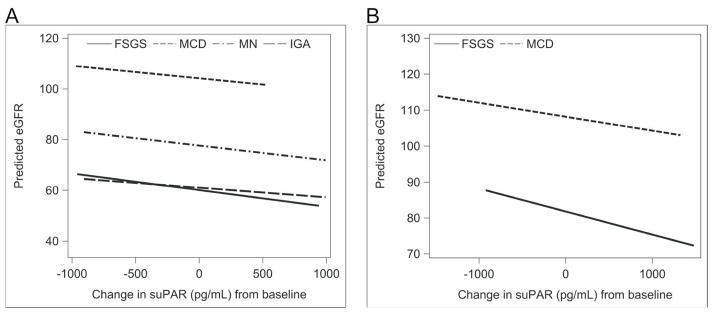
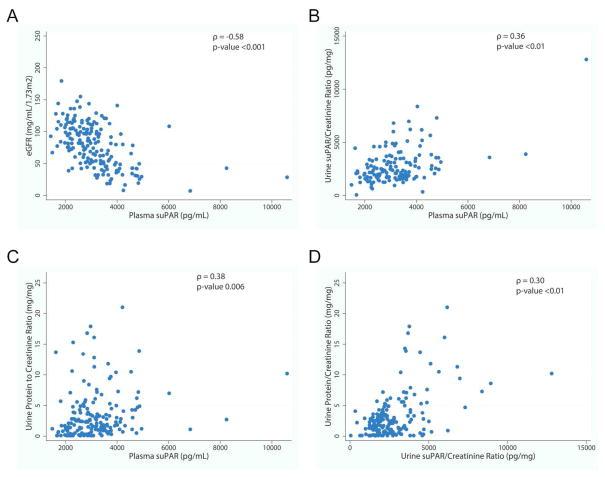
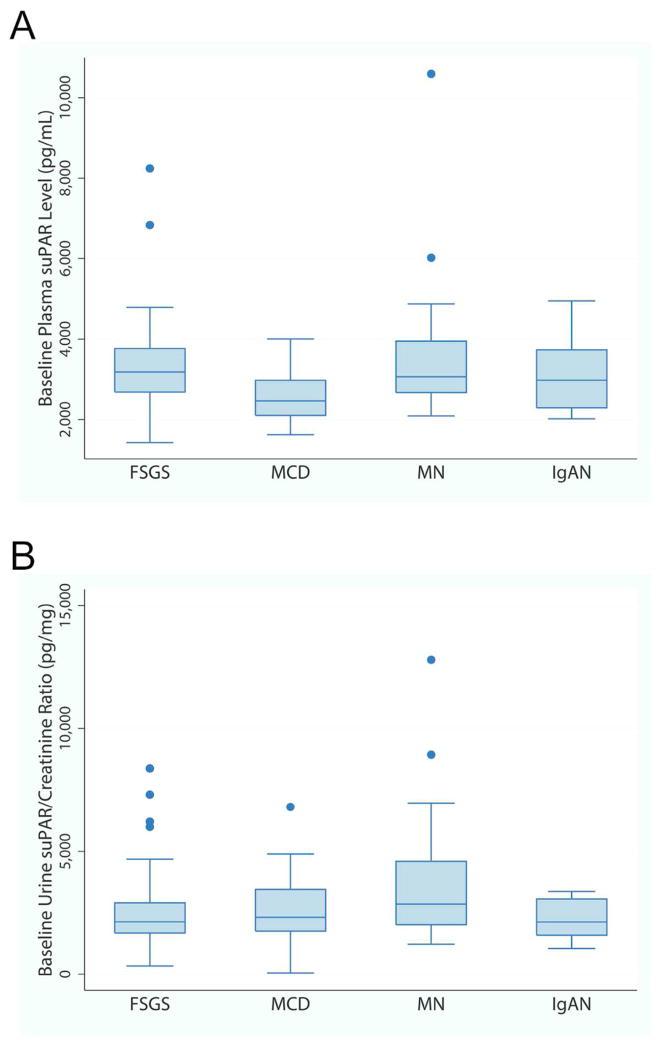
It has been suggested that soluble urokinase receptor (suPAR) is a causative circulating factor for and a biomarker of focal and segmental glomerulosclerosis (FSGS). Here we undertook validation of these assumptions in both mouse and human models. Injection of recombinant suPAR in wild-type mice did not induce proteinuria within 24 h. Moreover, a disease phenotype was not seen in an inducible transgenic mouse model that maintained elevated suPAR concentrations for 6 weeks. Plasma and urine suPAR concentrations were evaluated as clinical biomarkers in 241 patients with glomerular disease from the prospective, longitudinal multicenter observational NEPTUNE cohort. The serum suPAR concentration at baseline inversely correlated with estimated glomerular filtration rate (eGFR) and the urine suPAR/creatinine ratio positively correlated with the urine protein/creatinine ratio. After adjusting for eGFR and urine protein, neither the serum nor urine suPAR level was an independent predictor of FSGS histopathology. A multivariable mixed-effects model of longitudinal data evaluated the association between the change in serum suPAR concentration from baseline with eGFR. After adjusting for baseline suPAR concentration, age, gender, proteinuria, and time, the change in suPAR from baseline was associated with eGFR, but this association was not different for patients with FSGS as compared with other diagnoses. Thus these results do not support a pathological role for suPAR in FSGS.
有人提出可溶性尿激酶受体(suPAR)是局灶节段性肾小球硬化(FSGS)的致病循环因子和生物标志物。在此,我们在小鼠和人类模型中对这些假设进行了验证。在野生型小鼠中注射重组suPAR在24小时内未诱导蛋白尿。此外,在一个可诱导的转基因小鼠模型中,该模型维持suPAR浓度升高6周,未观察到疾病表型。在来自前瞻性、纵向多中心观察性NEPTUNE队列的241例肾小球疾病患者中,评估血浆和尿液suPAR浓度作为临床生物标志物。基线时血清suPAR浓度与估计肾小球滤过率(eGFR)呈负相关,尿液suPAR/肌酐比值与尿蛋白/肌酐比值呈正相关。在调整eGFR和尿蛋白后,血清和尿液suPAR水平均不是FSGS组织病理学的独立预测指标。纵向数据的多变量混合效应模型评估了血清suPAR浓度相对于基线的变化与eGFR之间的关联。在调整基线suPAR浓度、年龄、性别、蛋白尿和时间后,相对于基线的suPAR变化与eGFR相关,但与其他诊断的患者相比,FSGS患者的这种关联并无差异。因此,这些结果不支持suPAR在FSGS中的病理作用。


 Zotero 插件