
抗真菌免疫中的模式识别受体
Pattern recognition receptors in antifungal immunity.
作者信息
Plato Anthony, Hardison Sarah E, Brown Gordon D
机构信息
Division of Applied Medicine Immunity, Infection and Inflammation Programme Room 4.20, Institute of Medical Sciences, Ashgrove Road West University of Aberdeen, Aberdeen, AB25 2ZD, UK.
出版信息
Semin Immunopathol. 2015 Mar;37(2):97-106. doi: 10.1007/s00281-014-0462-4. Epub 2014 Nov 25.
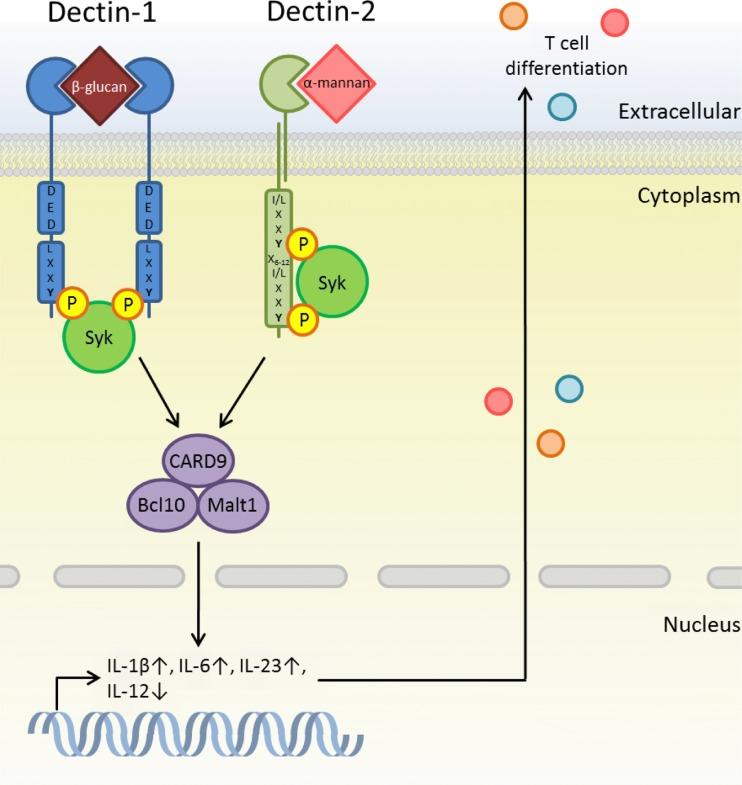
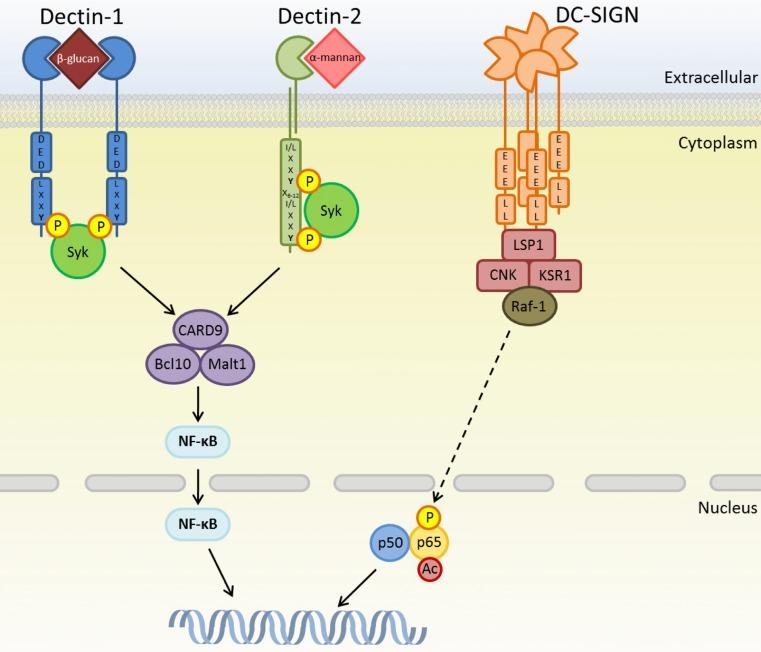
Receptors of the innate immune system are the first line of defence against infection, being able to recognise and initiate an inflammatory response to invading microorganisms. The Toll-like (TLR), NOD-like (NLR), RIG-I-like (RLR) and C-type lectin-like receptors (CLR) are four receptor families that contribute to the recognition of a vast range of species, including fungi. Many of these pattern recognition receptors (PRRs) are able to initiate innate immunity and polarise adaptive responses upon the recognition of fungal cell wall components and other conserved molecular patterns, including fungal nucleic acids. These receptors induce effective mechanisms of fungal clearance in normal hosts, but medical interventions, immunosuppression or genetic predisposition can lead to susceptibility to fungal infections. In this review, we highlight the importance of PRRs in fungal infection, specifically CLRs, which are the major PRR involved. We will describe specific PRRs in detail, the importance of receptor collaboration in fungal recognition and clearance, and describe how genetic aberrations in PRRs can contribute to disease pathology.
先天免疫系统的受体是抵御感染的第一道防线,能够识别入侵的微生物并启动炎症反应。Toll样受体(TLR)、NOD样受体(NLR)、RIG-I样受体(RLR)和C型凝集素样受体(CLR)是四个有助于识别包括真菌在内的多种物种的受体家族。这些模式识别受体(PRR)中的许多在识别真菌细胞壁成分和其他保守分子模式(包括真菌核酸)后,能够启动先天免疫并使适应性反应极化。这些受体在正常宿主中诱导有效的真菌清除机制,但医疗干预、免疫抑制或遗传易感性可导致真菌感染易感性。在本综述中,我们强调PRR在真菌感染中的重要性,特别是CLR,它是主要涉及的PRR。我们将详细描述特定的PRR、受体协作在真菌识别和清除中的重要性,并描述PRR中的基因畸变如何导致疾病病理。

 Zotero 插件