
寡型分析揭示了弧菌属种水平的生境选择。
Oligotyping reveals community level habitat selection within the genus Vibrio.
机构信息
Marine Biological Laboratory, Josephine Bay Paul Center for Comparative Molecular Biology and Evolution Woods Hole, MA, USA ; Department of Ecology and Evolutionary Biology, Brown University Providence, RI, USA.
Marine Biological Laboratory, Josephine Bay Paul Center for Comparative Molecular Biology and Evolution Woods Hole, MA, USA.
出版信息
Front Microbiol. 2014 Nov 13;5:563. doi: 10.3389/fmicb.2014.00563. eCollection 2014.
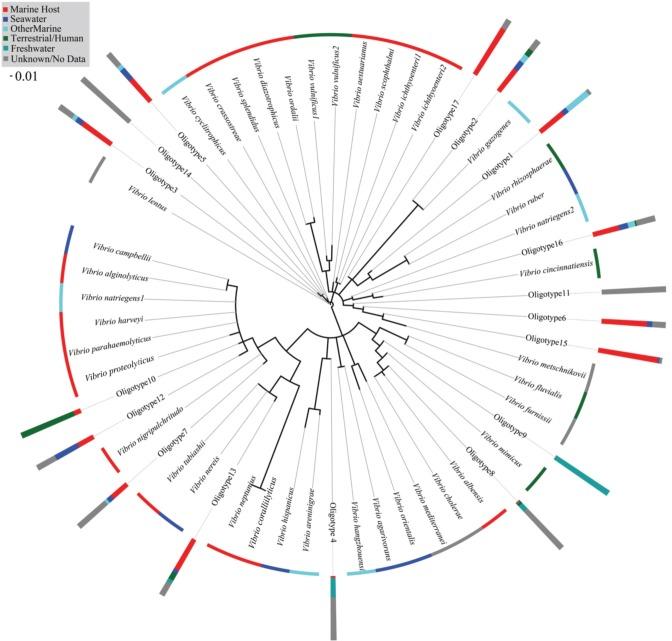
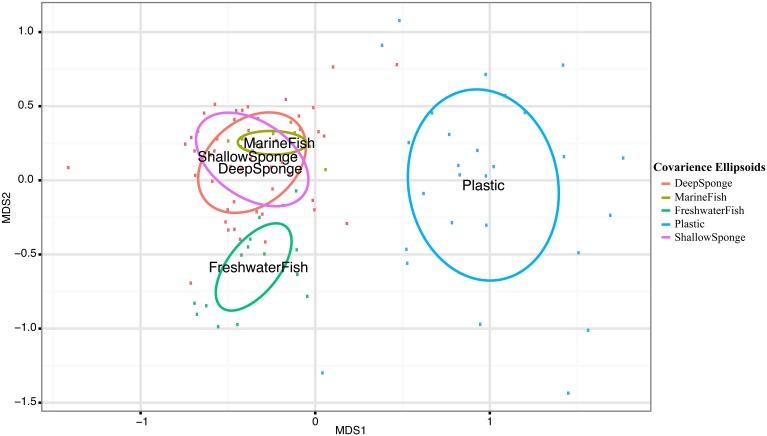
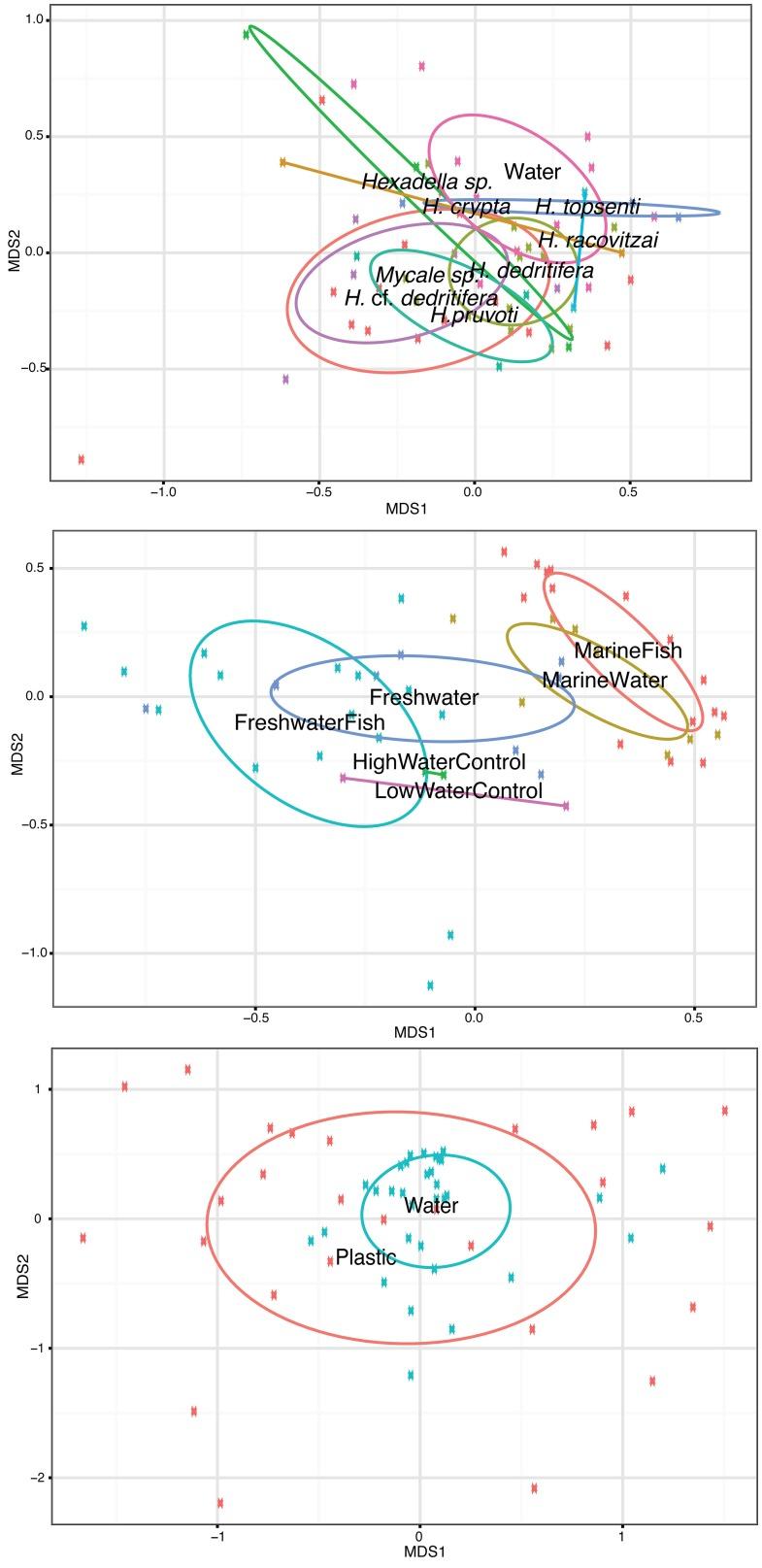
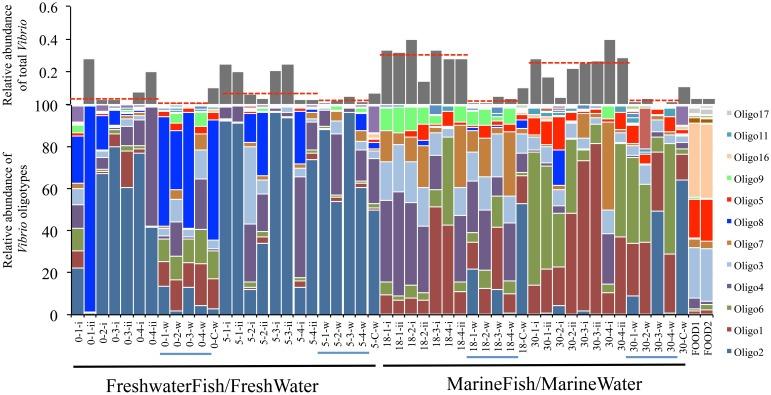
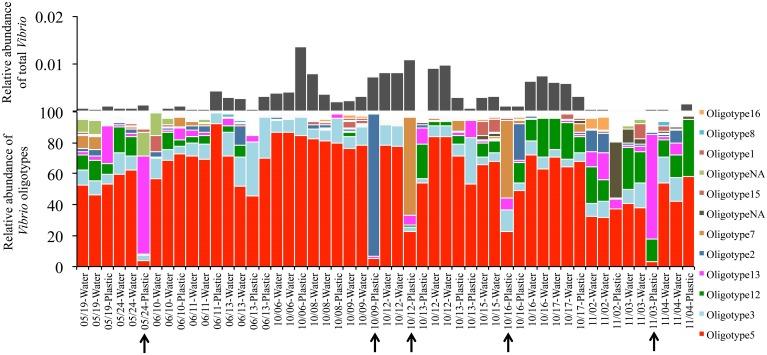
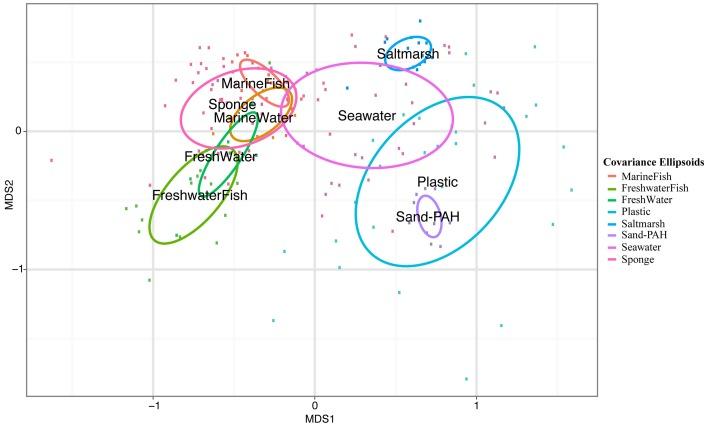
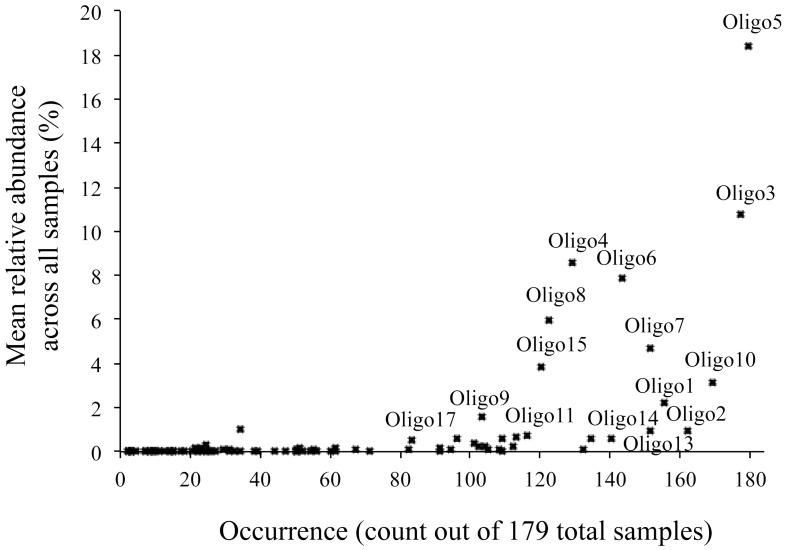
The genus Vibrio is a metabolically diverse group of facultative anaerobic bacteria, common in aquatic environments and marine hosts. The genus contains several species of importance to human health and aquaculture, including the causative agents of human cholera and fish vibriosis. Vibrios display a wide variety of known life histories, from opportunistic pathogens to long-standing symbionts with individual host species. Studying Vibrio ecology has been challenging as individual species often display a wide range of habitat preferences, and groups of vibrios can act as socially cohesive groups. Although strong associations with salinity, temperature and other environmental variables have been established, the degree of habitat or host specificity at both the individual and community levels is unknown. Here we use oligotyping analyses in combination with a large collection of existing Vibrio 16S ribosomal RNA (rRNA) gene sequence data to reveal patterns of Vibrio ecology across a wide range of environmental, host, and abiotic substrate associated habitats. Our data show that individual taxa often display a wide range of habitat preferences yet tend to be highly abundant in either substrate-associated or free-living environments. Our analyses show that Vibrio communities share considerable overlap between two distinct hosts (i.e., sponge and fish), yet are distinct from the abiotic plastic substrates. Lastly, evidence for habitat specificity at the community level exists in some habitats, despite considerable stochasticity in others. In addition to providing insights into Vibrio ecology across a broad range of habitats, our study shows the utility of oligotyping as a facile, high-throughput and unbiased method for large-scale analyses of publically available sequence data repositories and suggests its wide application could greatly extend the range of possibilities to explore microbial ecology.
弧菌属是一群代谢多样的兼性厌氧菌,常见于水生环境和海洋宿主中。该属包含几种对人类健康和水产养殖至关重要的物种,包括人类霍乱和鱼类弧菌病的病原体。弧菌表现出各种各样的已知生活史,从机会性病原体到与单个宿主物种长期共生的共生体。研究弧菌生态学具有挑战性,因为单个物种通常表现出广泛的栖息地偏好,并且弧菌群体可以作为具有社会凝聚力的群体。尽管已经确定了与盐度、温度和其他环境变量的强烈关联,但在个体和社区水平上的栖息地或宿主特异性的程度尚不清楚。在这里,我们使用寡型分析结合大量现有的弧菌 16S 核糖体 RNA(rRNA)基因序列数据,揭示了广泛的环境、宿主和非生物基质相关栖息地中弧菌生态学的模式。我们的数据表明,个别分类群通常表现出广泛的栖息地偏好,但往往在基质相关或自由生活环境中高度丰富。我们的分析表明,弧菌群落在两个截然不同的宿主(即海绵和鱼类)之间存在相当大的重叠,但与非生物塑料基质不同。最后,尽管在其他栖息地中存在相当大的随机性,但在一些栖息地中存在社区水平的栖息地特异性的证据。除了提供对广泛栖息地中弧菌生态学的深入了解外,我们的研究还表明寡型分析作为一种简便、高通量和无偏的方法,用于大规模分析公共可用的序列数据存储库具有实用性,并表明其广泛应用可以极大地扩展探索微生物生态学的可能性范围。
 Zotero 插件