
通过密集靶向捕获连锁图谱揭示八倍体草莓亚基因组的进化起源与动态变化
Evolutionary origins and dynamics of octoploid strawberry subgenomes revealed by dense targeted capture linkage maps.
作者信息
Tennessen Jacob A, Govindarajulu Rajanikanth, Ashman Tia-Lynn, Liston Aaron
机构信息
Department of Integrative Biology, Oregon State University.
Department of Biological Sciences, University of Pittsburgh.
出版信息
Genome Biol Evol. 2014 Dec 4;6(12):3295-313. doi: 10.1093/gbe/evu261.
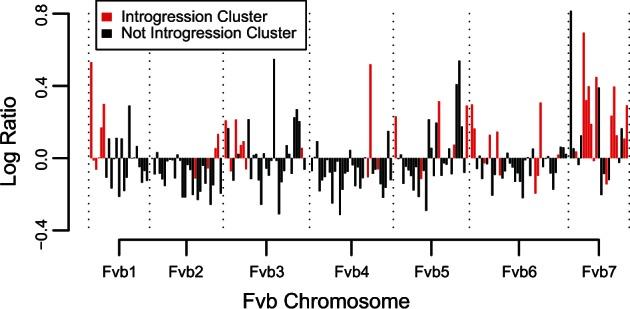
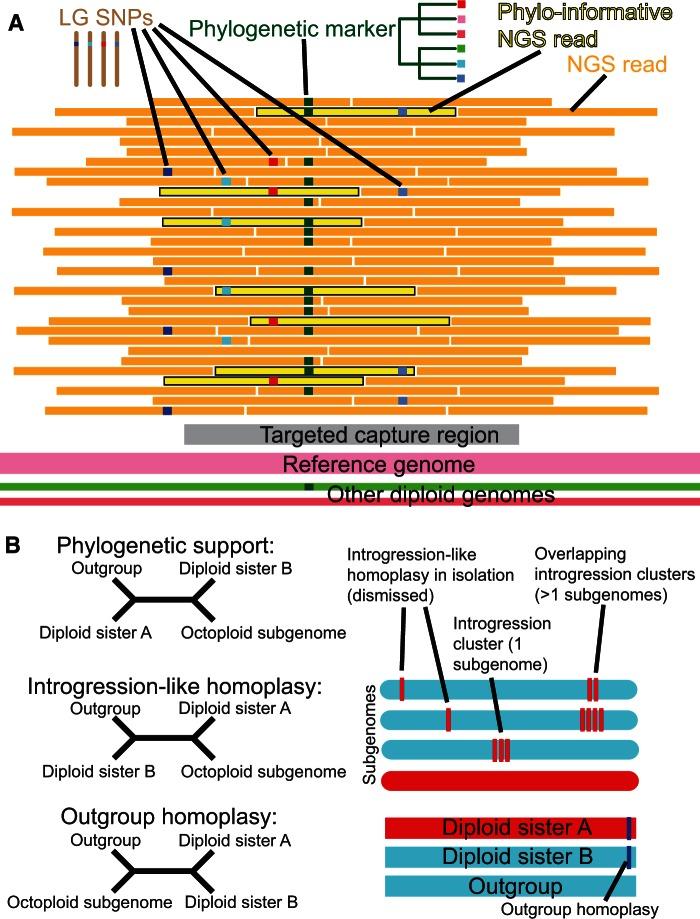
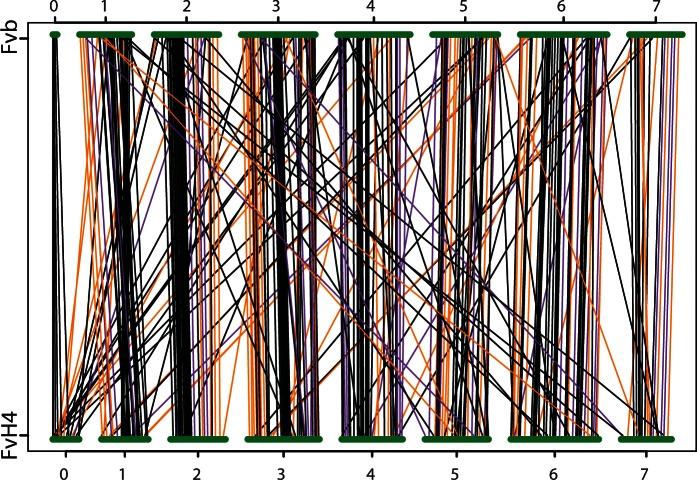
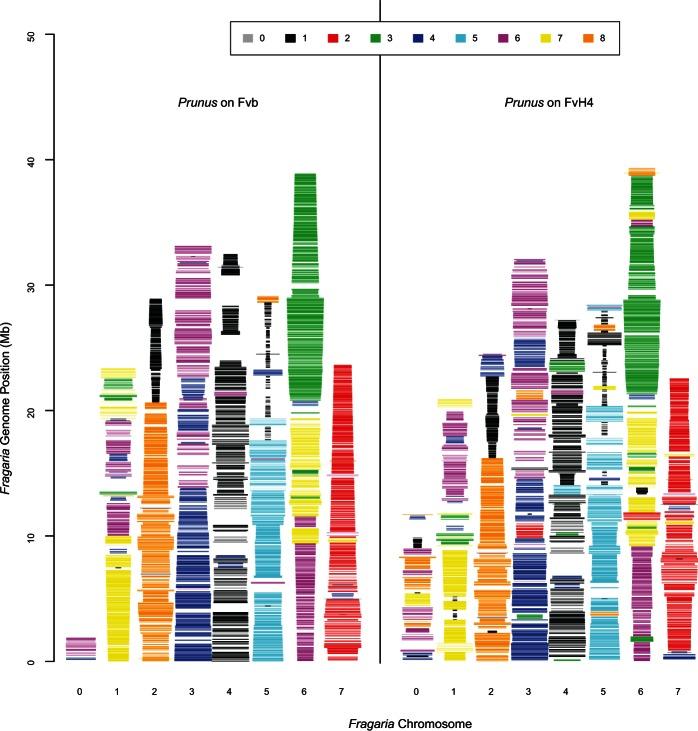
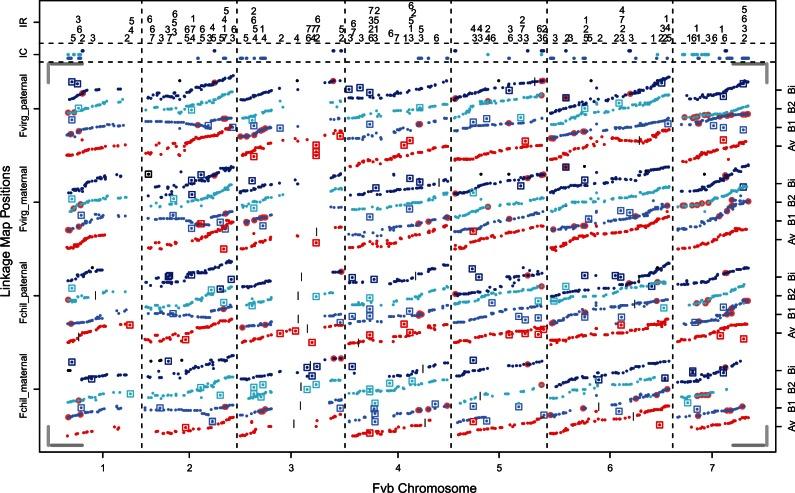
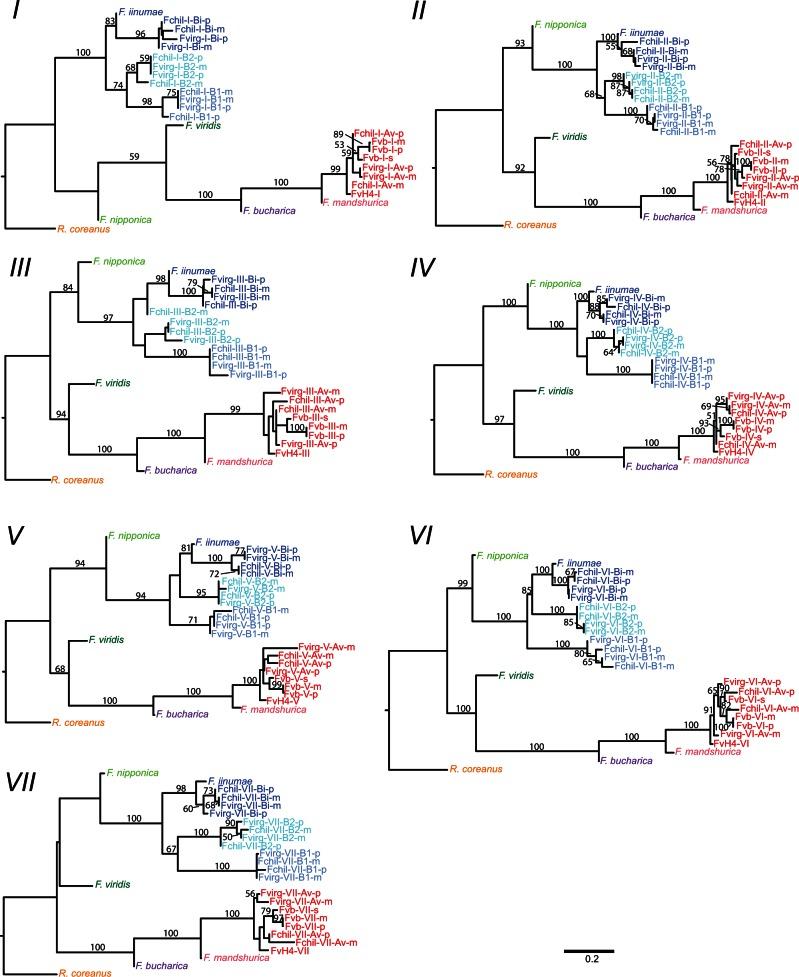
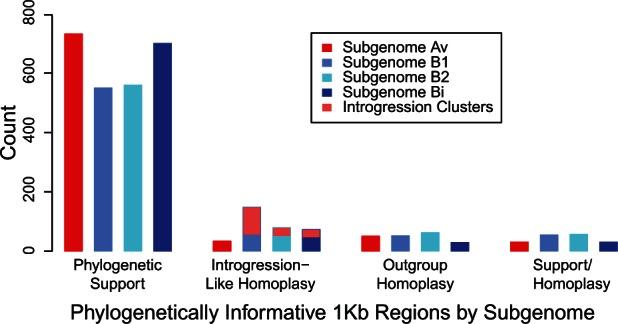
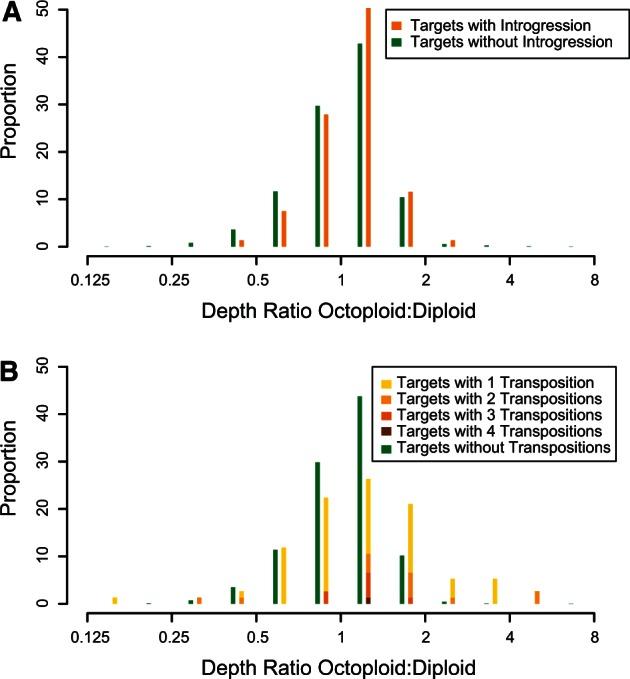
Whole-genome duplications are radical evolutionary events that have driven speciation and adaptation in many taxa. Higher-order polyploids have complex histories often including interspecific hybridization and dynamic genomic changes. This chromosomal reshuffling is poorly understood for most polyploid species, despite their evolutionary and agricultural importance, due to the challenge of distinguishing homologous sequences from each other. Here, we use dense linkage maps generated with targeted sequence capture to improve the diploid strawberry (Fragaria vesca) reference genome and to disentangle the subgenomes of the wild octoploid progenitors of cultivated strawberry, Fragaria virginiana and Fragaria chiloensis. Our novel approach, POLiMAPS (Phylogenetics Of Linkage-Map-Anchored Polyploid Subgenomes), leverages sequence reads to associate informative interhomeolog phylogenetic markers with linkage groups and reference genome positions. In contrast to a widely accepted model, we find that one of the four subgenomes originates with the diploid cytoplasm donor F. vesca, one with the diploid Fragaria iinumae, and two with an unknown ancestor close to F. iinumae. Extensive unidirectional introgression has converted F. iinumae-like subgenomes to be more F. vesca-like, but never the reverse, due either to homoploid hybridization in the F. iinumae-like diploid ancestors or else strong selection spreading F. vesca-like sequence among subgenomes through homeologous exchange. In addition, divergence between homeologous chromosomes has been substantially augmented by interchromosomal rearrangements. Our phylogenetic approach reveals novel aspects of the complicated web of genetic exchanges that occur during polyploid evolution and suggests a path forward for unraveling other agriculturally and ecologically important polyploid genomes.
全基因组复制是推动许多分类群物种形成和适应的重大进化事件。高阶多倍体有着复杂的演化历史,常常涉及种间杂交和动态基因组变化。尽管大多数多倍体物种在进化和农业方面具有重要意义,但由于区分同源序列的挑战,人们对这种染色体重排的了解甚少。在这里,我们使用通过靶向序列捕获生成的密集连锁图谱来改进二倍体草莓(弗州草莓)的参考基因组,并解开栽培草莓的野生八倍体祖先弗州草莓和智利草莓的亚基因组。我们的新方法POLiMAPS(连锁图谱锚定多倍体亚基因组系统发育学)利用序列读数将信息丰富的同源基因系统发育标记与连锁群和参考基因组位置相关联。与一个被广泛接受的模型不同,我们发现四个亚基因组中的一个起源于二倍体细胞质供体弗州草莓,一个起源于二倍体饭沼草莓,另外两个起源于与饭沼草莓亲缘关系较近的未知祖先。广泛的单向渐渗已使类似饭沼草莓的亚基因组变得更像弗州草莓,但从未出现相反的情况,这要么是由于类似饭沼草莓的二倍体祖先中的同倍体杂交,要么是由于强烈的选择通过同源交换在亚基因组中传播类似弗州草莓的序列。此外,同源染色体之间的差异已因染色体重排而大幅增加。我们的系统发育方法揭示了多倍体进化过程中发生的复杂基因交换网络的新方面,并为解开其他具有农业和生态重要性的多倍体基因组指明了一条道路。
 Zotero 插件