
SUV39H1/H3K9me3减弱了萝卜硫素诱导的PC3前列腺癌细胞凋亡信号。
SUV39H1/H3K9me3 attenuates sulforaphane-induced apoptotic signaling in PC3 prostate cancer cells.
作者信息
Watson G W, Wickramasekara S, Palomera-Sanchez Z, Black C, Maier C S, Williams D E, Dashwood R H, Ho E
机构信息
1] Department of Molecular and Cellular Biology, Oregon State University, Corvallis, OR, USA [2] College of Public Health and Human Sciences, Oregon State University, Corvallis, OR, USA.
Department of Chemistry, Oregon State University, Corvallis, OR, USA.
出版信息
Oncogenesis. 2014 Dec 8;3(12):e131. doi: 10.1038/oncsis.2014.47.
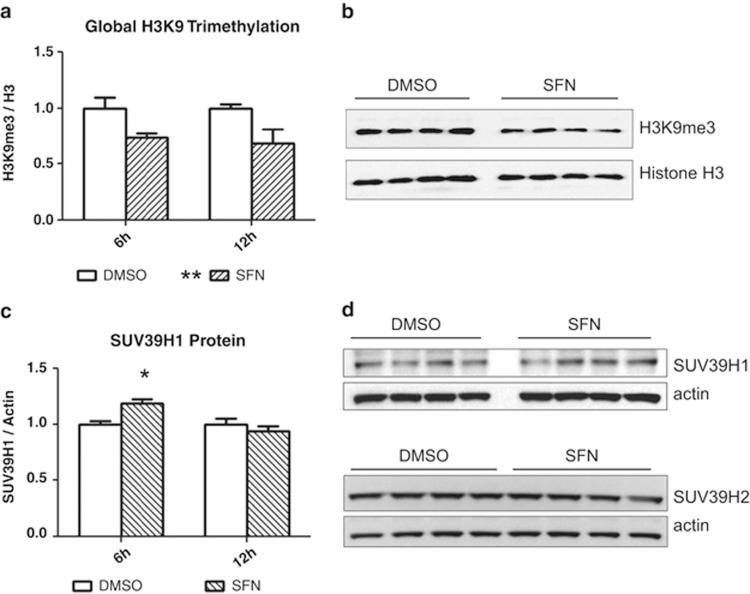
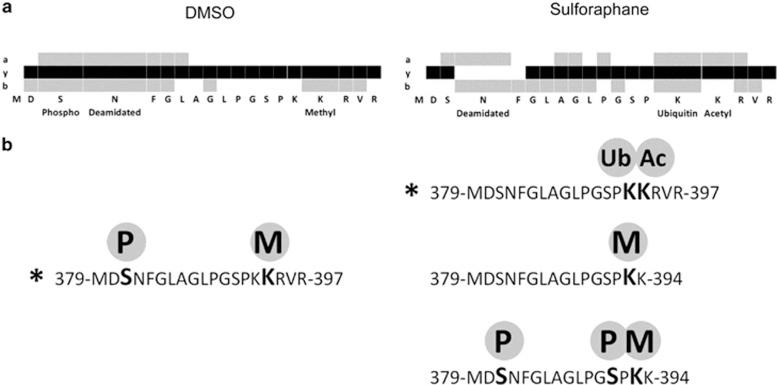
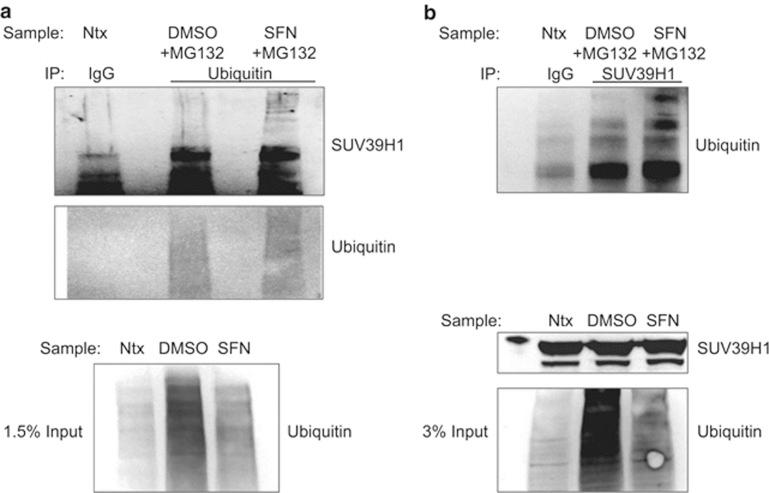
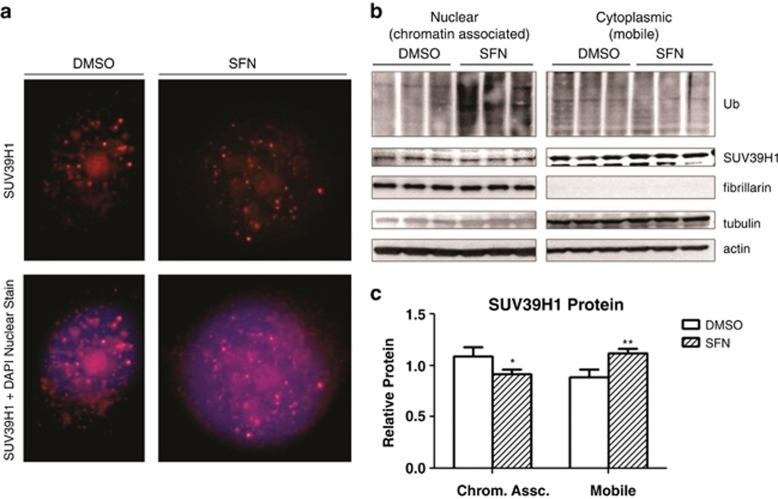
The isothiocyanate sulforaphane is a promising molecule for development as a therapeutic agent for patients with metastatic prostate cancer. Sulforaphane induces apoptosis in advanced prostate cancer cells, slows disease progression in vivo and is well tolerated at pharmacological doses. However, the underlying mechanism(s) responsible for cancer suppression remain to be fully elucidated. In this investigation we demonstrate that sulforaphane induces posttranslational modification of histone methyltransferase SUV39H1 in metastatic, androgen receptor-negative PC3 prostate cancer cells. Sulforaphane stimulates ubiquitination and acetylation of SUV39H1 within a C-terminal nuclear localization signal peptide motif and coincides with its dissociation from chromatin and a decrease in global trimethyl-histone H3 lysine 9 (H3K9me3) levels. Exogenous SUV39H1 expression leads to an increase in H3K9me3 and decreases sulforaphane-induced apoptotic signaling. SUV39H1 is thus identified as a novel mediator of sulforaphane cytotoxicity in PC3 cells. Our results also suggest SUV39H1 dynamics as a new therapeutic target in advanced prostate cancers.
异硫氰酸酯萝卜硫素是一种很有前景的分子,有望开发成为转移性前列腺癌患者的治疗药物。萝卜硫素可诱导晚期前列腺癌细胞凋亡,减缓体内疾病进展,且在药理剂量下耐受性良好。然而,导致癌症抑制的潜在机制仍有待充分阐明。在本研究中,我们证明萝卜硫素可诱导转移性、雄激素受体阴性的PC3前列腺癌细胞中组蛋白甲基转移酶SUV39H1的翻译后修饰。萝卜硫素刺激SUV39H1在C末端核定位信号肽基序内的泛素化和乙酰化,这与其从染色质上解离以及整体三甲基组蛋白H3赖氨酸9(H3K9me3)水平降低相一致。外源性SUV39H1表达导致H3K9me3增加,并降低萝卜硫素诱导的凋亡信号。因此,SUV39H1被确定为PC3细胞中萝卜硫素细胞毒性的新型介质。我们的结果还表明,SUV39H1动态变化是晚期前列腺癌的一个新治疗靶点。



 Zotero 插件