
警报素白细胞介素-1α是由二氧化硅微米和纳米颗粒诱导的急性肺部炎症中的主要细胞因子。
The alarmin IL-1α is a master cytokine in acute lung inflammation induced by silica micro- and nanoparticles.
作者信息
Rabolli Virginie, Badissi Anissa Alami, Devosse Raynal, Uwambayinema Francine, Yakoub Yousof, Palmai-Pallag Mihaly, Lebrun Astrid, De Gussem Valentin, Couillin Isabelle, Ryffel Bernard, Marbaix Etienne, Lison Dominique, Huaux François
机构信息
Louvain centre for Toxicology and Applied Pharmacology (LTAP), Institut de Recherche Expérimentale et Clinique (IREC), Université catholique de Louvain, Brussels, Belgium.
University of Orléans, CNRS, UMR7355, INEM, Transgenose Institute, Orléans, France.
出版信息
Part Fibre Toxicol. 2014 Dec 13;11:69. doi: 10.1186/s12989-014-0069-x.
BACKGROUND
Inflammasome-activated IL-1β plays a major role in lung neutrophilic inflammation induced by inhaled silica. However, the exact mechanisms that contribute to the initial production of precursor IL-1β (pro-IL-1β) are still unclear. Here, we assessed the implication of alarmins (IL-1α, IL-33 and HMGB1) in the lung response to silica particles and found that IL-1α is a master cytokine that regulates IL-1β expression.
METHODS
Pro- and mature IL-1β as well as alarmins were assessed by ELISA, Western Blot or qRT-PCR in macrophage cultures and in mouse lung following nano- and micrometric silica exposure. Implication of these immune mediators in the establishment of lung inflammatory responses to silica was investigated in knock-out mice or after antibody blockade by evaluating pulmonary neutrophil counts, CXCR2 expression and degree of histological injury.
RESULTS
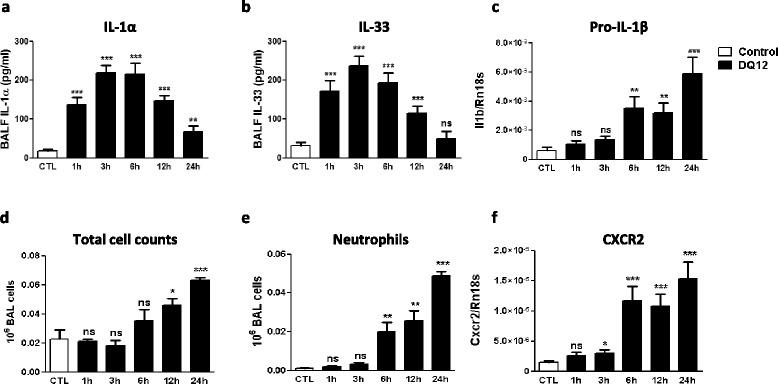
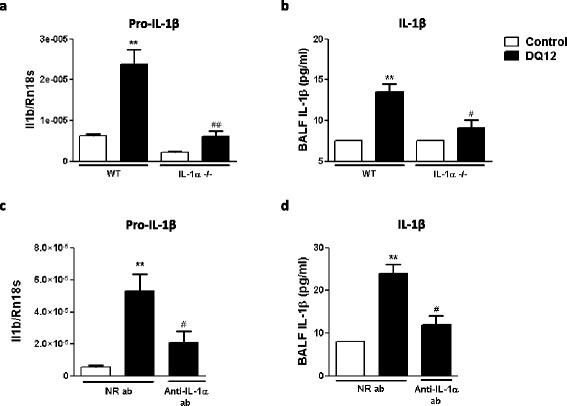
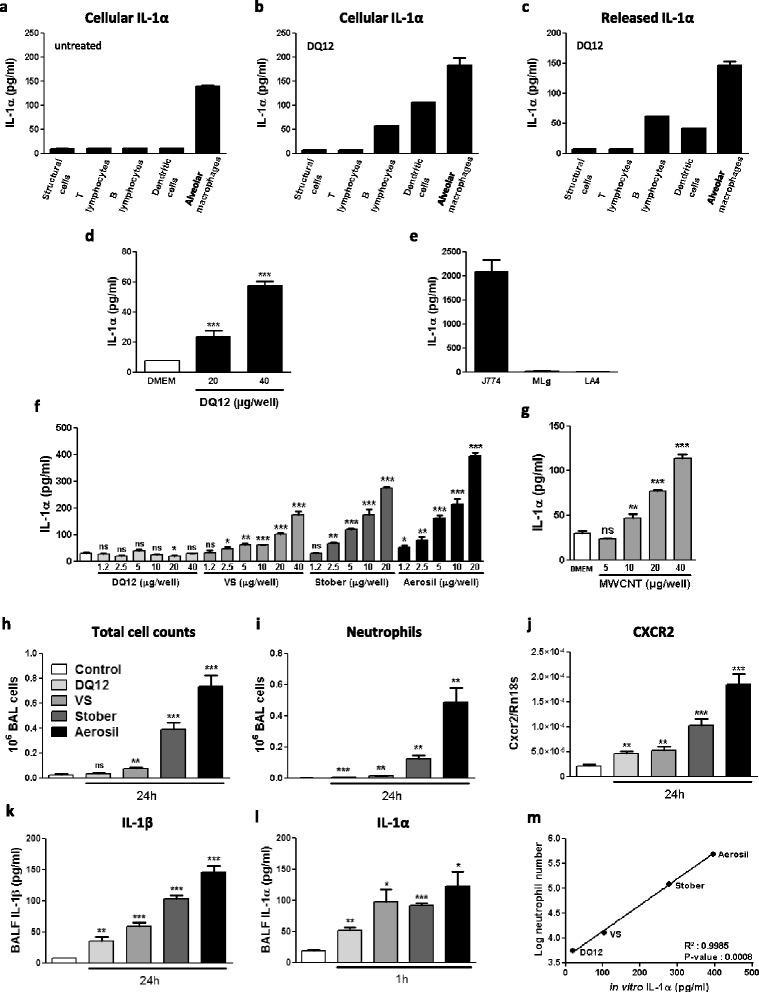
We found that the early release of IL-1α and IL-33, but not HMGB1 in alveolar space preceded the lung expression of pro-IL-1β and neutrophilic inflammation in silica-treated mice. In vitro, the production of pro-IL-1β by alveolar macrophages was significantly induced by recombinant IL-1α but not by IL-33. Neutralization or deletion of IL-1α reduced IL-1β production and neutrophil accumulation after silica in mice. Finally, IL-1α released by J774 macrophages after in vitro exposure to a range of micro- and nanoparticles of silica was correlated with the degree of lung inflammation induced in vivo by these particles.
CONCLUSIONS
We demonstrated that in response to silica exposure, IL-1α is rapidly released from pre-existing stocks in alveolar macrophages and promotes subsequent lung inflammation through the stimulation of IL-1β production. Moreover, we demonstrated that in vitro IL-1α release from macrophages can be used to predict the acute inflammogenic activity of silica micro- and nanoparticles.
背景
炎性小体激活的白细胞介素-1β(IL-1β)在吸入二氧化硅诱导的肺部中性粒细胞炎症中起主要作用。然而,导致前体IL-1β(pro-IL-1β)初始产生的确切机制仍不清楚。在此,我们评估了警报素(IL-1α、IL-33和高迁移率族蛋白B1(HMGB1))在肺部对二氧化硅颗粒反应中的作用,发现IL-1α是调节IL-1β表达的主要细胞因子。
方法
在巨噬细胞培养物和纳米及微米级二氧化硅暴露后的小鼠肺中,通过酶联免疫吸附测定(ELISA)、蛋白质免疫印迹法(Western Blot)或定量逆转录聚合酶链反应(qRT-PCR)评估pro-IL-1β和成熟IL-1β以及警报素。通过评估肺部中性粒细胞计数、CXC趋化因子受体2(CXCR2)表达和组织学损伤程度,在基因敲除小鼠或抗体阻断后研究这些免疫介质在建立肺部对二氧化硅的炎症反应中的作用。
结果
我们发现,在二氧化硅处理的小鼠中,肺泡腔中IL-33的早期释放先于pro-IL-1β的肺部表达和中性粒细胞炎症。在体外,重组IL-1α可显著诱导肺泡巨噬细胞产生pro-IL-1β,但IL-33则不能。中和或缺失IL-1α可降低小鼠吸入二氧化硅后IL-1β的产生和中性粒细胞的积聚。最后,J774巨噬细胞在体外暴露于一系列微米和纳米级二氧化硅颗粒后释放的IL-1α与这些颗粒在体内诱导的肺部炎症程度相关。
结论
我们证明,在暴露于二氧化硅时,IL-1α从肺泡巨噬细胞中预先存在的储备中迅速释放,并通过刺激IL-1β的产生促进随后的肺部炎症。此外,我们证明,巨噬细胞在体外释放的IL-1α可用于预测二氧化硅微米和纳米颗粒的急性炎症活性。



 Zotero 插件