
低收入和中等收入国家中不平等与人口健康之间的联系:政策神话还是社会现实?
The link between inequality and population health in low and middle income countries: policy myth or social reality?
作者信息
van Deurzen Ioana, van Oorschot Wim, van Ingen Erik
机构信息
Sociology Department, Tilburg University, Tilburg, The Netherlands.
Department of Sociology, Leuven University, Leuven, Belgium.
出版信息
PLoS One. 2014 Dec 11;9(12):e115109. doi: 10.1371/journal.pone.0115109. eCollection 2014.
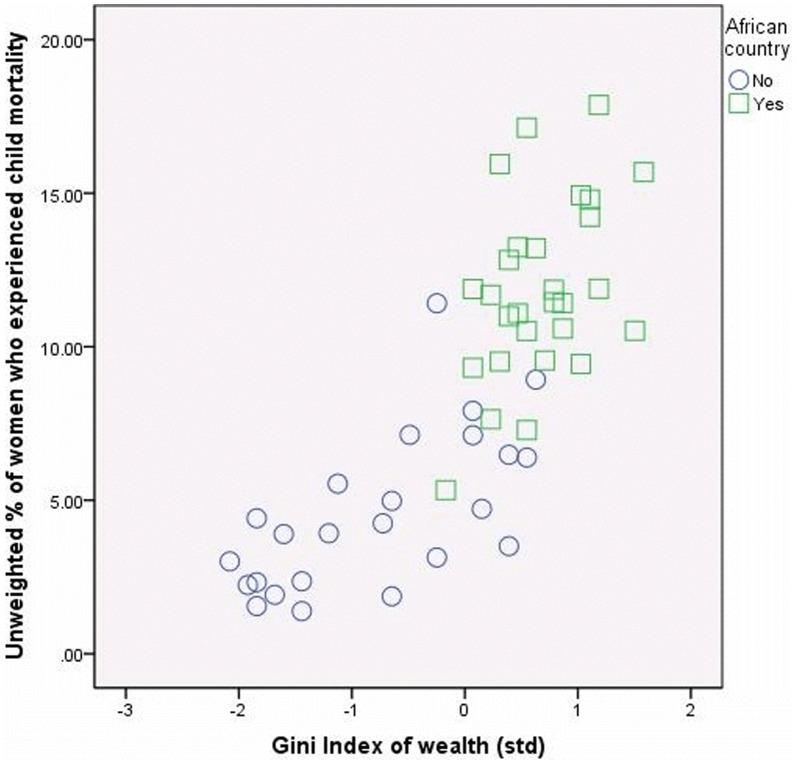
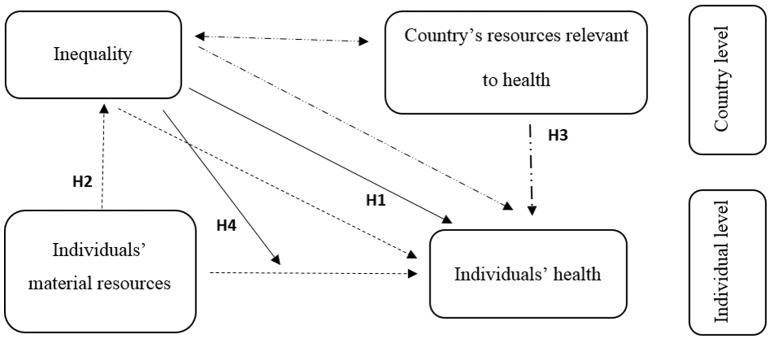
An influential policy idea states that reducing inequality is beneficial for improving health in the low and middle income countries (LMICs). Our study provides an empirical test of this idea: we utilized data collected by the Demographic and Health Surveys between 2000 and 2011 in as much as 52 LMICs, and we examined the relationship between household wealth inequality and two health outcomes: anemia status (of the children and their mothers) and the women' experience of child mortality. Based on multi-level analyses, we found that higher levels of household wealth inequality related to worse health, but this effect was strongly reduced when we took into account the level of individuals' wealth. However, even after accounting for the differences between individuals in terms of household wealth and other characteristics, in those LMICs with higher household wealth inequality more women experienced child mortality and more children were tested with anemia. This effect was partially mediated by the country's level and coverage of the health services and infrastructure. Furthermore, we found higher inequality to be related to a larger health gap between the poor and the rich in only one of the three examined samples. We conclude that an effective way to improve the health in the LMICs is to increase the wealth among the poor, which in turn also would lead to lower overall inequality and potential investments in public health infrastructure and services.
一种有影响力的政策观点认为,减少不平等对改善低收入和中等收入国家(LMICs)的健康状况有益。我们的研究对这一观点进行了实证检验:我们利用了2000年至2011年期间在多达52个低收入和中等收入国家由人口与健康调查收集的数据,并研究了家庭财富不平等与两个健康结果之间的关系:(儿童及其母亲的)贫血状况以及妇女的儿童死亡率经历。基于多层次分析,我们发现较高水平的家庭财富不平等与较差的健康状况相关,但当我们考虑个人财富水平时,这种影响会大幅降低。然而,即使在考虑了个人在家庭财富和其他特征方面的差异之后,在家庭财富不平等程度较高的那些低收入和中等收入国家,更多妇女经历了儿童死亡,更多儿童被检测出贫血。这种影响部分由该国的卫生服务和基础设施水平及覆盖范围所介导。此外,我们发现,在所研究的三个样本中,只有一个样本显示较高的不平等与贫富之间更大的健康差距相关。我们得出结论,改善低收入和中等收入国家健康状况的有效方法是增加穷人的财富,这反过来也将导致总体不平等程度降低,并有可能对公共卫生基础设施和服务进行投资。


 Zotero 插件