
高分辨率熔解曲线分析助力高通量基因组编辑与表型分析。
High-throughput genome editing and phenotyping facilitated by high resolution melting curve analysis.
作者信息
Thomas Holly R, Percival Stefanie M, Yoder Bradley K, Parant John M
机构信息
Department of Pharmacology and Toxicology, University of Alabama at Birmingham, Birmingham, Alabama, United States of America.
Department of Cellular, Developmental, and Integrated Biology, University of Alabama at Birmingham, Birmingham, Alabama, United States of America.
出版信息
PLoS One. 2014 Dec 11;9(12):e114632. doi: 10.1371/journal.pone.0114632. eCollection 2014.
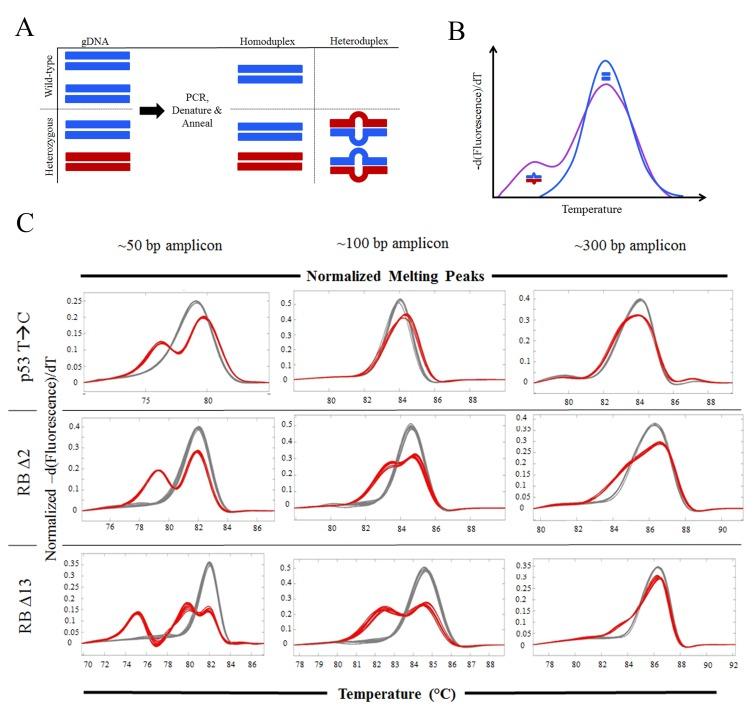
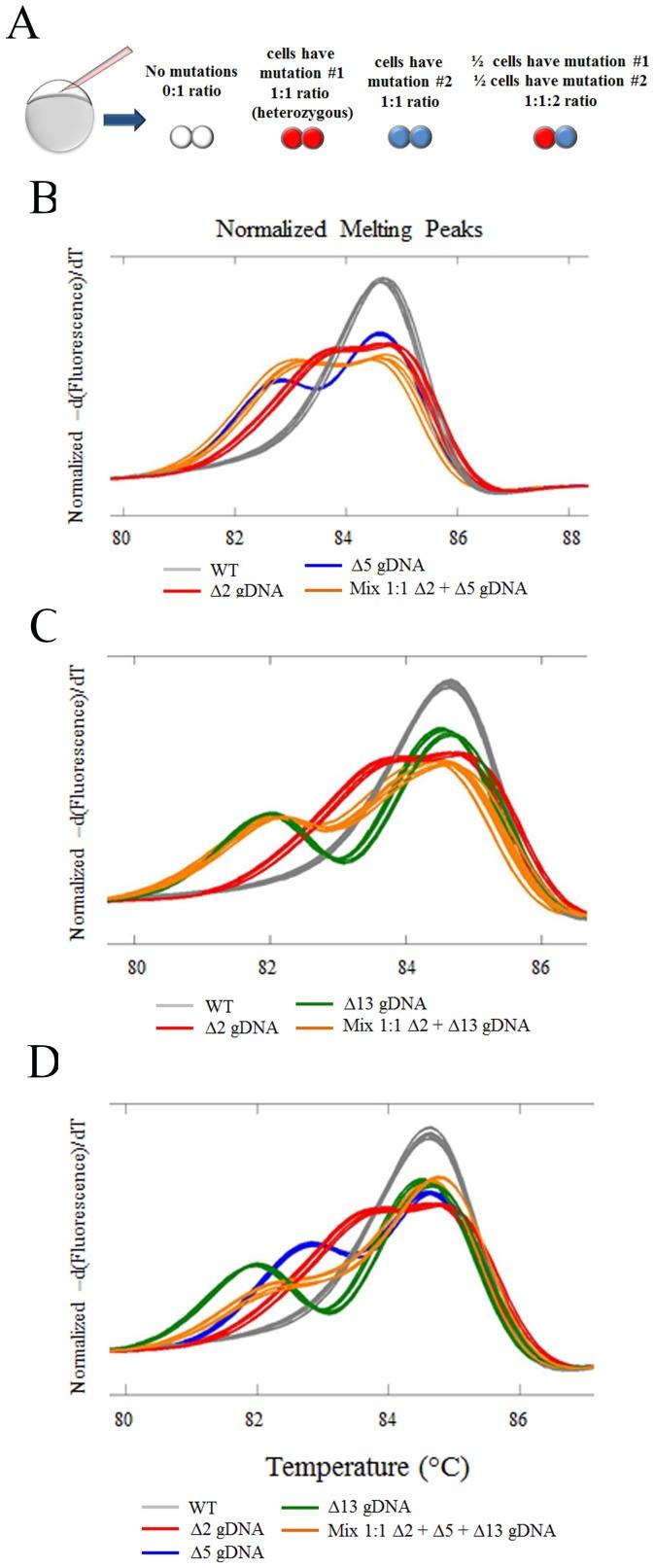
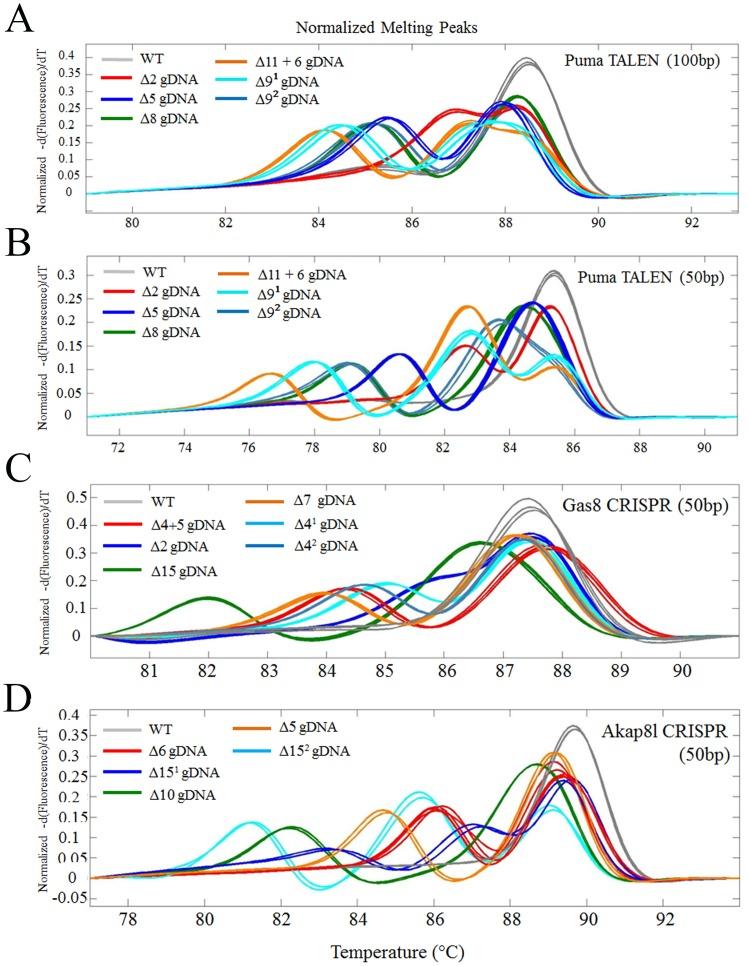
With the goal to generate and characterize the phenotypes of null alleles in all genes within an organism and the recent advances in custom nucleases, genome editing limitations have moved from mutation generation to mutation detection. We previously demonstrated that High Resolution Melting (HRM) analysis is a rapid and efficient means of genotyping known zebrafish mutants. Here we establish optimized conditions for HRM based detection of novel mutant alleles. Using these conditions, we demonstrate that HRM is highly efficient at mutation detection across multiple genome editing platforms (ZFNs, TALENs, and CRISPRs); we observed nuclease generated HRM positive targeting in 1 of 6 (16%) open pool derived ZFNs, 14 of 23 (60%) TALENs, and 58 of 77 (75%) CRISPR nucleases. Successful targeting, based on HRM of G0 embryos correlates well with successful germline transmission (46 of 47 nucleases); yet, surprisingly mutations in the somatic tail DNA weakly correlate with mutations in the germline F1 progeny DNA. This suggests that analysis of G0 tail DNA is a good indicator of the efficiency of the nuclease, but not necessarily a good indicator of germline alleles that will be present in the F1s. However, we demonstrate that small amplicon HRM curve profiles of F1 progeny DNA can be used to differentiate between specific mutant alleles, facilitating rare allele identification and isolation; and that HRM is a powerful technique for screening possible off-target mutations that may be generated by the nucleases. Our data suggest that micro-homology based alternative NHEJ repair is primarily utilized in the generation of CRISPR mutant alleles and allows us to predict likelihood of generating a null allele. Lastly, we demonstrate that HRM can be used to quickly distinguish genotype-phenotype correlations within F1 embryos derived from G0 intercrosses. Together these data indicate that custom nucleases, in conjunction with the ease and speed of HRM, will facilitate future high-throughput mutation generation and analysis needed to establish mutants in all genes of an organism.
为了在生物体的所有基因中产生无效等位基因的表型并对其进行表征,以及鉴于定制核酸酶的最新进展,基因组编辑的限制已从突变产生转移到突变检测。我们之前证明,高分辨率熔解(HRM)分析是对已知斑马鱼突变体进行基因分型的快速有效方法。在此,我们建立了基于HRM检测新突变等位基因的优化条件。使用这些条件,我们证明HRM在多个基因组编辑平台(锌指核酸酶、转录激活样效应因子核酸酶和CRISPR)的突变检测中效率很高;我们观察到,在6个开放池来源的锌指核酸酶中有1个(16%)、23个转录激活样效应因子核酸酶中有14个(60%)以及77个CRISPR核酸酶中有58个(75%)产生了核酸酶诱导的HRM阳性靶向。基于G0胚胎的HRM分析,成功靶向与成功的种系传递密切相关(47个核酸酶中有46个);然而,令人惊讶的是,体细胞尾部DNA中的突变与种系F1后代DNA中的突变相关性较弱。这表明对G0尾部DNA的分析是核酸酶效率的良好指标,但不一定是F1中存在的种系等位基因的良好指标。然而,我们证明F1后代DNA的小扩增子HRM曲线图谱可用于区分特定的突变等位基因,便于稀有等位基因的鉴定和分离;并且HRM是一种强大的技术,可用于筛选核酸酶可能产生的脱靶突变。我们的数据表明,基于微同源性的替代性非同源末端连接修复主要用于CRISPR突变等位基因的产生,并使我们能够预测产生无效等位基因的可能性。最后,我们证明HRM可用于快速区分G0杂交产生的F1胚胎中的基因型 - 表型相关性。这些数据共同表明,定制核酸酶与HRM的简便性和速度相结合,将有助于未来在生物体的所有基因中建立突变体所需的高通量突变产生和分析。





 Zotero 插件