
去神经支配会损害斑马鱼截肢鳍的再生。
Denervation impairs regeneration of amputated zebrafish fins.
作者信息
Simões Mariana G, Bensimon-Brito Anabela, Fonseca Mariana, Farinho Ana, Valério Fábio, Sousa Sara, Afonso Nuno, Kumar Anoop, Jacinto Antonio
机构信息
Instituto de Medicina Molecular, Faculdade de Medicina, Universidade de Lisboa, 1649-028, Lisboa, Portugal.
CEDOC, Chronic Diseases Research Center, NOVA Medical School, NOVA University of Lisbon, Campo dos Mártires da Pátria, 130, 1169-056, Lisboa, Portugal.
出版信息
BMC Dev Biol. 2014 Dec 31;14:49. doi: 10.1186/s12861-014-0049-2.
BACKGROUND
Zebrafish are able to regenerate many of its tissues and organs after damage. In amphibians this process is regulated by nerve fibres present at the site of injury, which have been proposed to release factors into the amputated limbs/fins, promoting and sustaining the proliferation of blastemal cells. Although some candidate factors have been proposed to mediate the nerve dependency of regeneration, the molecular mechanisms involved in this process remain unclear.
RESULTS
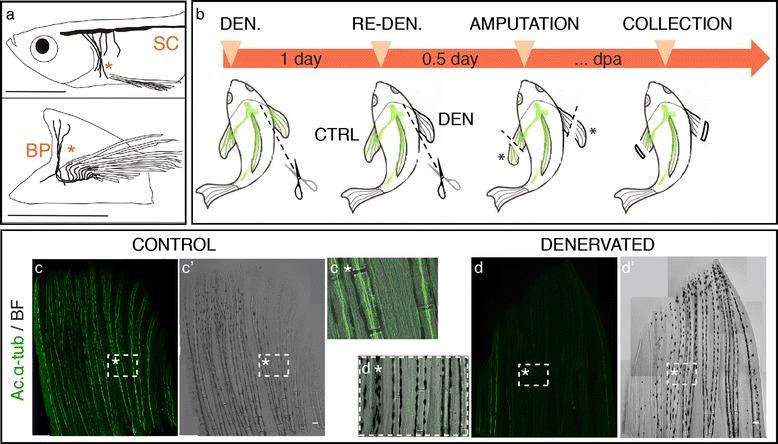
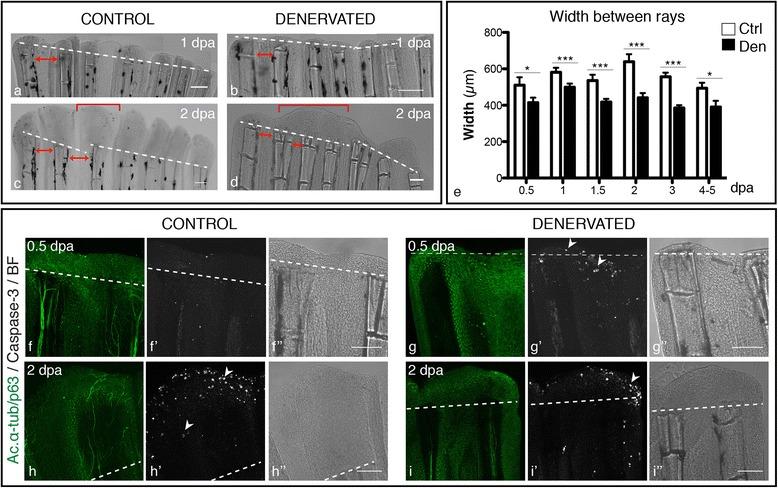
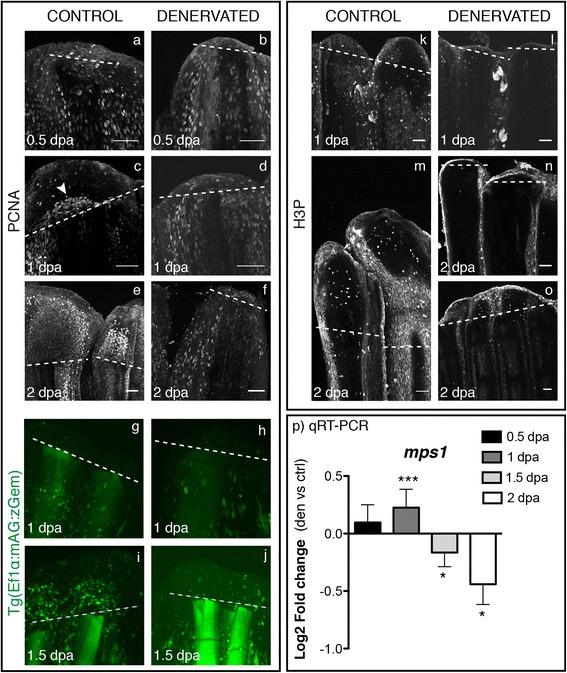
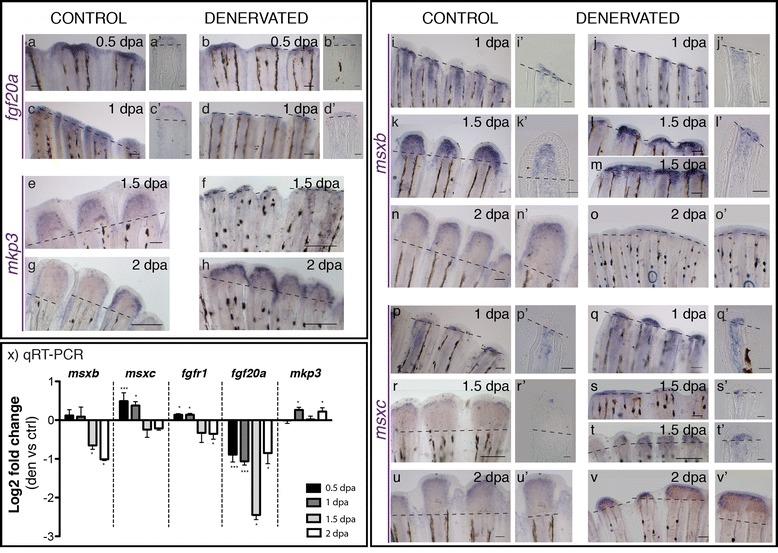
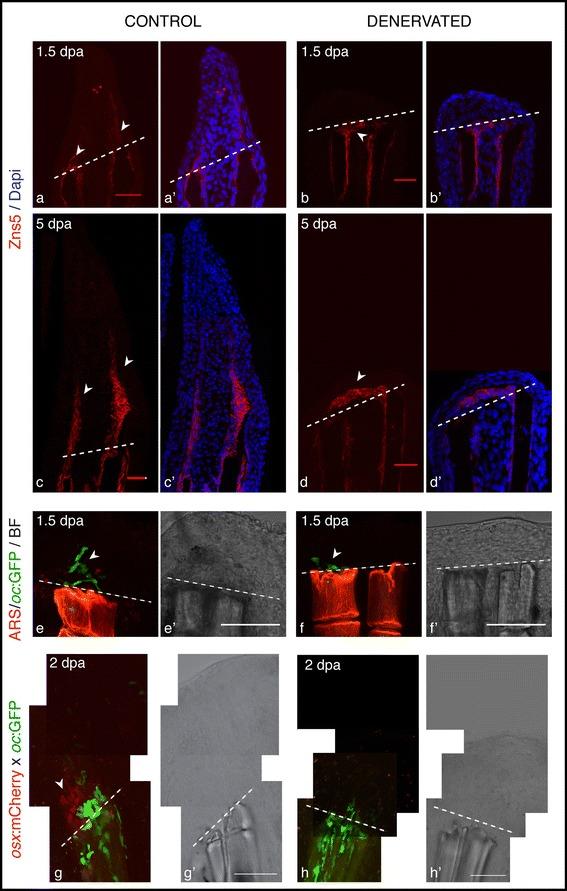
We have used zebrafish as a model system to address the role of nerve fibres in fin regeneration. We have developed a protocol for pectoral fin denervation followed by amputation and analysed the regenerative process under this experimental conditions. Upon denervation fins were able to close the wound and form a wound epidermis, but could not establish a functional apical epithelial cap, with a posterior failure of blastema formation and outgrowth, and the accumulation of several defects. The expression patterns of genes known to be key players during fin regeneration were altered upon denervation, suggesting that nerves can contribute to the regulation of the Fgf, Wnt and Shh pathways during zebrafish fin regeneration.
CONCLUSIONS
Our results demonstrate that proper innervation of the zebrafish pectoral fin is essential for a successful regenerative process, and establish this organism as a useful model to understand the molecular and cellular mechanisms of nerve dependence, during vertebrate regeneration.
背景
斑马鱼在受损后能够再生其许多组织和器官。在两栖动物中,这个过程由损伤部位存在的神经纤维调节,有人提出这些神经纤维会向截肢的肢体/鳍中释放因子,促进和维持胚基细胞的增殖。尽管已经提出了一些候选因子来介导再生的神经依赖性,但这个过程中涉及的分子机制仍不清楚。
结果
我们使用斑马鱼作为模型系统来研究神经纤维在鳍再生中的作用。我们开发了一种胸鳍去神经支配后再截肢的方案,并在这种实验条件下分析了再生过程。去神经支配后,鳍能够闭合伤口并形成伤口表皮,但无法建立功能性的顶端上皮帽,随后胚基形成和生长失败,并积累了一些缺陷。已知在鳍再生过程中起关键作用的基因的表达模式在去神经支配后发生了改变,这表明神经可以在斑马鱼鳍再生过程中参与对Fgf、Wnt和Shh信号通路的调节。
结论
我们的结果表明,斑马鱼胸鳍的适当神经支配对于成功的再生过程至关重要,并将这种生物体确立为理解脊椎动物再生过程中神经依赖性分子和细胞机制的有用模型。




 Zotero 插件