
外周细胞中血清素转运体基因的DNA甲基化与海马体体积的应激相关变化:一项针对抑郁症患者和健康对照者的研究
DNA methylation of the serotonin transporter gene in peripheral cells and stress-related changes in hippocampal volume: a study in depressed patients and healthy controls.
作者信息
Booij Linda, Szyf Moshe, Carballedo Angela, Frey Eva-Maria, Morris Derek, Dymov Sergiy, Vaisheva Farida, Ly Victoria, Fahey Ciara, Meaney James, Gill Michael, Frodl Thomas
机构信息
Department of Psychology and Psychiatry, Queen's University, Kingston, Ontario, Canada; Sainte-Justine Hospital Research Center & University of Montreal, Montreal, Quebec, Canada; Department of Psychiatry, McGill University, Montreal, Quebec, Canada.
Department of Pharmacology and Therapeutics, McGill University, Montreal, Quebec, Canada.
出版信息
PLoS One. 2015 Mar 17;10(3):e0119061. doi: 10.1371/journal.pone.0119061. eCollection 2015.
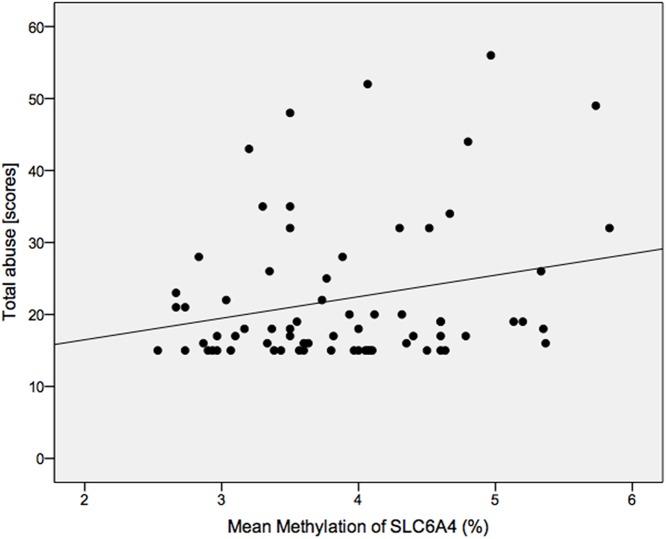
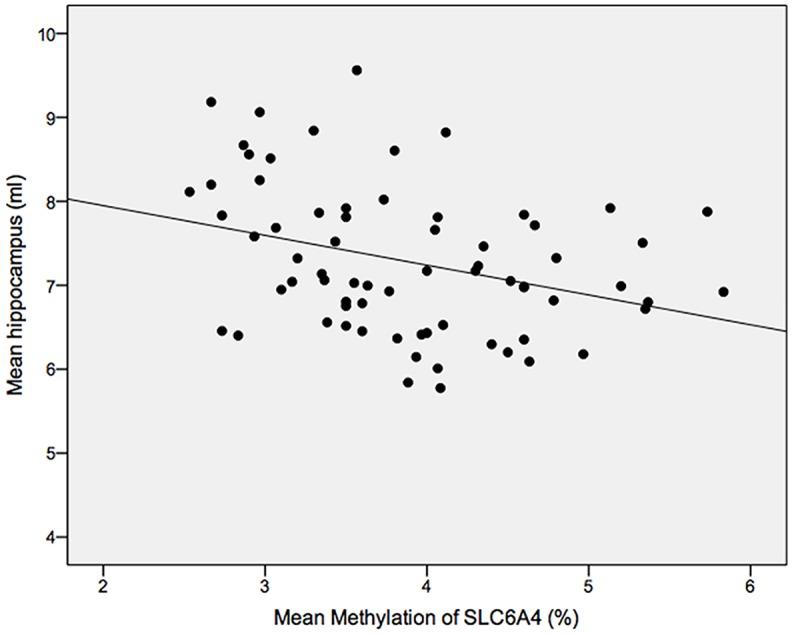
Serotonin plays an important role in the etiology of depression. Serotonin is also crucial for brain development. For instance, animal studies have demonstrated that early disruptions in the serotonin system affect brain development and emotion regulation in later life. A plausible explanation is that environmental stressors reprogram the serotonin system through epigenetic processes by altering serotonin system gene expression. This in turn may affect brain development, including the hippocampus, a region with dense serotonergic innervations and important in stress-regulation. The aim of this study was to test whether greater DNA methylation in specific CpG sites at the serotonin transporter promoter in peripheral cells is associated with childhood trauma, depression, and smaller hippocampal volume. We were particularly interested in those CpG sites whose state of methylation in peripheral cells had previously been associated with in vivo measures of brain serotonin synthesis. Thirty-three adults with Major Depressive Disorder (MDD) (23 females) and 36 matched healthy controls (21 females) were included in the study. Depressive symptoms, childhood trauma, and high-resolution structural MRI for hippocampal volume were assessed. Site-specific serotonin transporter methylation was assessed using pyrosequencing. Childhood trauma, being male, and smaller hippocampal volume were independently associated with greater peripheral serotonin transporter methylation. Greater serotonin transporter methylation in the depressed group was observed only in SSRI-treated patients. These results suggest that serotonin transporter methylation may be involved in physiological gene-environment interaction in the development of stress-related brain alterations. The results provide some indications that site-specific serotonin transporter methylation may be a biomarker for serotonin-associated stress-related psychopathology.
血清素在抑郁症的病因中起着重要作用。血清素对大脑发育也至关重要。例如,动物研究表明,血清素系统的早期紊乱会影响后期生活中的大脑发育和情绪调节。一个合理的解释是,环境应激源通过改变血清素系统基因表达,通过表观遗传过程对血清素系统进行重新编程。这反过来可能会影响大脑发育,包括海马体,海马体是一个血清素能神经支配密集且在应激调节中起重要作用的区域。本研究的目的是测试外周细胞中血清素转运体启动子特定CpG位点的更高DNA甲基化是否与童年创伤、抑郁症和较小的海马体体积相关。我们特别关注那些外周细胞中甲基化状态先前已与大脑血清素合成的体内测量相关的CpG位点。33名患有重度抑郁症(MDD)的成年人(23名女性)和36名匹配的健康对照者(21名女性)被纳入研究。评估了抑郁症状、童年创伤以及用于测量海马体体积的高分辨率结构MRI。使用焦磷酸测序评估位点特异性血清素转运体甲基化。童年创伤、男性身份以及较小的海马体体积与更高的外周血清素转运体甲基化独立相关。仅在接受SSRI治疗的患者中观察到抑郁症组中血清素转运体甲基化程度更高。这些结果表明,血清素转运体甲基化可能参与了应激相关脑改变发展过程中的生理基因 - 环境相互作用。结果提供了一些迹象表明,位点特异性血清素转运体甲基化可能是血清素相关应激相关精神病理学的生物标志物。

 Zotero 插件