
口腔癌营养不良会影响体重和生活质量。
Oral cancer malnutrition impacts weight and quality of life.
作者信息
Gellrich Nils-Claudius, Handschel Jörg, Holtmann Henrik, Krüskemper Gertrud
机构信息
Department of Cranio-Maxillofacial Surgery, Hannover Medical School, Carl-Neuberg-Street 1, Hannover D-30625, Germany.
Department for Oral and Maxillofacial Surgery, Heinrich Heine University of Düsseldorf, Moorenstr. 5, D-40225 Düsseldorf, Germany.
出版信息
Nutrients. 2015 Mar 27;7(4):2145-60. doi: 10.3390/nu7042145.
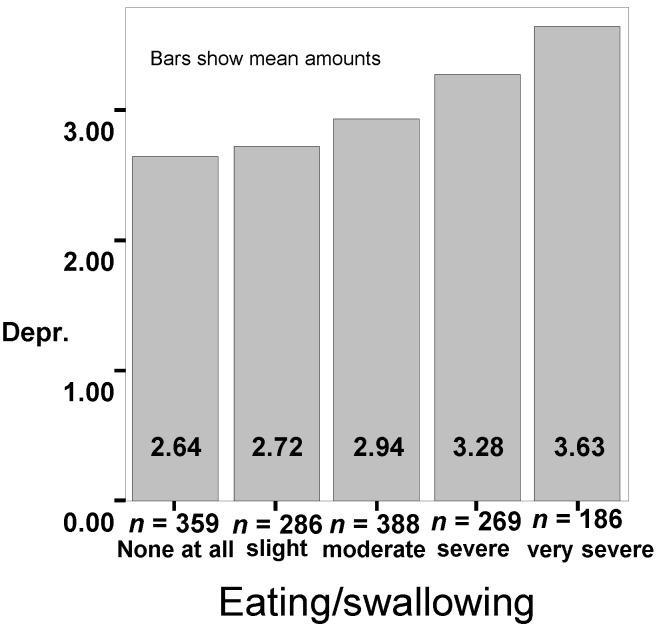
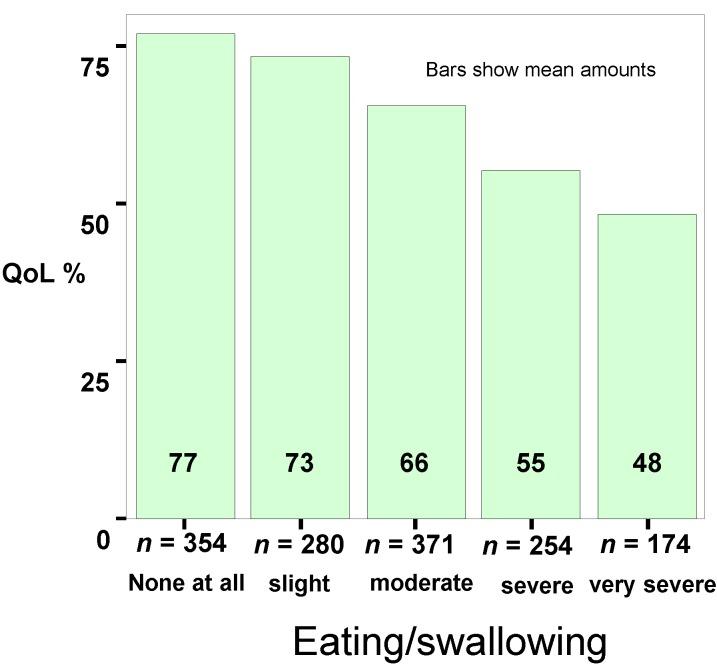
Diet is important for both quality of life (QoL) and survival of patients with oral cancer. Their intake of food is impeded by functional restrictions in chewing and swallowing. In the DÖSAK REHAB STUDY 1652 patients from 38 hospitals within the German-language area of Germany; Austria and Switzerland were examined with regard to functional and psychological variables having an impact on diet. Chewing and swallowing are correlated with mobility of the tongue and the mandible as well as opening of the mouth. Thirty five percent of the patients lost weight; 41% maintained their weight and 24% gained weight. The QoL of patients who were able to maintain their weight and of those who gained weight was significantly better than that of patients who lost weight. A normal diet was important for maintaining weight. Mashed food; liquid food and loss of appetite were closely associated with loss of weight; although it was possible for nutritional counseling and dietary support to be implemented particularly favorably in this respect. Due to problems with eating patients' strength deteriorated; thus restricting activity. Radiotherapy had a negative impact on diet and weight. It influenced sense of taste; dryness of the mouth; swelling and discomfort when ingesting food. Pain and scars in the region of the operation also cause patients to dislike hard; spicy and sour food. Support from a nutritional counselor in implementing a calorie-rich diet remedied this and such support needs to be integrated into patient management. The fact that a poor nutritional status is of such great importance is well-known; but what is often lacking is the systematic implementation of continued professional nutritional counseling over a long period of time; weight control and psycho-social support of the operated patients; particularly those who also have had radiotherapy.
饮食对于口腔癌患者的生活质量(QoL)和生存都很重要。他们的食物摄入因咀嚼和吞咽功能受限而受到阻碍。在多学科康复研究(DÖSAK REHAB STUDY)中,对来自德国、奥地利和瑞士德语区38家医院的1652名患者进行了关于影响饮食的功能和心理变量的检查。咀嚼和吞咽与舌头和下颌的活动以及张口有关。35%的患者体重减轻;41%的患者体重维持不变;24%的患者体重增加。能够维持体重和体重增加的患者的生活质量明显优于体重减轻的患者。正常饮食对于维持体重很重要。糊状食物、流质食物和食欲不振与体重减轻密切相关,尽管在这方面实施营养咨询和饮食支持可能会特别有效。由于进食问题,患者的体力下降,从而限制了活动。放疗对饮食和体重有负面影响。它影响味觉、口干、进食时的肿胀和不适。手术部位的疼痛和疤痕也导致患者不喜欢硬的、辛辣的和酸的食物。营养顾问在实施高热量饮食方面的支持弥补了这一点,这种支持需要纳入患者管理中。营养状况不佳如此重要这一事实是众所周知的,但经常缺乏的是对手术患者,尤其是那些也接受了放疗的患者,长期系统地实施持续的专业营养咨询、体重控制和心理社会支持。
 Zotero 插件