
CFTR增强剂依伐卡托对携带G551D突变的囊性纤维化患者气道微生物群的影响。
Impact of the CFTR-potentiator ivacaftor on airway microbiota in cystic fibrosis patients carrying a G551D mutation.
作者信息
Bernarde Cédric, Keravec Marlène, Mounier Jérôme, Gouriou Stéphanie, Rault Gilles, Férec Claude, Barbier Georges, Héry-Arnaud Geneviève
机构信息
EA 3882-Laboratoire Universitaire de Biodiversité et Ecologie Microbienne, Université de Brest, Brest, France.
Centre de Perharidy, CRCM mixte, Roscoff, France.
出版信息
PLoS One. 2015 Apr 8;10(4):e0124124. doi: 10.1371/journal.pone.0124124. eCollection 2015.
BACKGROUND
Airway microbiota composition has been clearly correlated with many pulmonary diseases, and notably with cystic fibrosis (CF), an autosomal genetic disorder caused by mutation in the CF transmembrane conductance regulator (CFTR). Recently, a new molecule, ivacaftor, has been shown to re-establish the functionality of the G551D-mutated CFTR, allowing significant improvement in lung function.
OBJECTIVE AND METHODS
The purpose of this study was to follow the evolution of the airway microbiota in CF patients treated with ivacaftor, using quantitative PCR and pyrosequencing of 16S rRNA amplicons, in order to identify quantitative and qualitative changes in bacterial communities. Three G551D children were followed up longitudinally over a mean period of more than one year covering several months before and after initiation of ivacaftor treatment.
RESULTS
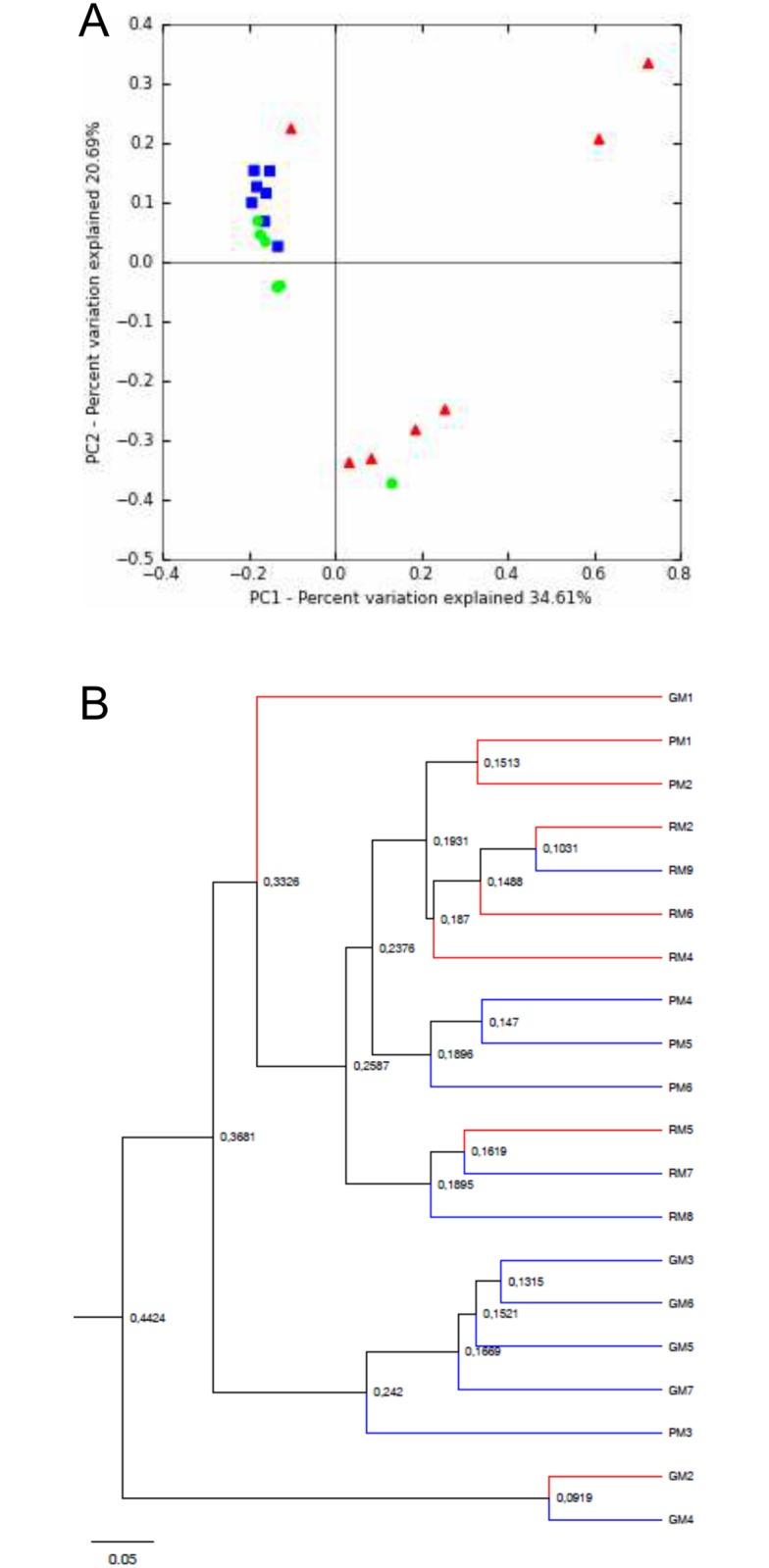
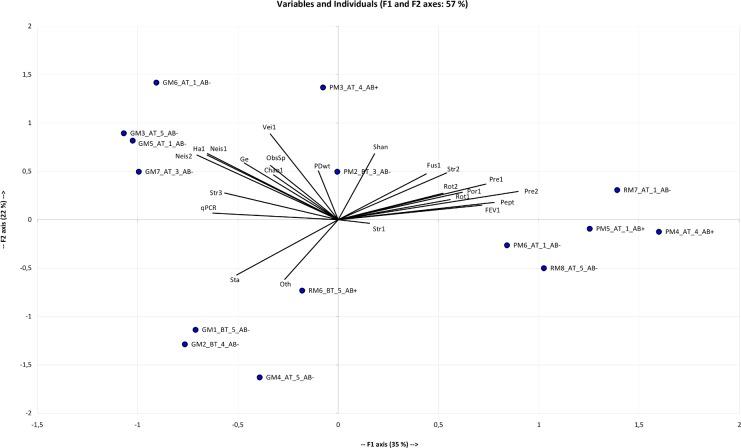
129 operational taxonomy units (OTUs), representing 64 genera, were identified. There was no significant difference in total bacterial load before and after treatment. Comparison of global community composition found no significant changes in microbiota. Two OTUs, however, showed contrasting dynamics: after initiation of ivacaftor, the relative abundance of the anaerobe Porphyromonas 1 increased (p<0.01) and that of Streptococcus 1 (S. mitis group) decreased (p<0.05), possibly in relation to the anti-Gram-positive properties of ivacaftor. The anaerobe Prevotella 2 correlated positively with the pulmonary function test FEV-1 (r=0.73, p<0.05). The study confirmed the presumed positive role of anaerobes in lung function.
CONCLUSION
Several airway microbiota components, notably anaerobes (obligate or facultative anaerobes), could be valuable biomarkers of lung function improvement under ivacaftor, and could shed light on the pathophysiology of lung disease in CF patients.
背景
气道微生物群组成已明确与多种肺部疾病相关,尤其是与囊性纤维化(CF)相关,CF是一种由CF跨膜传导调节因子(CFTR)突变引起的常染色体遗传病。最近,一种新分子依伐卡托已被证明可恢复G551D突变型CFTR的功能,使肺功能得到显著改善。
目的与方法
本研究的目的是通过对16S rRNA扩增子进行定量PCR和焦磷酸测序,跟踪接受依伐卡托治疗的CF患者气道微生物群的演变,以识别细菌群落的定量和定性变化。对3名G551D儿童进行了纵向随访,平均随访时间超过一年,涵盖依伐卡托治疗开始前和后的几个月。
结果
共鉴定出129个操作分类单元(OTU),代表64个属。治疗前后总细菌载量无显著差异。对整体群落组成的比较发现微生物群无显著变化。然而,有两个OTU表现出相反的动态变化:依伐卡托治疗开始后,厌氧菌卟啉单胞菌1的相对丰度增加(p<0.01),而链球菌1(缓症链球菌组)的相对丰度降低(p<0.05),这可能与依伐卡托的抗革兰氏阳性特性有关。厌氧菌普雷沃菌2与肺功能测试FEV-1呈正相关(r=0.73,p<0.05)。该研究证实了厌氧菌在肺功能中的假定积极作用。
结论
气道微生物群的几个组成部分,尤其是厌氧菌(专性或兼性厌氧菌),可能是依伐卡托治疗下肺功能改善的有价值生物标志物,并可能为CF患者肺部疾病的病理生理学提供线索。



 Zotero 插件