
用基因改造的自体间充质基质细胞治疗晚期胃肠道肿瘤(TREAT-ME1):一项I/II期临床试验的研究方案
Treatment of advanced gastrointestinal tumors with genetically modified autologous mesenchymal stromal cells (TREAT-ME1): study protocol of a phase I/II clinical trial.
作者信息
Niess Hanno, von Einem Jobst C, Thomas Michael N, Michl Marlies, Angele Martin K, Huss Ralf, Günther Christine, Nelson Peter J, Bruns Christiane J, Heinemann Volker
机构信息
Department of General, Visceral, Transplantation, Vascular and Thoracic Surgery, Hospital of the University of Munich, Munich, Germany.
Department of Medical Oncology and Comprehensive Cancer Center, Hospital of the University of Munich, Munich, Germany.
出版信息
BMC Cancer. 2015 Apr 8;15:237. doi: 10.1186/s12885-015-1241-x.
BACKGROUND
Adenocarcinoma originating from the digestive system is a major contributor to cancer-related deaths worldwide. Tumor recurrence, advanced local growth and metastasis are key factors that frequently prevent these tumors from curative surgical treatment. Preclinical research has demonstrated that the dependency of these tumors on supporting mesenchymal stroma results in susceptibility to cell-based therapies targeting this stroma.
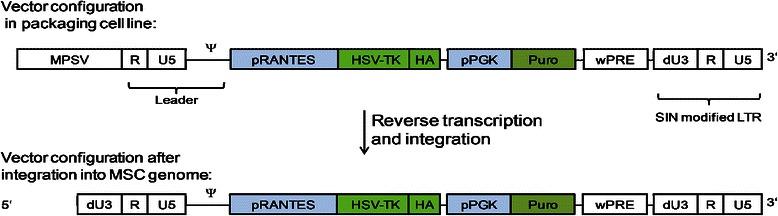
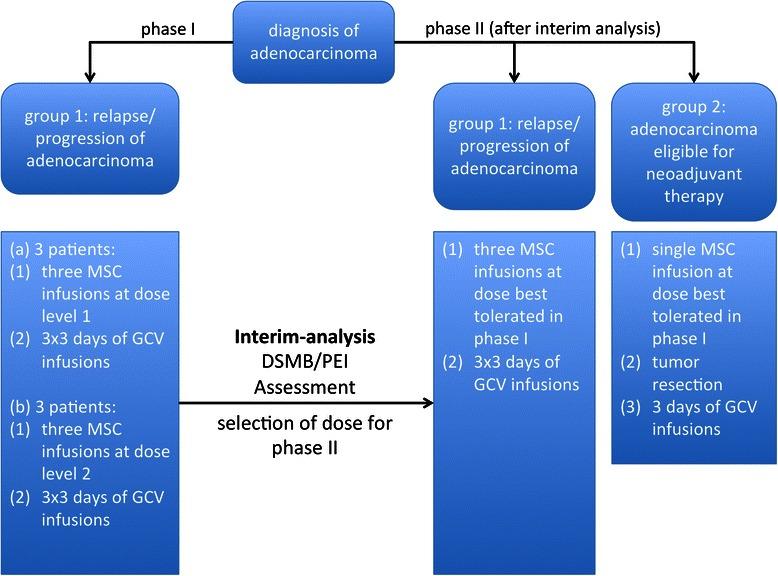
METHODS/DESIGN: TREAT-ME1 is a prospective, uncontrolled, single-arm phase I/II study assessing the safety and efficacy of genetically modified autologous mesenchymal stromal cells (MSC) as delivery vehicles for a cell-based gene therapy for advanced, recurrent or metastatic gastrointestinal or hepatopancreatobiliary adenocarcinoma. Autologous bone marrow will be drawn from each eligible patient after consent for bone marrow donation has been obtained (under a separate EC-approved protocol). In the following ~10 weeks the investigational medicinal product (IMP) is developed for each patient. To this end, the patient's MSCs are stably transfected with a gamma-retroviral, replication-incompetent and self-inactivating (SIN) vector system containing a therapeutic promoter - gene construct that allows for tumor-specific expression of the therapeutic gene. After release of the IMP the patients are enrolled after given informed consent for participation in the TREAT-ME 1 trial. In the phase I part of the study, the safety of the IMP is tested in six patients by three treatment cycles consisting of re-transfusion of MSCs at different concentrations followed by administration of the prodrug Ganciclovir. In the phase II part of the study, sixteen patients will be enrolled receiving IMP treatment. A subgroup of patients that qualifies for surgery will be treated preoperatively with the IMP to verify homing of the MSCs to tumors as to be confirmed in the surgical specimen.
DISCUSSION
The TREAT-ME1 clinical study involves a highly innovative therapeutic strategy combining cell and gene therapy and is conducted at a high level of pharmaceutical quality ensuring patient safety. This patient-tailored approach represents the first clinical study worldwide utilizing genetically engineered MSCs in humans.
TRIAL REGISTRATION
EU Clinical Trials Register/European Union Drug Regulating Authorities Clinical Trials Database number: 2012-003741-15.
背景
起源于消化系统的腺癌是全球癌症相关死亡的主要原因。肿瘤复发、局部进展和转移是经常阻碍这些肿瘤进行根治性手术治疗的关键因素。临床前研究表明,这些肿瘤对支持性间充质基质的依赖性导致其对靶向该基质的细胞疗法敏感。
方法/设计:TREAT-ME1是一项前瞻性、非对照、单臂I/II期研究,评估基因改造的自体间充质基质细胞(MSC)作为一种基于细胞的基因疗法载体治疗晚期、复发或转移性胃肠道或肝胰胆管腺癌的安全性和有效性。在获得患者同意捐献骨髓后(根据一项单独的经伦理委员会批准的方案),从每名符合条件的患者采集自体骨髓。在接下来约10周内,为每名患者开发研究用药品(IMP)。为此,使用含有治疗性启动子-基因构建体的γ-逆转录病毒、无复制能力和自我失活(SIN)载体系统对患者的MSC进行稳定转染,该构建体可实现治疗性基因的肿瘤特异性表达。IMP放行后,在患者签署参与TREAT-ME 1试验的知情同意书后将其纳入研究。在研究的I期部分,通过三个治疗周期对6名患者测试IMP的安全性,治疗周期包括回输不同浓度的MSC,随后给予前体药物更昔洛韦。在研究的II期部分,将招募16名接受IMP治疗的患者。符合手术条件的患者亚组将在术前接受IMP治疗,以验证MSC在肿瘤中的归巢情况,这将在手术标本中得到证实。
讨论
TREAT-ME1临床研究涉及一种将细胞和基因疗法相结合的高度创新的治疗策略,并且在确保患者安全的高药品质量水平下进行。这种针对患者的方法代表了全球首个在人体中使用基因工程化MSC的临床研究。
试验注册
欧盟临床试验注册库/欧盟药品监管当局临床试验数据库编号:2012-003741-15。

 Zotero 插件