
感染后肠易激综合征小鼠模型中细胞因子水平的变化
Changes of cytokine levels in a mouse model of post-infectious irritable bowel syndrome.
作者信息
Yang Bo, Zhou Xuchun, Lan Cheng
机构信息
Department of Gastroenterology, The First Affiliated Hospital of Chongqing Medical University, Chongqing, 4000 l6, China.
Department of Gastroenterology, Hainan Provincial People's Hospital, Haikou, 570311, China.
出版信息
BMC Gastroenterol. 2015 Apr 1;15:43. doi: 10.1186/s12876-015-0272-8.
BACKGROUND
Irritable bowel syndrome (IBS) is a highly prevalent functional gastrointestinal disorder. Post-infectious IBS (PI-IBS) is caused by an acute gastrointestinal infection preceding the onset of symptoms. However, the pathophysiology of PI-IBS is not clear, and the purpose of this study was to investigate the probable immune mechanisms of PI-IBS.
METHODS
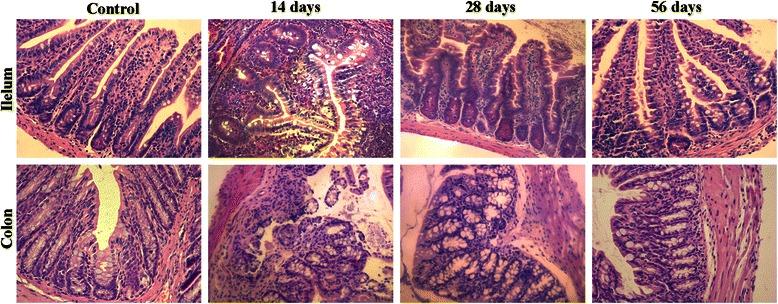
C57BL/6 mice were randomly assigned to either an infection group or a control group. Mice in the infection group were infected with Trichinella spiralis to establish a model of PI-IBS (500 Trichinella), while control mice received only salt solution. Visceral sensitivity of colorectal distention in mice was evaluated by abdominal withdrawal reflex scores and intestinal inflammation was assessed using hematoxylin-eosin staining; at day 56 post-infection, the mRNA and protein levels of specific cytokines in the gut segments were detected using reverse-transcription polymerase chain reaction and enzyme-linked immunoabsorbent assay.
RESULTS
Levels of interferon γ and interleukin (IL)-17 in the PI-IBS group were significantly increased in the duodenum and ileum, and IL-10 was decreased in the jejunum, ileum, and colon compared with control mice. However, the expression level of IL-1β was not significantly different between the two groups.
CONCLUSIONS
The present study suggests that the local low-grade inflammation and immune activation that are an important component of the pathophysiology of PI-IBS are primarily induced and maintained by specific cytokines.
背景
肠易激综合征(IBS)是一种高度流行的功能性胃肠疾病。感染后肠易激综合征(PI-IBS)由症状发作前的急性胃肠道感染引起。然而,PI-IBS的病理生理学尚不清楚,本研究的目的是探讨PI-IBS可能的免疫机制。
方法
将C57BL/6小鼠随机分为感染组和对照组。感染组小鼠感染旋毛虫以建立PI-IBS模型(500条旋毛虫),而对照小鼠仅接受盐溶液。通过腹部退缩反射评分评估小鼠结肠扩张的内脏敏感性,并使用苏木精-伊红染色评估肠道炎症;在感染后第56天,使用逆转录聚合酶链反应和酶联免疫吸附测定法检测肠道节段中特定细胞因子的mRNA和蛋白质水平。
结果
与对照小鼠相比,PI-IBS组十二指肠和回肠中的干扰素γ和白细胞介素(IL)-17水平显著升高,空肠、回肠和结肠中的IL-10水平降低。然而,两组之间IL-1β的表达水平没有显著差异。
结论
本研究表明,局部低度炎症和免疫激活作为PI-IBS病理生理学的重要组成部分,主要由特定细胞因子诱导和维持。


 Zotero 插件