
大鼠坐骨神经损伤后与损伤相关及特定残疾的腰椎脊髓基因调控
Injury-Dependent and Disability-Specific Lumbar Spinal Gene Regulation following Sciatic Nerve Injury in the Rat.
作者信息
Austin Paul J, Bembrick Alison L, Denyer Gareth S, Keay Kevin A
机构信息
School of Medical Sciences (Anatomy & Histology), The University of Sydney, Sydney, NSW, Australia.
School of Molecular Bioscience, The University of Sydney, Sydney, NSW, Australia.
出版信息
PLoS One. 2015 Apr 23;10(4):e0124755. doi: 10.1371/journal.pone.0124755. eCollection 2015.
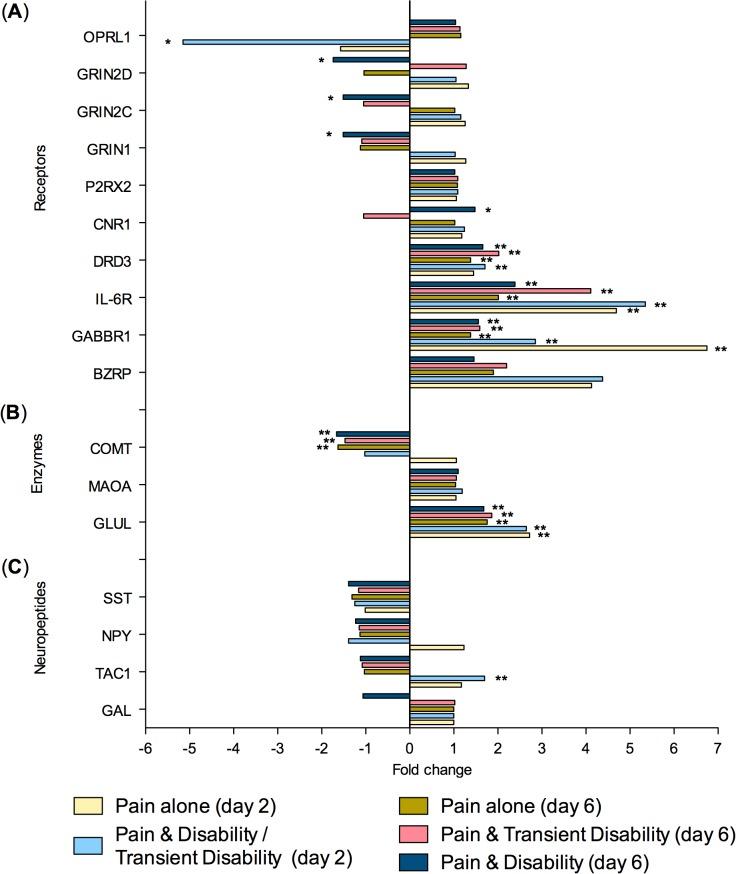
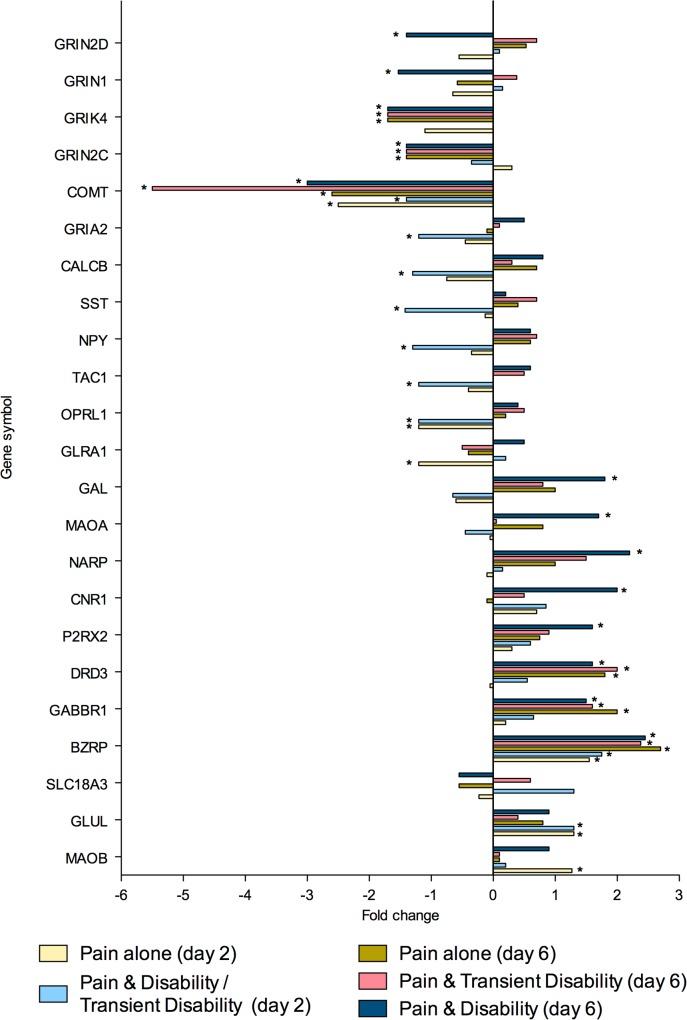
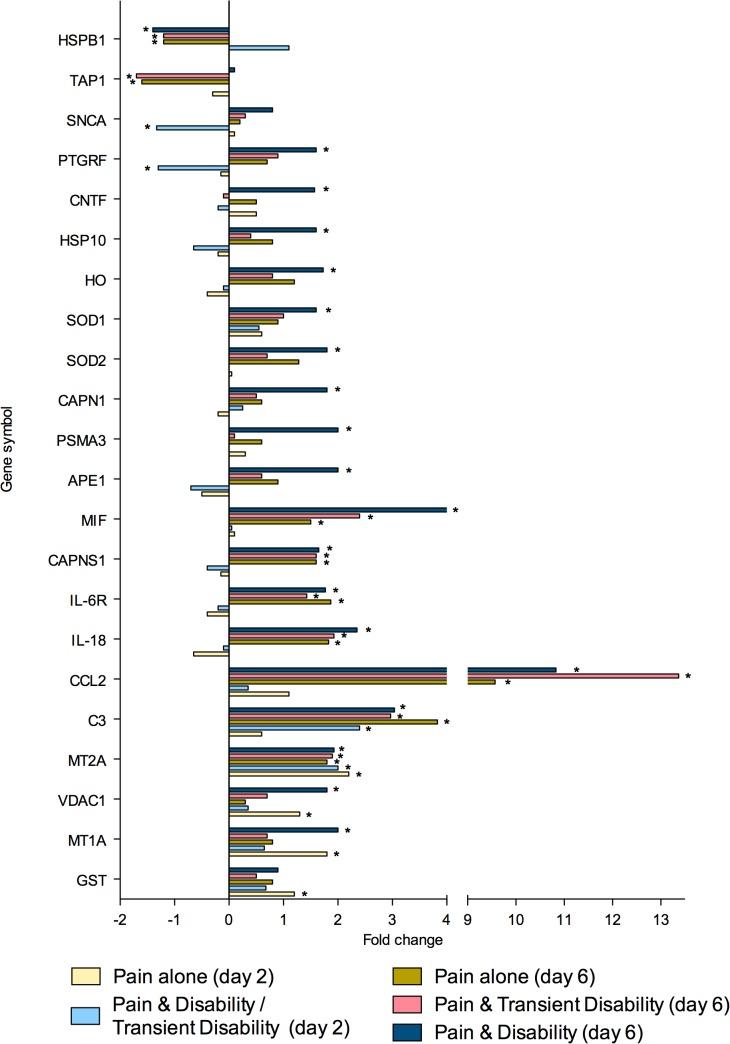
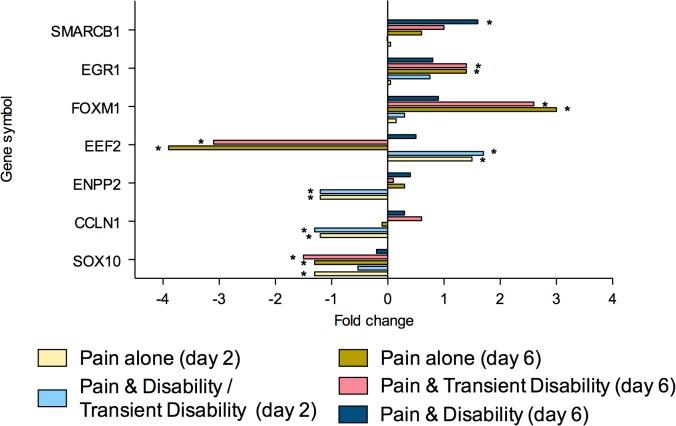
Allodynia, hyperalgesia and spontaneous pain are cardinal sensory signs of neuropathic pain. Clinically, many neuropathic pain patients experience affective-motivational state changes, including reduced familial and social interactions, decreased motivation, anhedonia and depression which are severely debilitating. In earlier studies we have shown that sciatic nerve chronic constriction injury (CCI) disrupts social interactions, sleep-wake-cycle and endocrine function in one third of rats, a subgroup reliably identified six days after injury. CCI consistently produces allodynia and hyperalgesia, the intensity of which was unrelated either to the altered social interactions, sleep-wake-cycle or endocrine changes. This decoupling of the sensory consequences of nerve injury from the affective-motivational changes is reported in both animal experiments and human clinical data. The sensory changes triggered by CCI are mediated primarily by functional changes in the lumbar dorsal horn, however, whether lumbar spinal changes may drive different affective-motivational states has never been considered. In these studies, we used microarrays to identify the unique transcriptomes of rats with altered social behaviours following sciatic CCI to determine whether specific patterns of lumbar spinal adaptations characterised this subgroup. Rats underwent CCI and on the basis of reductions in dominance behaviour in resident-intruder social interactions were categorised as having Pain & Disability, Pain & Transient Disability or Pain alone. We examined the lumbar spinal transcriptomes two and six days after CCI. Fifty-four 'disability-specific' genes were identified. Sixty-five percent were unique to Pain & Disability rats, two-thirds of which were associated with neurotransmission, inflammation and/or cellular stress. In contrast, 40% of genes differentially regulated in rats without disabilities were involved with more general homeostatic processes (cellular structure, transcription or translation). We suggest that these patterns of gene expression lead to either the expression of disability, or to resilience and recovery, by modifying local spinal circuitry at the origin of ascending supraspinal pathways.
痛觉过敏、痛觉超敏和自发痛是神经性疼痛的主要感觉体征。临床上,许多神经性疼痛患者会出现情感 - 动机状态的改变,包括家庭和社交互动减少、动力下降、快感缺失和抑郁,这些都会严重影响患者的生活能力。在早期研究中,我们发现坐骨神经慢性压迫损伤(CCI)会扰乱三分之一大鼠的社交互动、睡眠 - 觉醒周期和内分泌功能,在损伤后六天可可靠地识别出这一亚组。CCI持续产生痛觉过敏和痛觉超敏,其强度与社交互动、睡眠 - 觉醒周期或内分泌变化无关。在动物实验和人类临床数据中均报道了神经损伤的感觉后果与情感 - 动机变化之间的这种脱耦现象。CCI引发的感觉变化主要由腰段背角的功能变化介导,然而,腰段脊髓变化是否可能驱动不同的情感 - 动机状态从未被考虑过。在这些研究中,我们使用微阵列来鉴定坐骨神经CCI后社交行为改变的大鼠的独特转录组,以确定腰段脊髓适应的特定模式是否表征了这一亚组。大鼠接受CCI,并根据在居住者 - 入侵者社交互动中支配行为的减少情况,分为患有疼痛与残疾、疼痛与短暂残疾或仅疼痛三类。我们在CCI后两天和六天检查了腰段脊髓转录组。鉴定出了54个“残疾特异性”基因。其中65%是疼痛与残疾大鼠所特有的,其中三分之二与神经传递、炎症和/或细胞应激有关。相比之下,在无残疾大鼠中差异调节的基因中有40%参与更一般的稳态过程(细胞结构、转录或翻译)。我们认为,这些基因表达模式通过修饰上行脊髓上通路起始处的局部脊髓回路,导致残疾的表达,或导致恢复力和恢复。



 Zotero 插件