
在MCL-001(EMERGE)关键试验中,接受来那度胺治疗的复发/难治性套细胞淋巴瘤患者按肿瘤细胞增殖率(Ki-67)进行的长期随访及结果
Longer-term follow-up and outcome by tumour cell proliferation rate (Ki-67) in patients with relapsed/refractory mantle cell lymphoma treated with lenalidomide on MCL-001(EMERGE) pivotal trial.
作者信息
Goy Andre, Kalayoglu Besisik Sevgi, Drach Johannes, Ramchandren Radhakrishnan, Robertson Michael J, Avivi Irit, Rowe Jacob M, Herbrecht Raoul, Van Hoof Achiel, Zhang Lei, Cicero Sherri, Fu Tommy, Witzig Thomas
机构信息
John Theurer Cancer Center at HUMC, Hackensack, NJ, USA.
Istanbul University Faculty of Medicine, Istanbul, Turkey.
出版信息
Br J Haematol. 2015 Aug;170(4):496-503. doi: 10.1111/bjh.13456. Epub 2015 Apr 28.
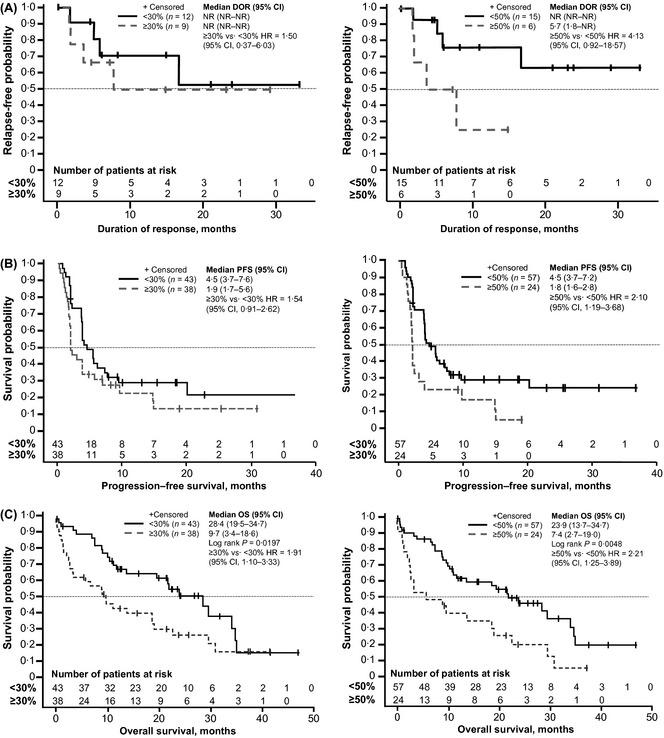
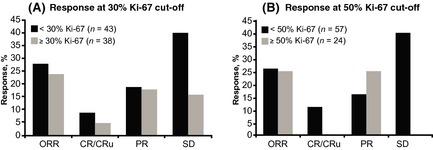
Patients with mantle cell lymphoma (MCL) generally respond to first-line immunochemotherapy, but often show chemoresistance upon subsequent relapses, with poor outcome. Several studies of the immunomodulator, lenalidomide, have demonstrated its activity in MCL including the MCL-001 study in relapsed/refractory patients who had failed defined prior therapies of anthracyclines or mitoxantrone, cyclophosphamide, rituximab and also bortezomib. We present here the long-term efficacy follow-up of the prospective phase II MCL-001 study (N = 134), including new exploratory analyses with baseline Ki-67 (MIB1), a biological marker of tumour proliferation. With longer follow-up, lenalidomide showed a 28% overall response rate [ORR; 8% complete response (CR)/CR unconfirmed (CRu)]. Median duration of response (DOR), progression-free survival and overall survival were 16·6, 4·0 and 20·9 months, respectively. Myelosuppression continued to be the most common grade 3/4 toxicity. Several studies of MCL patients treated with chemotherapy, rituximab and bortezomib have shown an inverse association between survival and Ki-67. Ki-67 data in 81/134 MCL-001 patients showed similar ORRs in both low (<30% or <50%) versus high (≥30% or ≥50%) Ki-67-expressing groups, yet lower Ki-67 levels demonstrated superior CR/CRu, DOR and survival outcomes. Overall, lenalidomide showed durable efficacy with a consistent safety profile in heavily pretreated, relapsed/refractory MCL post-bortezomib.
套细胞淋巴瘤(MCL)患者通常对一线免疫化疗有反应,但在后续复发时往往表现出化疗耐药性,预后较差。几项关于免疫调节剂来那度胺的研究表明其在MCL中有活性,包括MCL - 001研究,该研究针对的是复发/难治性患者,这些患者之前接受过蒽环类药物或米托蒽醌、环磷酰胺、利妥昔单抗以及硼替佐米的既定治疗但均告失败。我们在此展示前瞻性II期MCL - 001研究(N = 134)的长期疗效随访情况,包括对肿瘤增殖生物标志物基线Ki - 67(MIB1)进行的新探索性分析。随着随访时间延长,来那度胺显示出28%的总缓解率[ORR;8%完全缓解(CR)/未确认的完全缓解(CRu)]。中位缓解持续时间(DOR)、无进展生存期和总生存期分别为16.6、4.0和20.9个月。骨髓抑制仍然是最常见的3/4级毒性反应。几项针对接受化疗、利妥昔单抗和硼替佐米治疗的MCL患者的研究表明,生存期与Ki - 67之间存在负相关。81/134例MCL - 001患者的Ki - 67数据显示,低表达(<30%或<50%)与高表达(≥30%或≥50%)Ki - 67的组间ORR相似,但较低的Ki - 67水平显示出更好的CR/CRu、DOR和生存结果。总体而言,来那度胺在硼替佐米治疗后的重度预处理、复发/难治性MCL中显示出持久疗效和一致的安全性。

 Zotero 插件