
利用通过细胞指数富集配体系统进化技术生成的DNA适配体对人肝癌细胞进行分子识别。
Molecular Recognition of Human Liver Cancer Cells Using DNA Aptamers Generated via Cell-SELEX.
作者信息
Xu Jiehua, Teng I-Ting, Zhang Liqin, Delgado Stefanie, Champanhac Carole, Cansiz Sena, Wu Cuichen, Shan Hong, Tan Weihong
机构信息
Department of Nuclear Medicine, The Third Affiliated Hospital, Sun Yat-Sen University, Guangzhou, Guangdong, China; Department of Chemistry, Department of Biochemistry and Molecular Biology and Department of Physiology and Functional Genomics, Center for Research at the Bio/Nano Interface, Health Cancer Center, UF Genetics Institute and McKnight Brain Institute, University of Florida, Gainesville, FL, United States of America.
Department of Chemistry, Department of Biochemistry and Molecular Biology and Department of Physiology and Functional Genomics, Center for Research at the Bio/Nano Interface, Health Cancer Center, UF Genetics Institute and McKnight Brain Institute, University of Florida, Gainesville, FL, United States of America.
出版信息
PLoS One. 2015 May 4;10(5):e0125863. doi: 10.1371/journal.pone.0125863. eCollection 2015.
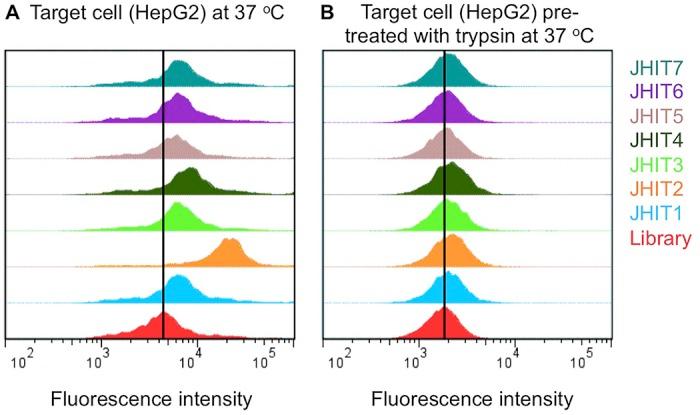
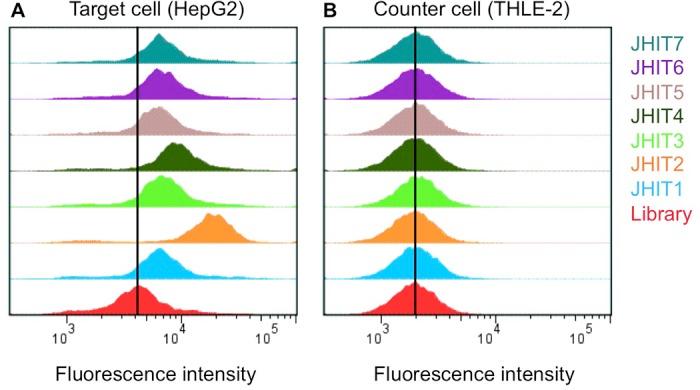
Most clinical cases of liver cancer cannot be diagnosed until they have evolved to an advanced stage, thus resulting in high mortality. It is well recognized that the implementation of early detection methods and the development of targeted therapies for liver cancer are essential to reducing the high mortality rates associated with this disease. To achieve these goals, molecular probes capable of recognizing liver cancer cell-specific targets are needed. Here we describe a panel of aptamers able to distinguish hepatocarcinoma from normal liver cells. The aptamers, which were selected by cell-based SELEX (Systematic Evolution of Ligands by Exponential Enrichment), have Kd values in the range of 64-349 nM toward the target human hepatoma cell HepG2, and also recognize ovarian cancer cells and lung adenocarcinoma. The proteinase treatment experiment indicated that all aptamers could recognize target HepG2 cells through surface proteins. This outcome suggested that these aptamers could be used as potential probes for further research in cancer studies, such as developing early detection assays, targeted therapies, and imaging agents, as well as for the investigation of common membrane proteins in these distinguishable cancers.
大多数肝癌临床病例在发展到晚期之前无法被诊断出来,因此导致高死亡率。人们普遍认识到,实施早期检测方法和开发肝癌靶向治疗对于降低与该疾病相关的高死亡率至关重要。为了实现这些目标,需要能够识别肝癌细胞特异性靶点的分子探针。在这里,我们描述了一组能够区分肝癌细胞与正常肝细胞的适配体。这些适配体是通过基于细胞的SELEX(指数富集配体系统进化)筛选出来的,对目标人肝癌细胞HepG2的解离常数(Kd)值在64 - 349 nM范围内,并且还能识别卵巢癌细胞和肺腺癌细胞。蛋白酶处理实验表明,所有适配体都可以通过表面蛋白识别目标HepG2细胞。这一结果表明,这些适配体可用作潜在的探针,用于癌症研究的进一步探索,如开发早期检测方法、靶向治疗和成像剂,以及研究这些可区分癌症中的常见膜蛋白。
 Zotero 插件