
马来西亚因轮状病毒肠胃炎需住院治疗导致的家庭灾难性医疗支出和贫困状况。
Household catastrophic healthcare expenditure and impoverishment due to rotavirus gastroenteritis requiring hospitalization in Malaysia.
作者信息
Loganathan Tharani, Lee Way-Seah, Lee Kok-Foo, Jit Mark, Ng Chiu-Wan
机构信息
Department of Social and Preventive Medicine, University of Malaya, Kuala Lumpur, Malaysia.
Department of Paediatrics, University of Malaya, Kuala Lumpur, Malaysia; University Malaya Paediatric and Child Health Research Group, Kuala Lumpur, Malaysia.
出版信息
PLoS One. 2015 May 5;10(5):e0125878. doi: 10.1371/journal.pone.0125878. eCollection 2015.
BACKGROUND
While healthcare costs for rotavirus gastroenteritis requiring hospitalization may be burdensome on households in Malaysia, exploration on the distribution and catastrophic impact of these expenses on households are lacking.
OBJECTIVES
We assessed the economic burden, levels and distribution of catastrophic healthcare expenditure, the poverty impact on households and inequities related to healthcare payments for acute gastroenteritis requiring hospitalization in Malaysia.
METHODS
A two-year prospective, hospital-based study was conducted from 2008 to 2010 in an urban (Kuala Lumpur) and rural (Kuala Terengganu) setting in Malaysia. All children under the age of 5 years admitted for acute gastroenteritis were included. Patients were screened for rotavirus and information on healthcare expenditure was obtained.
RESULTS
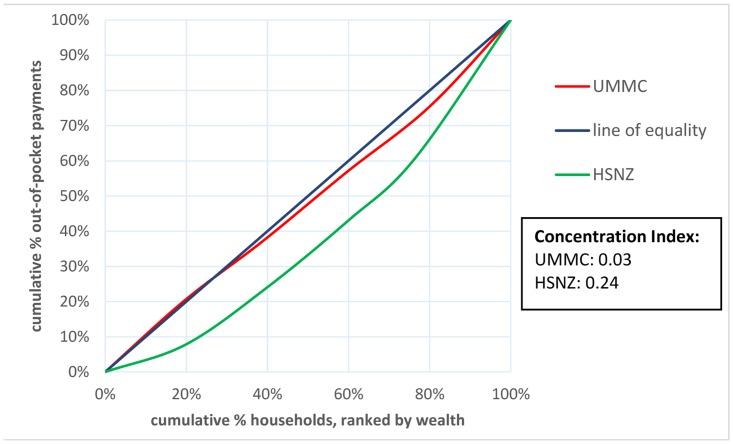
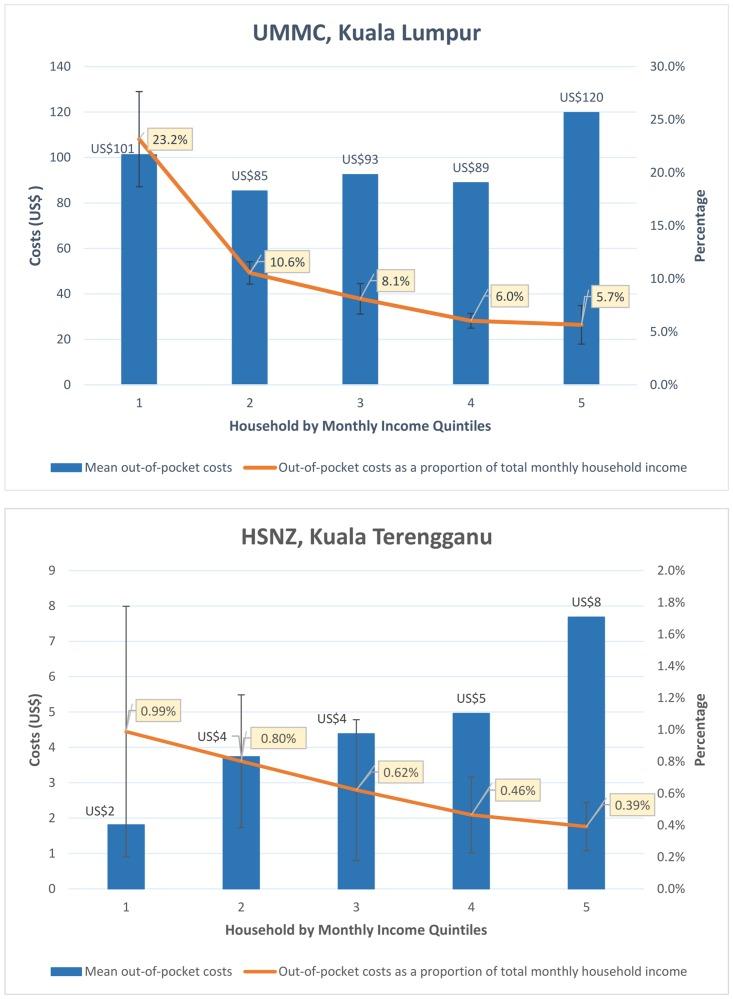
Of the 658 stool samples collected at both centers, 248 (38%) were positive for rotavirus. Direct and indirect costs incurred were significantly higher in Kuala Lumpur compared with Kuala Terengganu (US$222 Vs. US$45; p<0.001). The mean direct and indirect costs for rotavirus gastroenteritis consisted 20% of monthly household income in Kuala Lumpur, as compared with only 5% in Kuala Terengganu. Direct medical costs paid out-of-pocket caused 141 (33%) households in Kuala Lumpur to experience catastrophic expenditure and 11 (3%) households to incur poverty. However in Kuala Terengganu, only one household (0.5%) experienced catastrophic healthcare expenditure and none were impoverished. The lowest income quintile in Kuala Lumpur was more likely to experience catastrophic payments compared to the highest quintile (87% vs 8%). The concentration index for out-of-pocket healthcare payments was closer to zero at Kuala Lumpur (0.03) than at Kuala Terengganu (0.24).
CONCLUSIONS
While urban households were wealthier, healthcare expenditure due to gastroenteritis had more catastrophic and poverty impact on the urban poor. Universal rotavirus vaccination would reduce both disease burden and health inequities in Malaysia.
背景
虽然马来西亚因轮状病毒肠胃炎需住院治疗的医疗费用可能给家庭带来沉重负担,但目前缺乏对这些费用在家庭中的分布情况及其灾难性影响的研究。
目的
我们评估了马来西亚因急性肠胃炎需住院治疗的灾难性医疗支出的经济负担、水平和分布情况,以及对家庭的贫困影响和与医疗支付相关的不公平现象。
方法
2008年至2010年在马来西亚的城市(吉隆坡)和农村(瓜拉丁加奴)地区进行了一项为期两年的前瞻性医院研究。纳入所有因急性肠胃炎入院的5岁以下儿童。对患者进行轮状病毒筛查,并获取医疗费用信息。
结果
在两个中心采集的658份粪便样本中,248份(38%)轮状病毒检测呈阳性。吉隆坡的直接和间接费用显著高于瓜拉丁加奴(222美元对45美元;p<0.001)。吉隆坡轮状病毒肠胃炎的平均直接和间接费用占家庭月收入的20%,而瓜拉丁加奴仅为5%。吉隆坡有141户家庭(33%)因自付直接医疗费用而经历灾难性支出,11户家庭(3%)陷入贫困。然而在瓜拉丁加奴,只有一户家庭(0.5%)经历了灾难性医疗支出,没有家庭陷入贫困。吉隆坡最低收入五分位数家庭比最高收入五分位数家庭更有可能经历灾难性支付(87%对8%)。吉隆坡自付医疗费用的集中指数(0.03)比瓜拉丁加奴(0.24)更接近零。
结论
虽然城市家庭更富裕,但肠胃炎导致的医疗支出对城市贫困人口的灾难性影响和贫困影响更大。普遍接种轮状病毒疫苗将减轻马来西亚的疾病负担和健康不公平现象。

 Zotero 插件