
烧伤患者体内的基质金属蛋白酶-8、-9及金属蛋白酶组织抑制剂-1:一项前瞻性观察研究
Matrix metalloproteinases -8 and -9 and tissue inhibitor of metalloproteinase-1 in burn patients. A prospective observational study.
作者信息
Hästbacka Johanna, Fredén Filip, Hult Maarit, Bergquist Maria, Wilkman Erika, Vuola Jyrki, Sorsa Timo, Tervahartiala Taina, Huss Fredrik
机构信息
Intensive Care Medicine, Department of Anesthesiology, Intensive Care Medicine and Pain Medicine, Helsinki University Hospital, Helsinki, Finland.
Department of Surgical Sciences, Anesthesiology and Intensive Care, Uppsala University, Uppsala, Sweden; Burn Center, Department of Plastic- and Maxillofacial Surgery, University Hospital of Uppsala, Uppsala, Sweden.
出版信息
PLoS One. 2015 May 6;10(5):e0125918. doi: 10.1371/journal.pone.0125918. eCollection 2015.
INTRODUCTION
Matrix metalloproteinases (MMPs) -8 and -9 are released from neutrophils in acute inflammation and may contribute to permeability changes in burn injury. In retrospective studies on sepsis, levels of MMP-8, MMP-9, and tissue inhibitor of metalloproteinase-1 (TIMP-1) differed from those of healthy controls, and TIMP-1 showed an association with outcome. Our objective was to investigate the relationship between these proteins and disease severity and outcome in burn patients.
METHODS
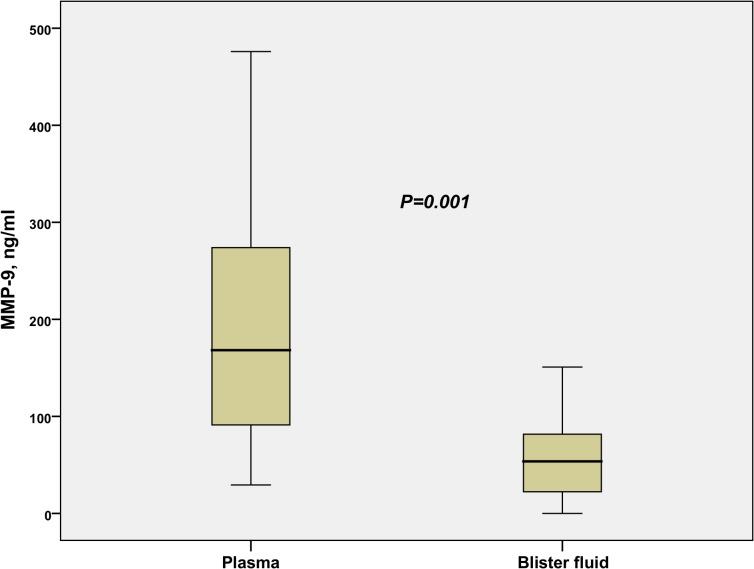
In this prospective, observational, two-center study, we collected plasma samples from admission to day 21 post-burn, and burn blister fluid samples on admission. We compared MMP-8, -9, and TIMP-1 levels between TBSA<20% (N = 19) and TBSA>20% (N = 30) injured patients and healthy controls, and between 90-day survivors and non-survivors. MMP-8, -9, and TIMP-1 levels at 24-48 hours from injury, their maximal levels, and their time-adjusted means were compared between groups. Correlations with clinical parameters and the extent of burn were analyzed. MMP-8, -9, and TIMP-1 levels in burn blister fluids were also studied.
RESULTS
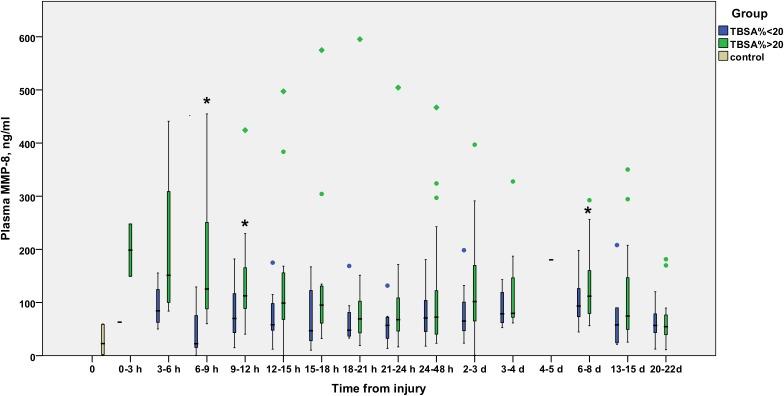
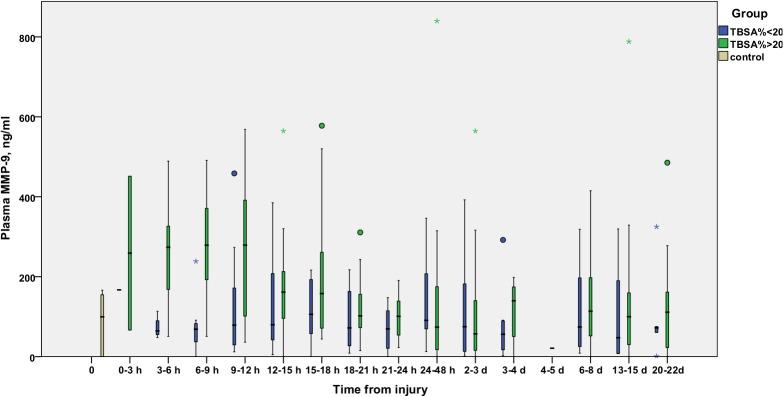
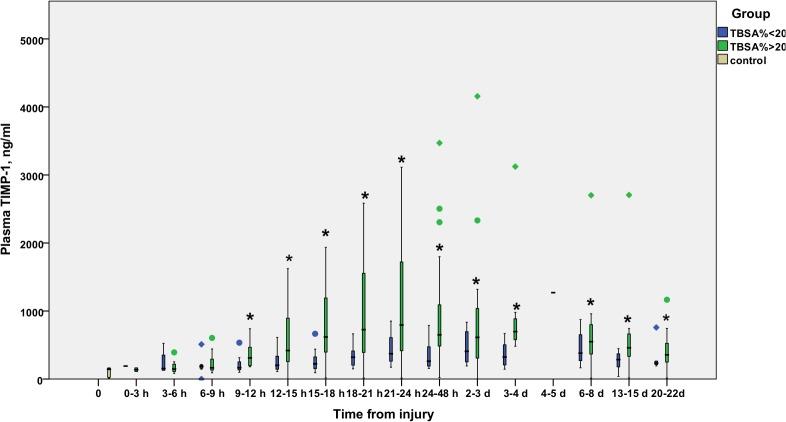
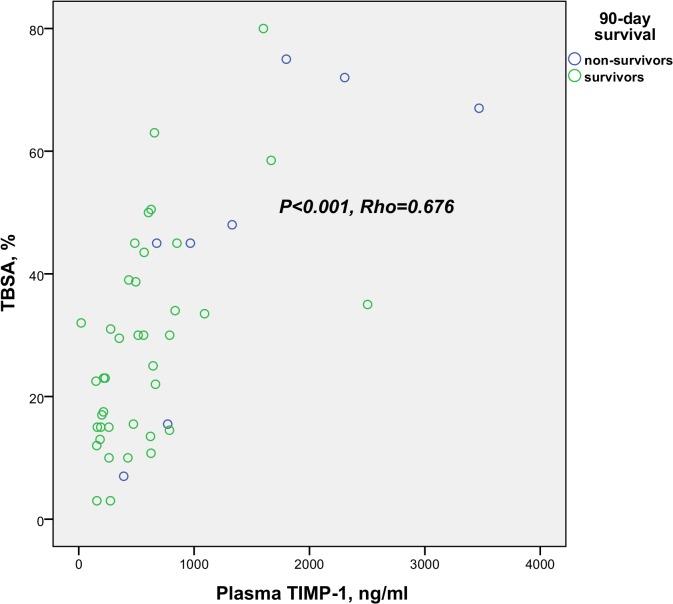
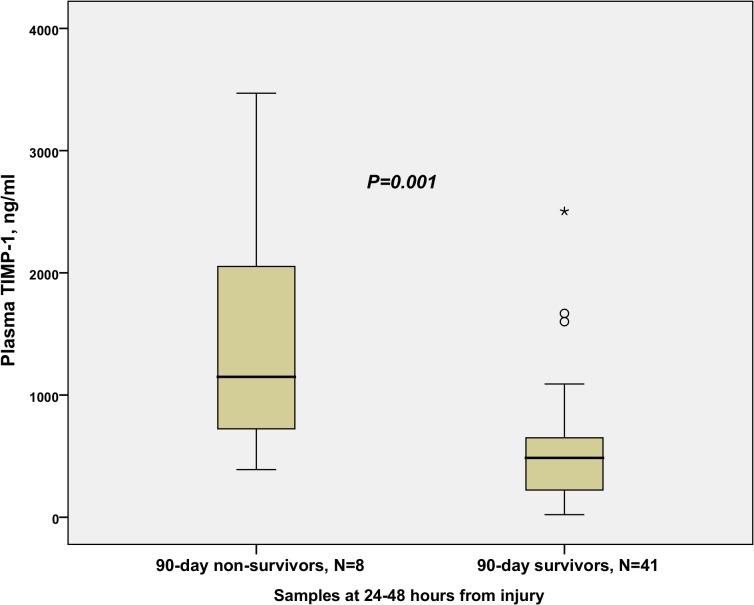
Plasma MMP-8 and -9 were higher in patients than in healthy controls (P<0.001 and P = 0.016), but only MMP-8 differed between the TBSA<20% and TBSA>20% groups. MMP-8 and -9 were not associated with clinical severity or outcome measures. TIMP-1 differed significantly between patients and controls (P<0.001) and between TBSA<20% and TBSA>20% groups (P<0.002). TIMP-1 was associated with 90-day mortality and correlated with the extent of injury and clinical measures of disease severity. TIMP-1 may serve as a new biomarker in outcome prognostication of burn patients.
引言
基质金属蛋白酶(MMP)-8和-9在急性炎症中从中性粒细胞释放,可能导致烧伤损伤中的通透性改变。在关于脓毒症的回顾性研究中,MMP-8、MMP-9和金属蛋白酶组织抑制剂-1(TIMP-1)的水平与健康对照不同,且TIMP-1显示与预后相关。我们的目的是研究这些蛋白质与烧伤患者疾病严重程度和预后之间的关系。
方法
在这项前瞻性、观察性、双中心研究中,我们收集了从烧伤入院至伤后21天的血浆样本,以及入院时的烧伤水疱液样本。我们比较了烧伤总面积(TBSA)<20%(N = 19)和TBSA>20%(N = 30)的受伤患者与健康对照之间,以及90天幸存者和非幸存者之间的MMP-8、-9和TIMP-1水平。比较了伤后24 - 48小时、最高水平及其时间校正均值时各组的MMP-8、-9和TIMP-1水平。分析了与临床参数和烧伤程度的相关性。还研究了烧伤水疱液中的MMP-8、-9和TIMP-1水平。
结果
患者血浆中的MMP-8和-9高于健康对照(P<0.001和P = 0.016),但仅MMP-8在TBSA<20%和TBSA>20%组之间存在差异。MMP-8和-9与临床严重程度或预后指标无关。TIMP-1在患者与对照之间(P<0.001)以及TBSA<20%和TBSA>20%组之间(P<0.002)存在显著差异。TIMP-1与90天死亡率相关,并与损伤程度和疾病严重程度的临床指标相关。TIMP-1可能作为烧伤患者预后预测的一种新生物标志物。


 Zotero 插件