
肺炎链球菌在体外和体内增强人呼吸道合胞病毒感染
Streptococcus pneumoniae Enhances Human Respiratory Syncytial Virus Infection In Vitro and In Vivo.
作者信息
Nguyen D Tien, Louwen Rogier, Elberse Karin, van Amerongen Geert, Yüksel Selma, Luijendijk Ad, Osterhaus Albert D M E, Duprex W Paul, de Swart Rik L
机构信息
Department of Viroscience, Erasmus MC, Rotterdam, The Netherlands.
Department of Medical Microbiology and Infectious Diseases, Erasmus MC, Rotterdam, The Netherlands.
出版信息
PLoS One. 2015 May 13;10(5):e0127098. doi: 10.1371/journal.pone.0127098. eCollection 2015.
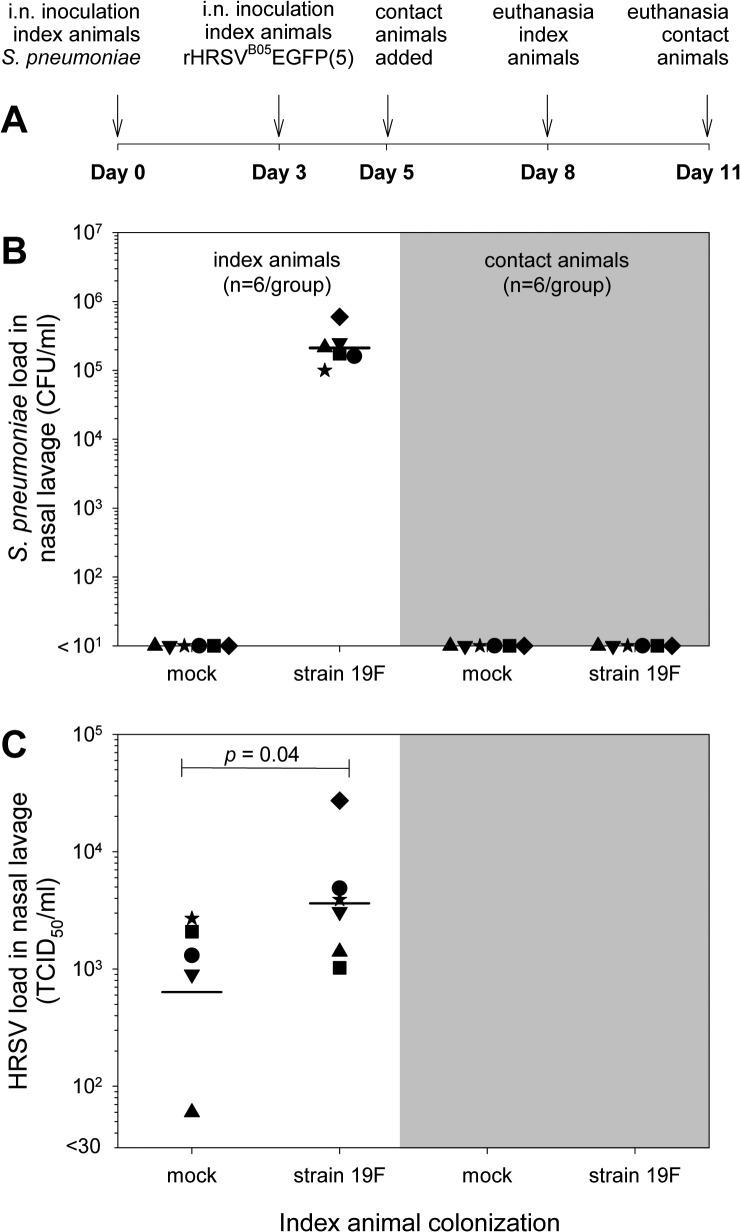
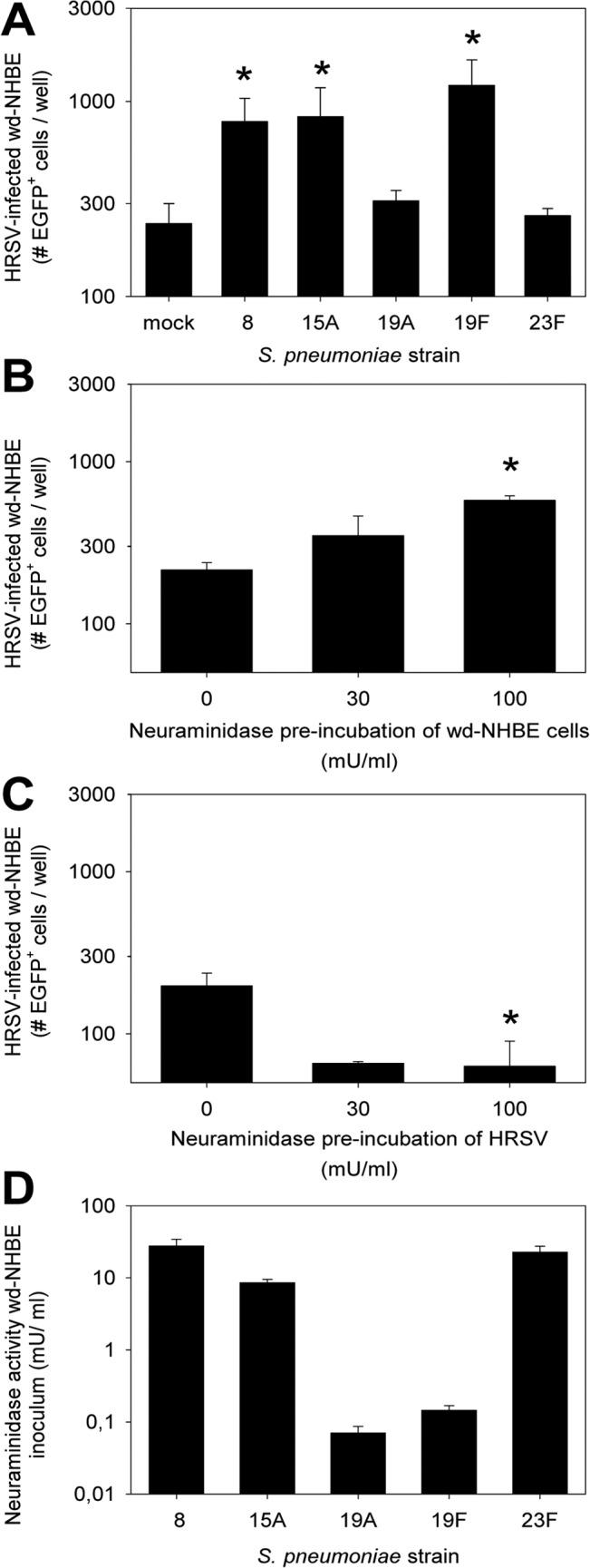
Human respiratory syncytial virus (HRSV) and Streptococcus pneumoniae are important causative agents of respiratory tract infections. Both pathogens are associated with seasonal disease outbreaks in the pediatric population, and can often be detected simultaneously in infants hospitalized with bronchiolitis or pneumonia. It has been described that respiratory virus infections may predispose for bacterial superinfections, resulting in severe disease. However, studies on the influence of bacterial colonization of the upper respiratory tract on the pathogenesis of subsequent respiratory virus infections are scarce. Here, we have investigated whether pneumococcal colonization enhances subsequent HRSV infection. We used a newly generated recombinant subgroup B HRSV strain that expresses enhanced green fluorescent protein and pneumococcal isolates obtained from healthy children in disease-relevant in vitro and in vivo model systems. Three pneumococcal strains specifically enhanced in vitro HRSV infection of primary well-differentiated normal human bronchial epithelial cells grown at air-liquid interface, whereas two other strains did not. Since previous studies reported that bacterial neuraminidase enhanced HRSV infection in vitro, we measured pneumococcal neuraminidase activity in these cultures but found no correlation with the observed infection enhancement in our model. Subsequently, a selection of pneumococcal strains was used to induce nasal colonization of cotton rats, the best available small animal model for HRSV. Intranasal HRSV infection three days later resulted in strain-specific enhancement of HRSV replication in vivo. One S. pneumoniae strain enhanced HRSV both in vitro and in vivo, and was also associated with enhanced syncytium formation in vivo. However, neither pneumococci nor HRSV were found to spread from the upper to the lower respiratory tract, and neither pathogen was transmitted to naive cage mates by direct contact. These results demonstrate that pneumococcal colonization can enhance subsequent HRSV infection, and provide tools for additional mechanistic and intervention studies.
人呼吸道合胞病毒(HRSV)和肺炎链球菌是呼吸道感染的重要病原体。这两种病原体都与儿科人群的季节性疾病暴发有关,并且在因细支气管炎或肺炎住院的婴儿中常常能同时检测到。据描述,呼吸道病毒感染可能易引发细菌重叠感染,导致严重疾病。然而,关于上呼吸道细菌定植对后续呼吸道病毒感染发病机制影响的研究却很少。在此,我们研究了肺炎球菌定植是否会增强后续的HRSV感染。我们使用了一种新构建的表达增强型绿色荧光蛋白的重组B亚组HRSV毒株,以及从健康儿童中分离得到的肺炎球菌菌株,采用了与疾病相关的体外和体内模型系统。三种肺炎球菌菌株特异性增强了在气液界面生长的原代充分分化的正常人支气管上皮细胞的体外HRSV感染,而另外两种菌株则没有。由于先前的研究报道细菌神经氨酸酶在体外增强了HRSV感染,我们检测了这些培养物中的肺炎球菌神经氨酸酶活性,但发现其与我们模型中观察到的感染增强并无关联。随后,选择了一批肺炎球菌菌株来诱导棉鼠鼻腔定植,棉鼠是目前用于HRSV研究的最佳小型动物模型。三天后经鼻内感染HRSV导致体内HRSV复制出现菌株特异性增强。一株肺炎链球菌在体外和体内均增强了HRSV感染,并且还与体内增强的合胞体形成有关。然而,未发现肺炎球菌和HRSV从上呼吸道传播至下呼吸道,且两种病原体均未通过直接接触传播给未感染的同笼伙伴。这些结果表明肺炎球菌定植可增强后续的HRSV感染,并为进一步的机制和干预研究提供了工具。


 Zotero 插件