
TP53:伪装的癌基因。
TP53: an oncogene in disguise.
作者信息
Soussi T, Wiman K G
机构信息
1] Department of Oncology-Pathology, Karolinska Institutet, Cancer Center Karolinska (CCK) R8:04, Stockholm SE-171 76, Sweden [2] Sorbonne Universités, UPMC Univ Paris 06, Paris F-75005, France [3] INSERM, U1138, Centre de Recherche des Cordeliers, Paris, France [4] Université Paris Descartes, Sorbonne Paris Cité, Paris, France.
Department of Oncology-Pathology, Karolinska Institutet, Cancer Center Karolinska (CCK) R8:04, Stockholm SE-171 76, Sweden.
出版信息
Cell Death Differ. 2015 Aug;22(8):1239-49. doi: 10.1038/cdd.2015.53. Epub 2015 May 29.
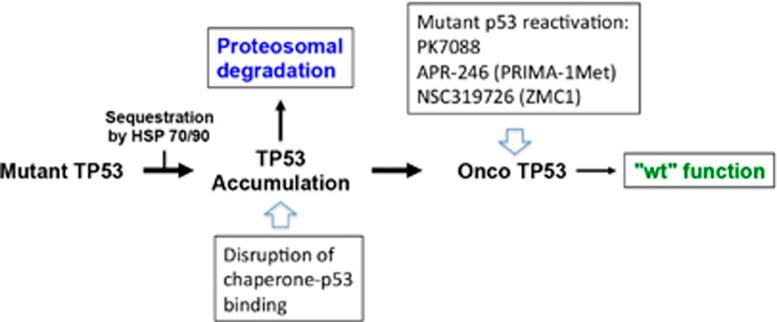
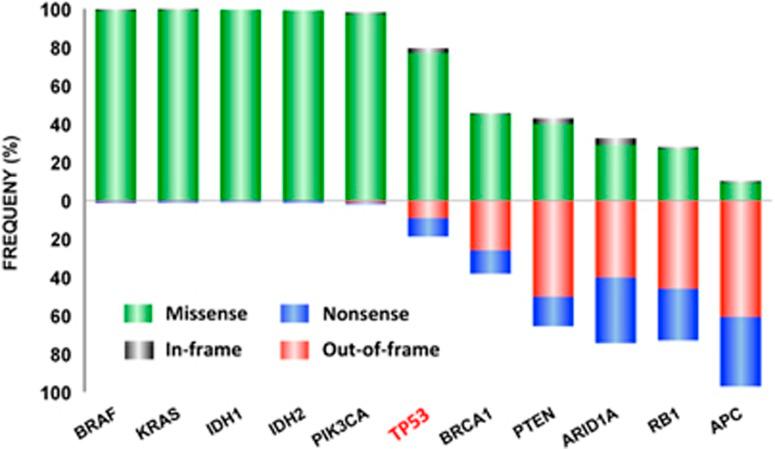
The standard classification used to define the various cancer genes confines tumor protein p53 (TP53) to the role of a tumor suppressor gene. However, it is now an indisputable fact that many p53 mutants act as oncogenic proteins. This statement is based on multiple arguments including the mutation signature of the TP53 gene in human cancer, the various gains-of-function (GOFs) of the different p53 mutants and the heterogeneous phenotypes developed by knock-in mouse strains modeling several human TP53 mutations. In this review, we will shatter the classical and traditional image of tumor protein p53 (TP53) as a tumor suppressor gene by emphasizing its multiple oncogenic properties that make it a potential therapeutic target that should not be underestimated. Analysis of the data generated by the various cancer genome projects highlights the high frequency of TP53 mutations and reveals that several p53 hotspot mutants are the most common oncoprotein variants expressed in several types of tumors. The use of Muller's classical definition of mutations based on quantitative and qualitative consequences on the protein product, such as 'amorph', 'hypomorph', 'hypermorph' 'neomorph' or 'antimorph', allows a more meaningful assessment of the consequences of cancer gene modifications, their potential clinical significance, and clearly demonstrates that the TP53 gene is an atypical cancer gene.
用于定义各种癌症基因的标准分类将肿瘤蛋白p53(TP53)限定为肿瘤抑制基因。然而,现在有一个无可争议的事实,即许多p53突变体起着致癌蛋白的作用。这一说法基于多个论据,包括人类癌症中TP53基因的突变特征、不同p53突变体的各种功能获得(GOF)以及模拟几种人类TP53突变的基因敲入小鼠品系所呈现的异质表型。在这篇综述中,我们将通过强调肿瘤蛋白p53(TP53)的多种致癌特性,打破其作为肿瘤抑制基因的经典和传统形象,这些特性使其成为一个不应被低估的潜在治疗靶点。对各种癌症基因组计划产生的数据进行分析,突出了TP53突变的高频率,并揭示了几种p53热点突变体是几种类型肿瘤中最常见的癌蛋白变体。使用穆勒基于对蛋白质产物的定量和定性后果对突变的经典定义,如“无效突变”、“亚效突变”、“超效突变”、“新效突变”或“反效突变”,可以更有意义地评估癌症基因修饰的后果、它们潜在的临床意义,并清楚地表明TP53基因是一个非典型的癌症基因。


 Zotero 插件