
硫化氢在心脏病中的心脏保护作用:从分子机制到治疗潜力
The Cardioprotective Effects of Hydrogen Sulfide in Heart Diseases: From Molecular Mechanisms to Therapeutic Potential.
作者信息
Shen Yaqi, Shen Zhuqing, Luo Shanshan, Guo Wei, Zhu Yi Zhun
机构信息
Department of Pharmacology, School of Pharmacy, Fudan University, Zhangheng Road 826, Pudong New District, Shanghai 201203, China ; Department of Physiology and Pathophysiology, Shanghai Medical College, Fudan University, Shanghai 200032, China.
Department of Pharmacology, School of Pharmacy, Fudan University, Zhangheng Road 826, Pudong New District, Shanghai 201203, China.
出版信息
Oxid Med Cell Longev. 2015;2015:925167. doi: 10.1155/2015/925167. Epub 2015 May 11.
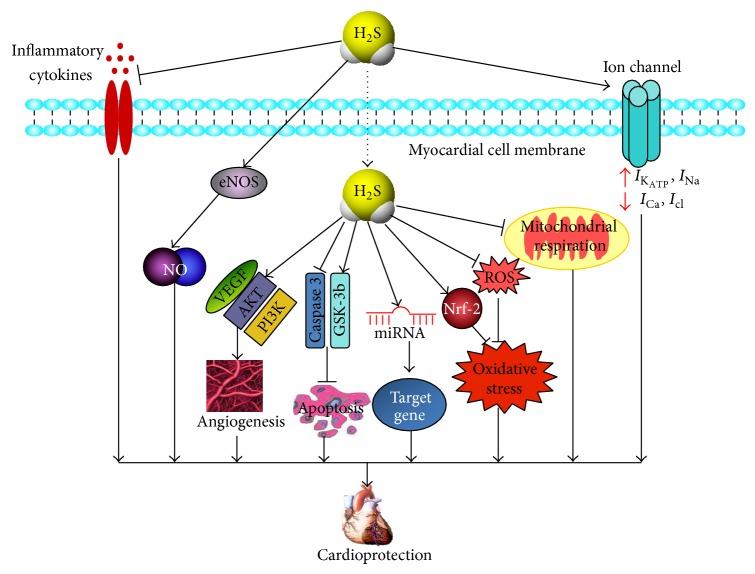
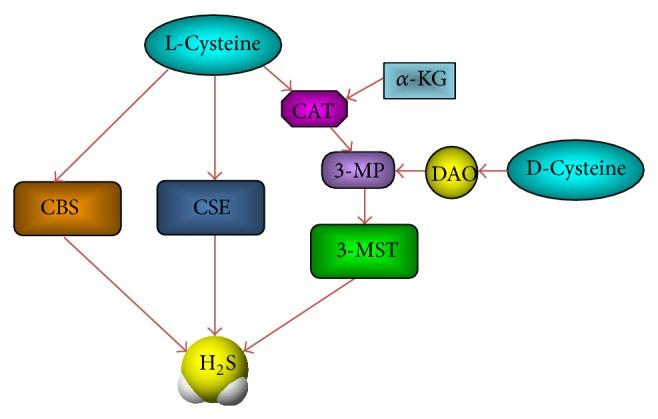
Hydrogen sulfide (H2S) is now recognized as a third gaseous mediator along with nitric oxide (NO) and carbon monoxide (CO), though it was originally considered as a malodorous and toxic gas. H2S is produced endogenously from cysteine by three enzymes in mammalian tissues. An increasing body of evidence suggests the involvement of H2S in different physiological and pathological processes. Recent studies have shown that H2S has the potential to protect the heart against myocardial infarction, arrhythmia, hypertrophy, fibrosis, ischemia-reperfusion injury, and heart failure. Some mechanisms, such as antioxidative action, preservation of mitochondrial function, reduction of apoptosis, anti-inflammatory responses, angiogenic actions, regulation of ion channel, and interaction with NO, could be responsible for the cardioprotective effect of H2S. Although several mechanisms have been identified, there is a need for further research to identify the specific molecular mechanism of cardioprotection in different cardiac diseases. Therefore, insight into the molecular mechanisms underlying H2S action in the heart may promote the understanding of pathophysiology of cardiac diseases and lead to new therapeutic targets based on modulation of H2S production.
硫化氢(H₂S)现在被认为是与一氧化氮(NO)和一氧化碳(CO)并列的第三种气体介质,尽管它最初被认为是一种有恶臭的有毒气体。在哺乳动物组织中,H₂S由三种酶从半胱氨酸内源性产生。越来越多的证据表明H₂S参与了不同的生理和病理过程。最近的研究表明,H₂S有保护心脏免受心肌梗死、心律失常、肥大、纤维化、缺血再灌注损伤和心力衰竭的潜力。一些机制,如抗氧化作用、维持线粒体功能、减少细胞凋亡、抗炎反应、血管生成作用、离子通道调节以及与NO的相互作用,可能是H₂S心脏保护作用的原因。尽管已经确定了几种机制,但仍需要进一步研究以确定不同心脏疾病中心脏保护的具体分子机制。因此,深入了解H₂S在心脏中作用的分子机制可能会促进对心脏疾病病理生理学的理解,并基于调节H₂S产生而产生新的治疗靶点。

 Zotero 插件