
CXCL8和CCL20通过调节人原代成骨细胞的细胞因子产生来增强破骨细胞生成。
CXCL8 and CCL20 Enhance Osteoclastogenesis via Modulation of Cytokine Production by Human Primary Osteoblasts.
作者信息
Pathak Janak L, Bakker Astrid D, Verschueren Patrick, Lems Willem F, Luyten Frank P, Klein-Nulend Jenneke, Bravenboer Nathalie
机构信息
Department of Oral Cell Biology, Academic Centre for Dentistry Amsterdam (ACTA), University of Amsterdam and VU University Amsterdam, MOVE Research Institute Amsterdam, Amsterdam, The Netherlands; Skeletal Biology and Engineering Research Center, KU Leuven, Leuven, Belgium.
Department of Oral Cell Biology, Academic Centre for Dentistry Amsterdam (ACTA), University of Amsterdam and VU University Amsterdam, MOVE Research Institute Amsterdam, Amsterdam, The Netherlands.
出版信息
PLoS One. 2015 Jun 23;10(6):e0131041. doi: 10.1371/journal.pone.0131041. eCollection 2015.
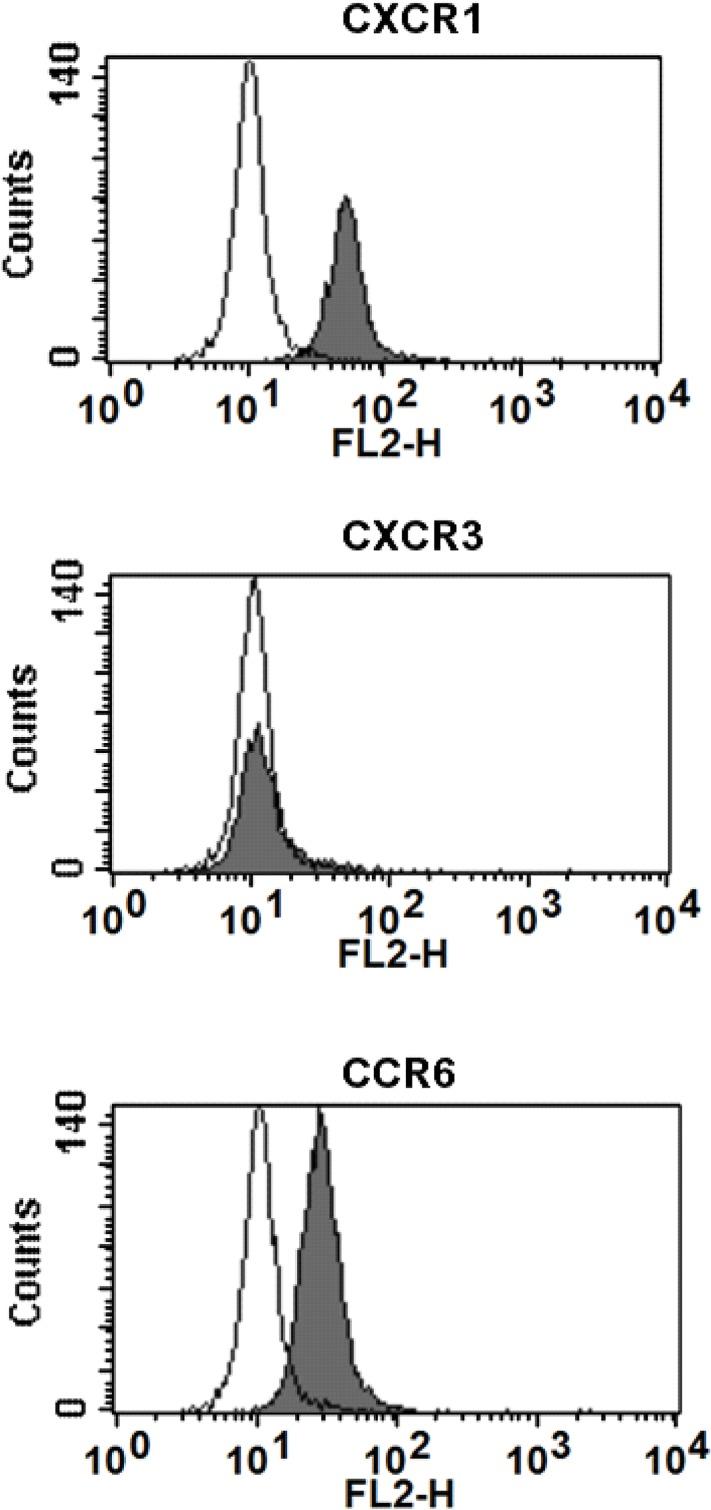
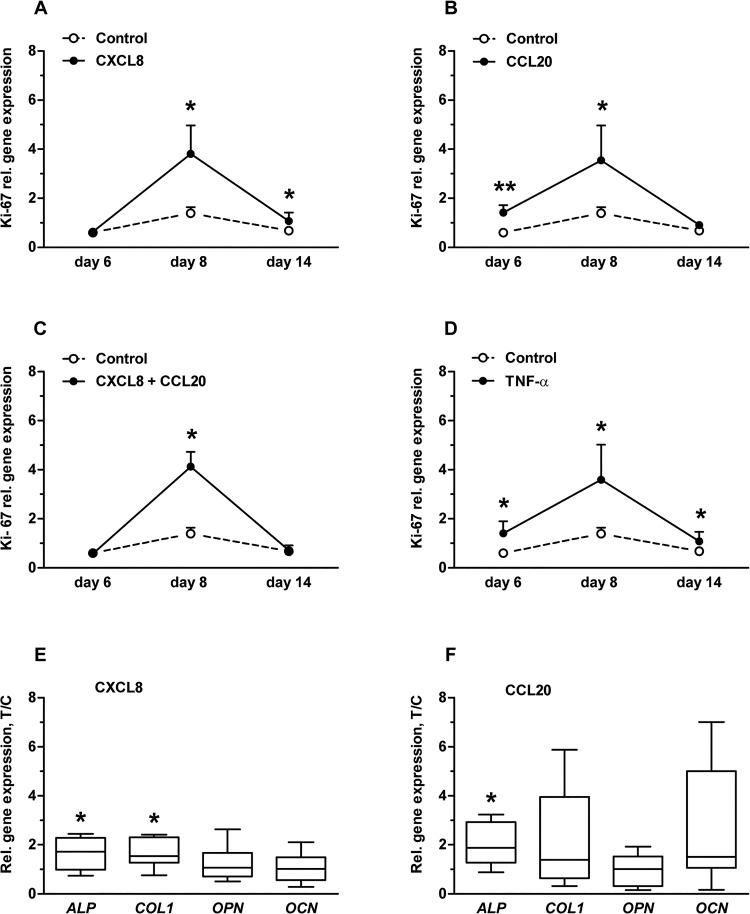
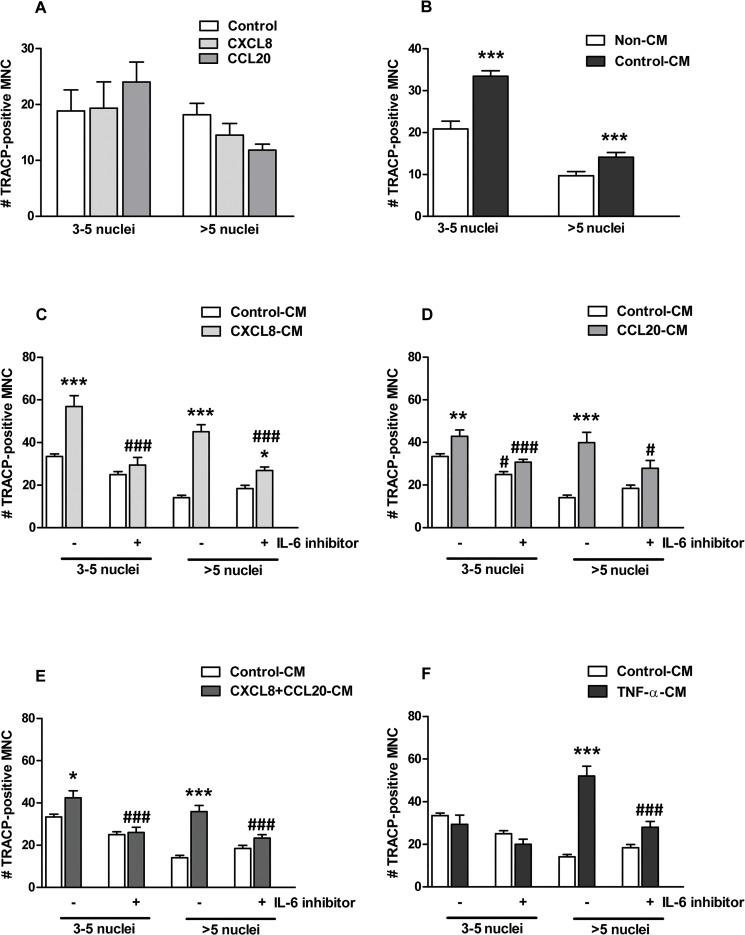
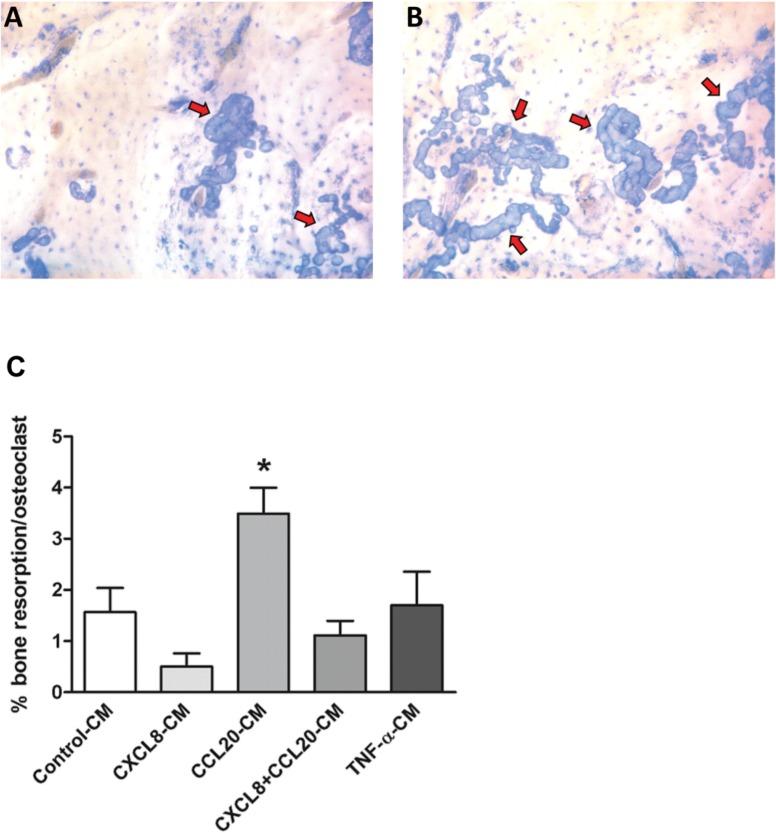
Generalized osteoporosis is common in patients with inflammatory diseases, possibly because of circulating inflammatory factors that affect osteoblast and osteoclast formation and activity. Serum levels of the inflammatory factors CXCL8 and CCL20 are elevated in rheumatoid arthritis, but whether these factors affect bone metabolism is unknown. We hypothesized that CXCL8 and CCL20 decrease osteoblast proliferation and differentiation, and enhance osteoblast-mediated osteoclast formation and activity. Human primary osteoblasts were cultured with or without CXCL8 (2-200 pg/ml) or CCL20 (5-500 pg/ml) for 14 days. Osteoblast proliferation and gene expression of matrix proteins and cytokines were analyzed. Osteoclast precursors were cultured with CXCL8 (200 pg/ml) and CCL20 (500 pg/ml), or with conditioned medium (CM) from CXCL8 and CCL20-treated osteoblasts with or without IL-6 inhibitor. After 3 weeks osteoclast formation and activity were determined. CXCL8 (200 pg/ml) and CCL20 (500 pg/ml) enhanced mRNA expression of KI67 (2.5-2.7-fold), ALP (1.6-1.7-fold), and IL-6 protein production (1.3-1.6-fold) by osteoblasts. CXCL8-CM enhanced the number of osteoclasts with 3-5 nuclei (1.7-fold), and with >5 nuclei (3-fold). CCL20-CM enhanced the number of osteoclasts with 3-5 nuclei (1.3-fold), and with >5 nuclei (2.8-fold). IL-6 inhibition reduced the stimulatory effect of CXCL8-CM and CCL20-CM on formation of osteoclasts. In conclusion, CXCL8 and CCL20 did not decrease osteoblast proliferation or gene expression of matrix proteins. CXCL8 and CCL20 did not directly affect osteoclastogenesis. However, CXCL8 and CCL20 enhanced osteoblast-mediated osteoclastogenesis, partly via IL-6 production, suggesting that CXCL8 and CCL20 may contribute to osteoporosis in rheumatoid arthritis by affecting bone cell communication.
全身性骨质疏松在炎症性疾病患者中很常见,可能是由于循环中的炎症因子影响成骨细胞和破骨细胞的形成及活性。类风湿关节炎患者血清中炎症因子CXCL8和CCL20水平升高,但这些因子是否影响骨代谢尚不清楚。我们推测CXCL8和CCL20会降低成骨细胞的增殖和分化,并增强成骨细胞介导的破骨细胞形成及活性。将人原代成骨细胞在有或无CXCL8(2 - 200 pg/ml)或CCL20(5 - 500 pg/ml)的条件下培养14天。分析成骨细胞的增殖以及基质蛋白和细胞因子的基因表达。将破骨细胞前体与CXCL8(200 pg/ml)和CCL20(500 pg/ml)一起培养,或与来自经CXCL8和CCL20处理的成骨细胞的条件培养基(CM)一起培养,同时添加或不添加IL - 6抑制剂。3周后测定破骨细胞的形成和活性。CXCL8(200 pg/ml)和CCL20(500 pg/ml)可使成骨细胞中KI67的mRNA表达增强(2.5 - 2.7倍)、碱性磷酸酶(ALP)增强(1.6 - 1.7倍)以及IL - 6蛋白产生增强(1.3 - 1.6倍)。CXCL8 - CM使具有3 - 5个核的破骨细胞数量增加(1.7倍),具有>5个核的破骨细胞数量增加(3倍)。CCL20 - CM使具有3 - 5个核的破骨细胞数量增加(1.3倍),具有>5个核的破骨细胞数量增加(2.8倍)。IL - 6抑制降低了CXCL8 - CM和CCL20 - CM对破骨细胞形成的刺激作用。总之,CXCL8和CCL20并未降低成骨细胞的增殖或基质蛋白的基因表达。CXCL8和CCL20并未直接影响破骨细胞生成。然而,CXCL8和CCL20增强了成骨细胞介导的破骨细胞生成,部分是通过IL - 6的产生,这表明CXCL8和CCL20可能通过影响骨细胞通讯而导致类风湿关节炎中的骨质疏松。


 Zotero 插件