
基于转录组学鉴定促炎条件下n-3脂肪酸二十二碳六烯酸在血管内皮细胞中的新抗炎和血管舒张特性[已修正]
Transcriptome-based identification of new anti-inflammatory and vasodilating properties of the n-3 fatty acid docosahexaenoic acid in vascular endothelial cell under proinflammatory conditions [corrected].
作者信息
Massaro Marika, Martinelli Rosanna, Gatta Valentina, Scoditti Egeria, Pellegrino Mariangela, Carluccio Maria Annunziata, Calabriso Nadia, Buonomo Tonia, Stuppia Liborio, Storelli Carlo, De Caterina Raffaele
机构信息
National Research Council (CNR), Institute of Clinical Physiology, Lecce, Italy.
CEINGE Biotecnologie Avanzate, Naples, Italy; Department of Medicine and Surgery of Salerno University, Salerno, Italy.
出版信息
PLoS One. 2015 Jun 26;10(6):e0129652. doi: 10.1371/journal.pone.0129652. eCollection 2015.
SCOPE
High intakes of n-3 fatty acids exert anti-inflammatory effects and cardiovascular protection, but the underlying molecular basis is incompletely defined. By genome-wide analysis we searched for novel effects of docosahexaenoic acid (DHA) on gene expression and pathways in human vascular endothelium under pro-inflammatory conditions.
METHODS AND RESULTS
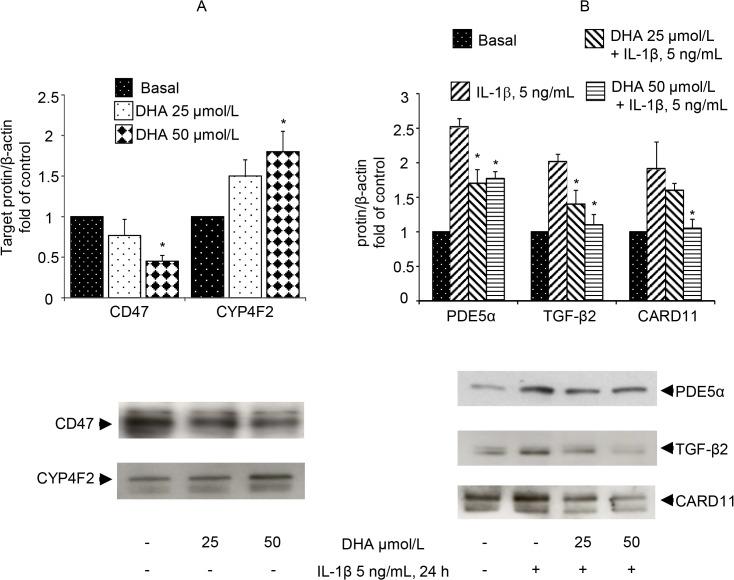
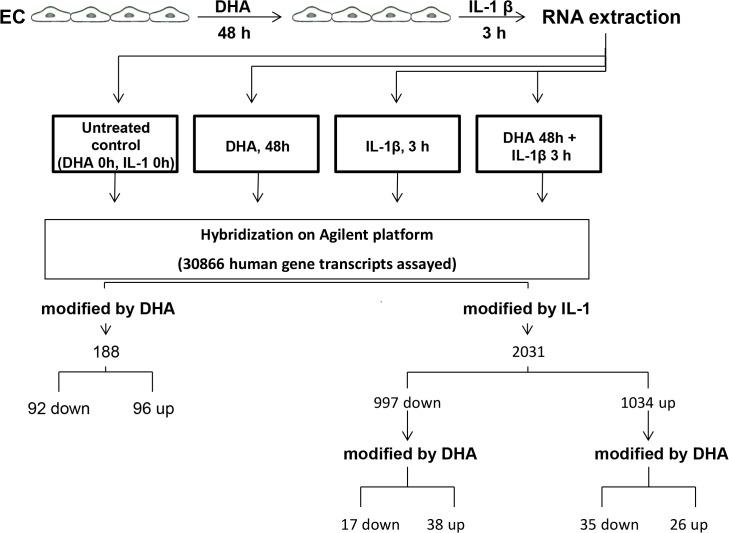
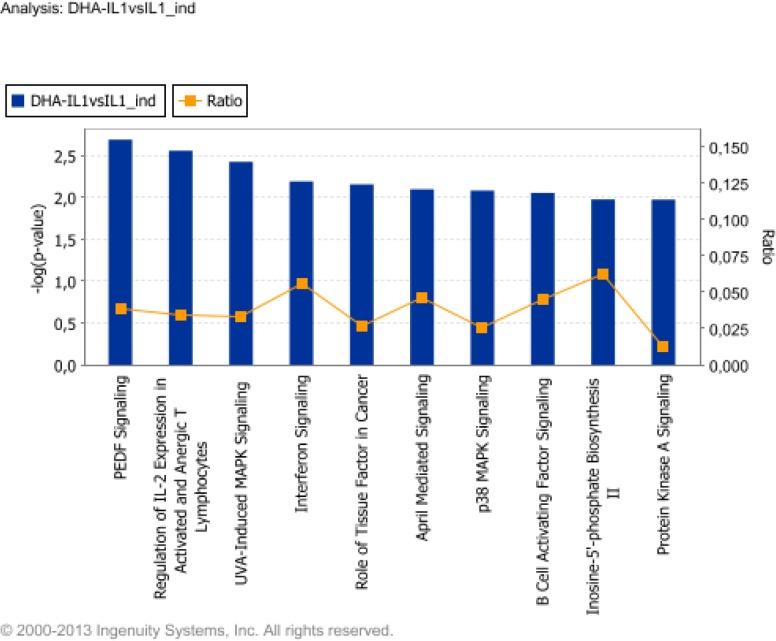
Human umbilical vein endothelial cells were treated with DHA and then stimulated with interleukin(IL)-1β. Total RNA was extracted, and gene expression examined by DNA microarray. DHA alone altered the expression of 188 genes, decreasing 92 and increasing 96. IL-1β changed the expression of 2031 genes, decreasing 997 and increasing 1034. Treatment with DHA before stimulation significantly affected the expression of 116 IL-1β-deregulated genes, counter-regulating the expression of 55 genes among those decreased and of 61 among those increased. Functional and network analyses identified immunological, inflammatory and metabolic pathways as the most affected. Newly identified DHA-regulated genes are involved in stemness, cellular growth, cardiovascular system function and cancer, and included cytochrome p450 4F2(CYP4F2), transforming growth factor(TGF)-β2, Cluster of Differentiation (CD)47, caspase recruitment domain(CARD)11 and phosphodiesterase(PDE)5α.
CONCLUSIONS
Endothelial exposure to DHA regulates novel genes and related pathways. Such unbiased identification should increase our understanding of mechanisms by which n-3 fatty acids affect human diseases.
范围
高摄入n-3脂肪酸具有抗炎作用和心血管保护作用,但其潜在的分子基础尚未完全明确。通过全基因组分析,我们在促炎条件下寻找二十二碳六烯酸(DHA)对人血管内皮细胞基因表达和信号通路的新作用。
方法与结果
用人脐静脉内皮细胞(HUVECs)分别用DHA处理后,再用白细胞介素(IL)-1β刺激。提取总RNA,用DNA微阵列检测基因表达。单独使用DHA改变了188个基因的表达,其中92个基因表达下调,96个基因表达上调。IL-1β改变了2031个基因的表达,其中997个基因表达下调,1034个基因表达上调。刺激前用DHA处理显著影响了116个IL-1β失调基因的表达,对其中55个下调基因和61个上调基因的表达起到了反向调节作用。功能和网络分析确定免疫、炎症和代谢信号通路受影响最大。新发现的DHA调节基因涉及干性、细胞生长、心血管系统功能和癌症,包括细胞色素P450 4F2(CYP4F2)、转化生长因子(TGF)-β2、分化簇(CD)47、胱天蛋白酶募集结构域(CARD)11和磷酸二酯酶(PDE)5α。
结论
内皮细胞暴露于DHA可调节新的基因和相关信号通路。这种无偏见的鉴定应能增加我们对n-3脂肪酸影响人类疾病机制的理解。

 Zotero 插件