
用于EGFRvIII表达型胶质瘤过继性免疫治疗的重定向人抗生物素蛋白CAR T细胞及其通过光学成像的评估
Retargeted human avidin-CAR T cells for adoptive immunotherapy of EGFRvIII expressing gliomas and their evaluation via optical imaging.
作者信息
Liu Kaiyu, Liu Xujie, Peng Zhiping, Sun Haojie, Zhang Mingzhi, Zhang Jianning, Liu Shuang, Hao Limin, Lu Guoqiu, Zheng Kangcheng, Gong Xikui, Wu Di, Wang Fan, Shen Li
机构信息
Department of Biochemistry and Molecular Biology, Peking University Health Science Center, Beijing, People's Republic of China.
Department of Radiological Medicine, Chongqing Medical University, Chongqing, People's Republic of China.
出版信息
Oncotarget. 2015 Sep 15;6(27):23735-47. doi: 10.18632/oncotarget.4362.
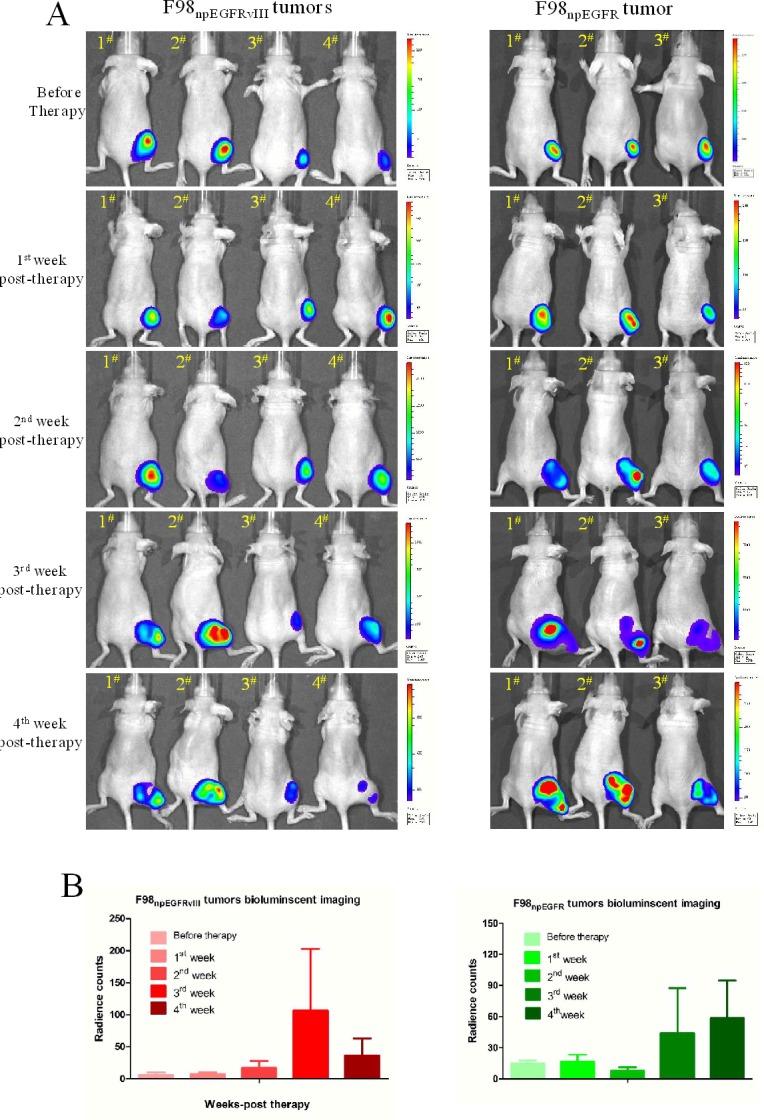
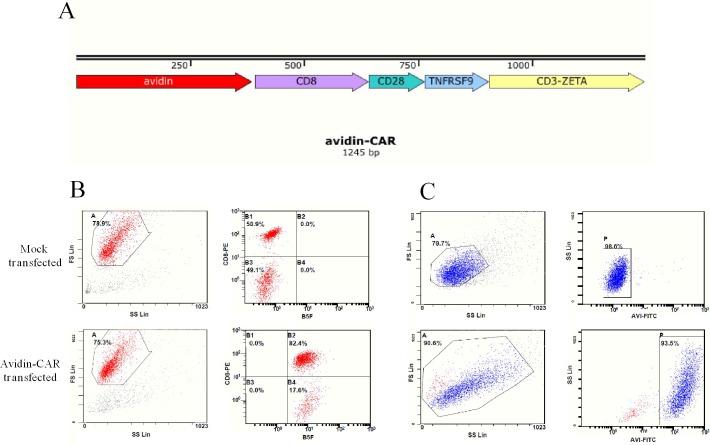
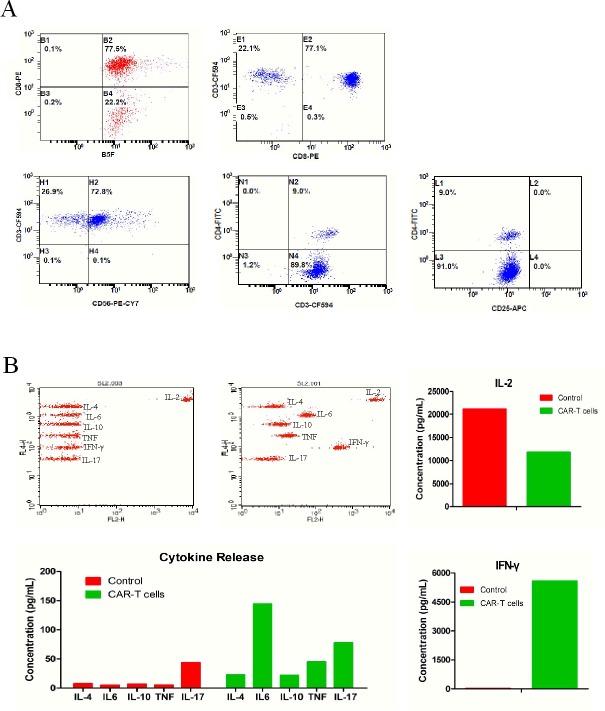
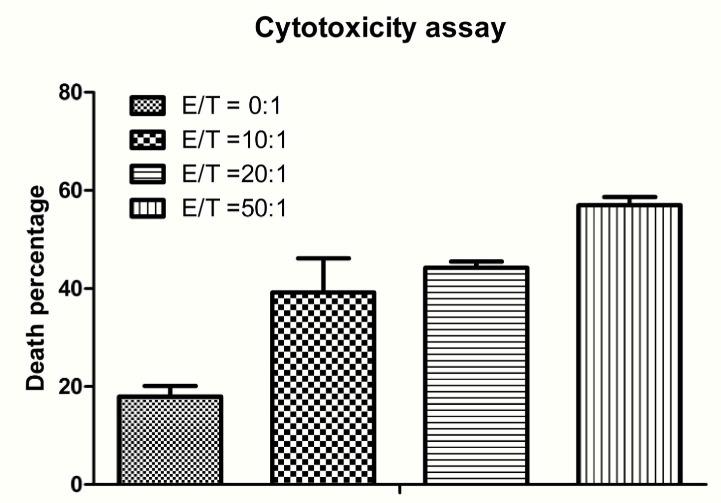
There has been significant progress in the design of chimeric antigen receptors (CAR) for adoptive immunotherapy targeting tumor-associated antigens. However, the challenge of monitoring the therapy in real time has been continually ignored. To address this issue, we developed optical molecular imaging approaches to evaluate a recently reported novel CAR strategy for adoptive immunotherapy against glioma xenografts expressing EGFRvIII. We initially biotinylated a novel anti-EGFRvIII monoclonal antibody (biotin-4G1) to pre-target EGFRvIII+ gliomas and then redirect activated avidin-CAR expressing T cells against the pre-targeted biotin-4G1. By optical imaging study and bio-distribution analysis, we confirmed the specificity of pre-target and target and determined the optimal time for T cells adoptive transfer in vivo. The results showed this therapeutic strategy offered efficient therapy effect to EGFRvIII+ glioma-bearing mice and implied that optical imaging is a highly useful tool in aiding in the instruction of clinical CAR-T cells adoptive transfer in future.
在用于靶向肿瘤相关抗原的过继性免疫治疗的嵌合抗原受体(CAR)设计方面已取得显著进展。然而,实时监测该治疗的挑战一直被持续忽视。为解决这一问题,我们开发了光学分子成像方法,以评估一种最近报道的针对表达EGFRvIII的胶质瘤异种移植物的过继性免疫治疗新CAR策略。我们首先将一种新型抗EGFRvIII单克隆抗体(生物素化-4G1)生物素化,以预靶向EGFRvIII +胶质瘤,然后将表达抗生物素蛋白-CAR的活化T细胞重新导向预靶向的生物素化-4G1。通过光学成像研究和生物分布分析,我们证实了预靶向和靶向的特异性,并确定了体内T细胞过继转移的最佳时间。结果表明,这种治疗策略对携带EGFRvIII +胶质瘤的小鼠具有有效的治疗效果,并暗示光学成像在未来指导临床CAR-T细胞过继转移方面是一种非常有用的工具。


 Zotero 插件