
端粒酶基因敲除小鼠中端粒缩短导致的造血缺陷的可逆性
Reversibility of Defective Hematopoiesis Caused by Telomere Shortening in Telomerase Knockout Mice.
作者信息
Raval Aparna, Behbehani Gregory K, Nguyen Le Xuan Truong, Thomas Daniel, Kusler Brenda, Garbuzov Alina, Ramunas John, Holbrook Colin, Park Christopher Y, Blau Helen, Nolan Garry P, Artandi Steven E, Mitchell Beverly S
机构信息
Stanford Cancer Institute and Division of Hematology, Department of Medicine, Stanford University, Stanford, CA, 94305, United States of America.
Stanford Cancer Institute and Division of Hematology, Department of Medicine, Stanford University, Stanford, CA, 94305, United States of America; Baxter Laboratory for Stem Cell Biology, Department of Microbiology and Immunology Stanford University, School of Medicine, Stanford, CA, 94305, United States of America.
出版信息
PLoS One. 2015 Jul 2;10(7):e0131722. doi: 10.1371/journal.pone.0131722. eCollection 2015.
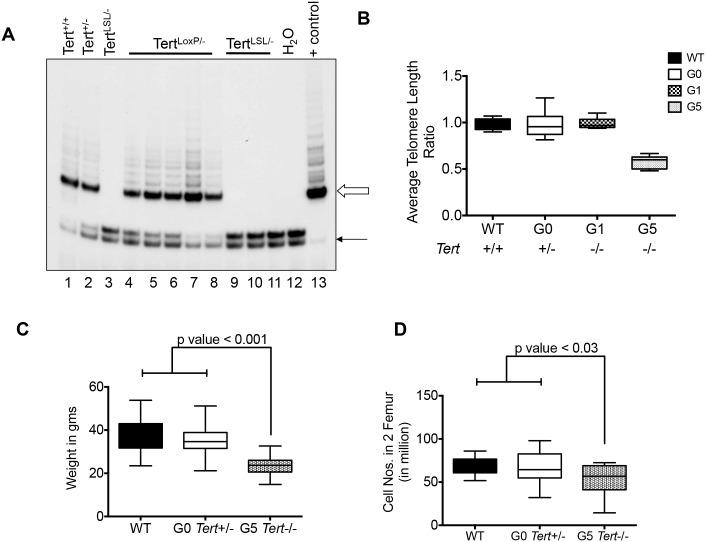
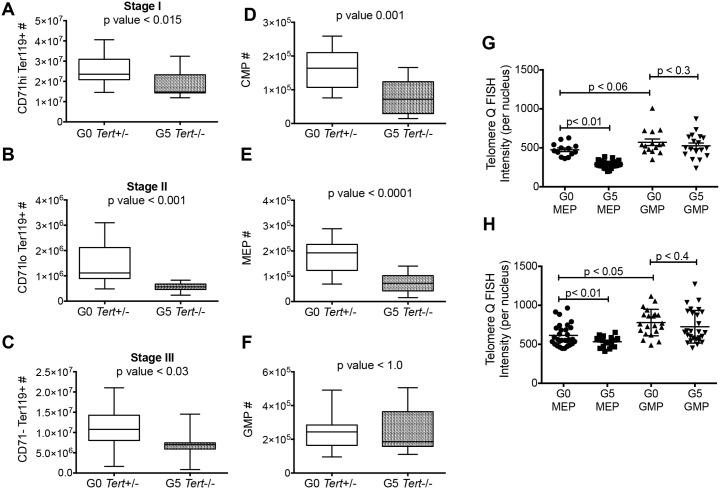
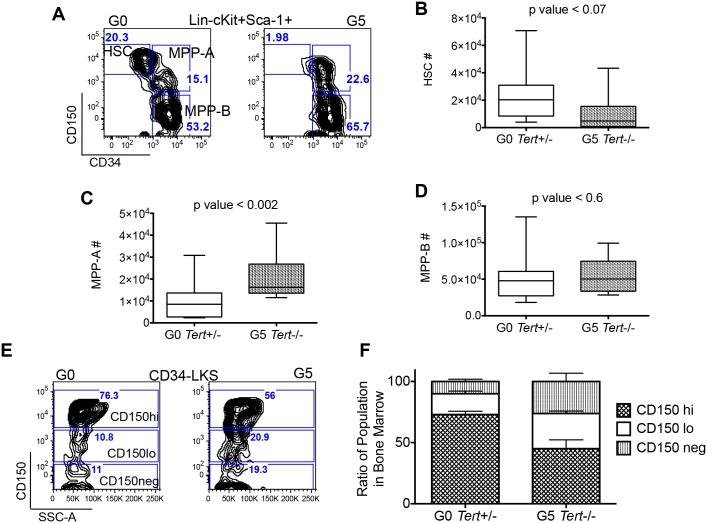
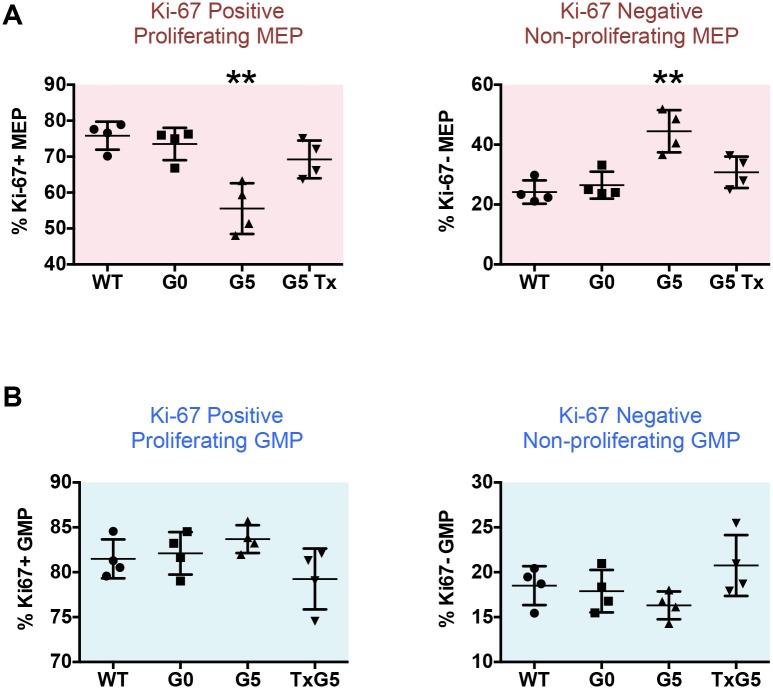
Telomere shortening is common in bone marrow failure syndromes such as dyskeratosis congenita (DC), aplastic anemia (AA) and myelodysplastic syndromes (MDS). However, improved knowledge of the lineage-specific consequences of telomere erosion and restoration of telomere length in hematopoietic progenitors is required to advance therapeutic approaches. We have employed a reversible murine model of telomerase deficiency to compare the dependence of erythroid and myeloid lineage differentiation on telomerase activity. Fifth generation Tert-/- (G5 Tert-/-) mice with shortened telomeres have significant anemia, decreased erythroblasts and reduced hematopoietic stem cell (HSC) populations associated with neutrophilia and increased myelopoiesis. Intracellular multiparameter analysis by mass cytometry showed significantly reduced cell proliferation and increased sensitivity to activation of DNA damage checkpoints in erythroid progenitors and in erythroid-biased CD150hi HSC, but not in myeloid progenitors. Strikingly, Cre-inducible reactivation of telomerase activity restored hematopoietic stem and progenitor cell (HSPC) proliferation, normalized the DNA damage response, and improved red cell production and hemoglobin levels. These data establish a direct link between the loss of TERT activity, telomere shortening and defective erythropoiesis and suggest that novel strategies to restore telomerase function may have an important role in the treatment of the resulting anemia.
端粒缩短在骨髓衰竭综合征中很常见,如先天性角化不良(DC)、再生障碍性贫血(AA)和骨髓增生异常综合征(MDS)。然而,为了推进治疗方法,需要更好地了解造血祖细胞中端粒侵蚀的谱系特异性后果以及端粒长度的恢复情况。我们采用了一种端粒酶缺陷的可逆小鼠模型,以比较红系和髓系谱系分化对端粒酶活性的依赖性。端粒缩短的第五代Tert-/-(G5 Tert-/-)小鼠有明显贫血,成红细胞减少,造血干细胞(HSC)群体减少,伴有嗜中性粒细胞增多和骨髓生成增加。通过质谱流式细胞术进行的细胞内多参数分析显示,红系祖细胞和偏向红系的CD150hi HSC中的细胞增殖显著减少,对DNA损伤检查点激活的敏感性增加,但髓系祖细胞中没有这种情况。引人注目的是,端粒酶活性的Cre诱导再激活恢复了造血干祖细胞(HSPC)的增殖,使DNA损伤反应正常化,并改善了红细胞生成和血红蛋白水平。这些数据建立了TERT活性丧失、端粒缩短与红细胞生成缺陷之间的直接联系,并表明恢复端粒酶功能的新策略可能在治疗由此导致的贫血中发挥重要作用。



 Zotero 插件