
使用下一代测序技术对犬类及其主人口腔微生物群的比较
Comparison of the Oral Microbiomes of Canines and Their Owners Using Next-Generation Sequencing.
作者信息
Oh Changin, Lee Kunkyu, Cheong Yeotaek, Lee Sang-Won, Park Seung-Yong, Song Chang-Seon, Choi In-Soo, Lee Joong-Bok
机构信息
Laboratory of Infectious Diseases, College of Veterinary Medicine and Veterinary Science Research Institute, Konkuk University, Seoul, 143-701, Republic of Korea.
出版信息
PLoS One. 2015 Jul 2;10(7):e0131468. doi: 10.1371/journal.pone.0131468. eCollection 2015.
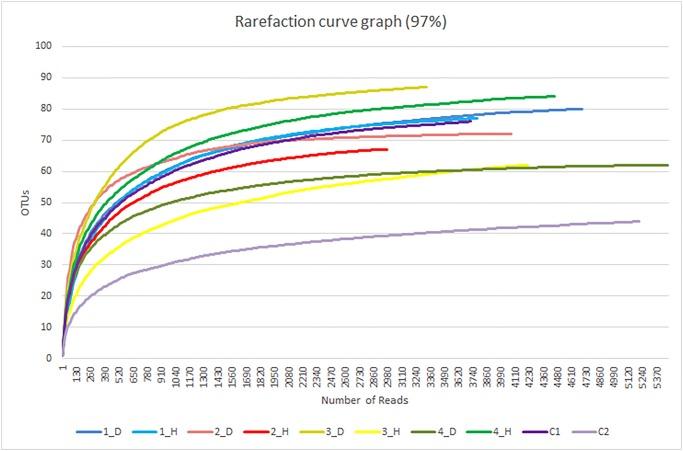
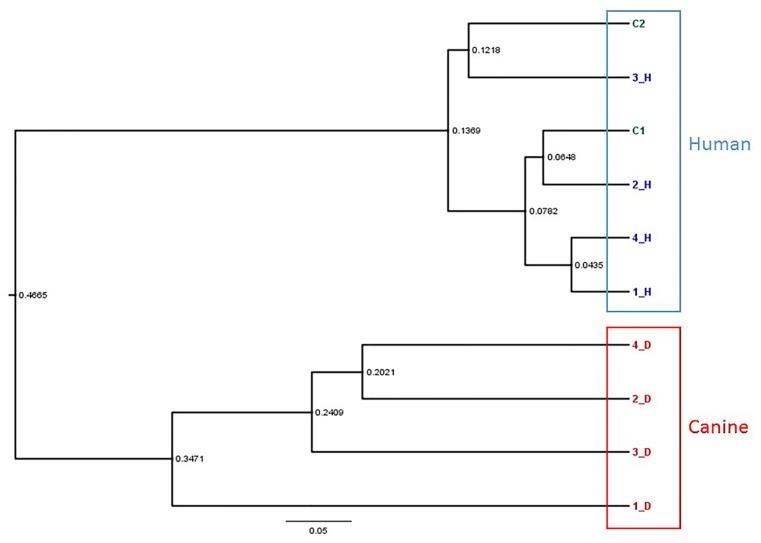
The oral microbiome, which is closely associated with many diseases, and the resident pathogenic oral bacteria, which can be transferred by close physical contact, are important public health considerations. Although the dog is the most common companion animal, the composition of the canine oral microbiome, which may include human pathogenic bacteria, and its relationship with that of their owners are unclear. In this study, 16S rDNA pyrosequencing was used to compare the oral microbiomes of 10 dogs and their owners and to identify zoonotic pathogens. Pyrosequencing revealed 246 operational taxonomic units in the 10 samples, representing 57 genera from eight bacterial phyla. Firmicutes (57.6%), Proteobacteria (21.6%), Bacteroidetes (9.8%), Actinobacteria (7.1%), and Fusobacteria (3.9%) were the predominant phyla in the human oral samples, whereas Proteobacteria (25.7%), Actinobacteria (21%), Bacteroidetes (19.7%), Firmicutes (19.3%), and Fusobacteria (12.3%) were predominant in the canine oral samples. The predominant genera in the human samples were Streptococcus (43.9%), Neisseria (10.3%), Haemophilus (9.6%), Prevotella (8.4%), and Veillonella (8.1%), whereas the predominant genera in the canine samples were Actinomyces (17.2%), Unknown (16.8), Porphyromonas (14.8), Fusobacterium (11.8), and Neisseria (7.2%). The oral microbiomes of dogs and their owners were appreciably different, and similarity in the microbiomes of canines and their owners was not correlated with residing in the same household. Oral-to-oral transfer of Neisseria shayeganii, Porphyromonas canigingivalis, Tannerella forsythia, and Streptococcus minor from dogs to humans was suspected. The finding of potentially zoonotic and periodontopathic bacteria in the canine oral microbiome may be a public health concern.
口腔微生物群与许多疾病密切相关,而常驻口腔病原菌可通过密切身体接触传播,这些都是重要的公共卫生问题。尽管狗是最常见的伴侣动物,但其口腔微生物群的组成(可能包括人类病原菌)及其与主人口腔微生物群的关系尚不清楚。在本研究中,采用16S rDNA焦磷酸测序法比较了10只狗及其主人的口腔微生物群,并鉴定人畜共患病原体。焦磷酸测序在10个样本中揭示了246个操作分类单元,代表来自8个细菌门的57个属。厚壁菌门(57.6%)、变形菌门(21.6%)、拟杆菌门(9.8%)、放线菌门(7.1%)和梭杆菌门(3.9%)是人类口腔样本中的主要菌门,而变形菌门(25.7%)、放线菌门(21%)、拟杆菌门(19.7%)、厚壁菌门(19.3%)和梭杆菌门(12.3%)是犬类口腔样本中的主要菌门。人类样本中的主要菌属为链球菌(43.9%)、奈瑟菌属(10.3%)、嗜血杆菌属(9.6%)、普雷沃菌属(8.4%)和韦荣球菌属(8.1%),而犬类样本中的主要菌属为放线菌属(17.2%)、未知菌属(16.8%)、卟啉单胞菌属(14.8%)、梭杆菌属(11.8%)和奈瑟菌属(7.2%)。狗及其主人的口腔微生物群明显不同,犬类与其主人微生物群的相似性与是否居住在同一家庭无关。怀疑存在从狗到人的谢氏奈瑟菌、牙龈卟啉单胞菌、福赛坦纳菌和微小链球菌的口对口传播。在犬类口腔微生物群中发现潜在的人畜共患病菌和牙周病原菌可能是一个公共卫生问题。



 Zotero 插件