
癌症恶病质对大鼠药物肝脏代谢及肾脏排泄的影响。
Influence of cancer cachexia on drug liver metabolism and renal elimination in rats.
作者信息
Cvan Trobec Katja, Kerec Kos Mojca, Trontelj Jurij, Grabnar Iztok, Tschirner Anika, Palus Sandra, Anker Stefan D, Springer Jochen, Lainscak Mitja
机构信息
Faculty of Pharmacy, University of Ljubljana, Ljubljana, Slovenia.
Applied Cachexia Research, Department of Cardiology, Charité Medical School, Campus Virchow-Klinikum, Berlin, Germany.
出版信息
J Cachexia Sarcopenia Muscle. 2015 Mar;6(1):45-52. doi: 10.1002/jcsm.12012.
BACKGROUND
Body wasting and cachexia change body composition and organ function, with effects on drug pharmacokinetics. The aim of this study was to investigate how cancer and cancer cachexia modify liver metabolism and renal drug elimination in rats.
METHODS
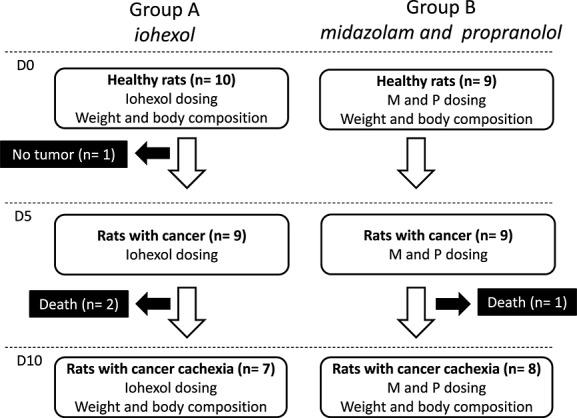
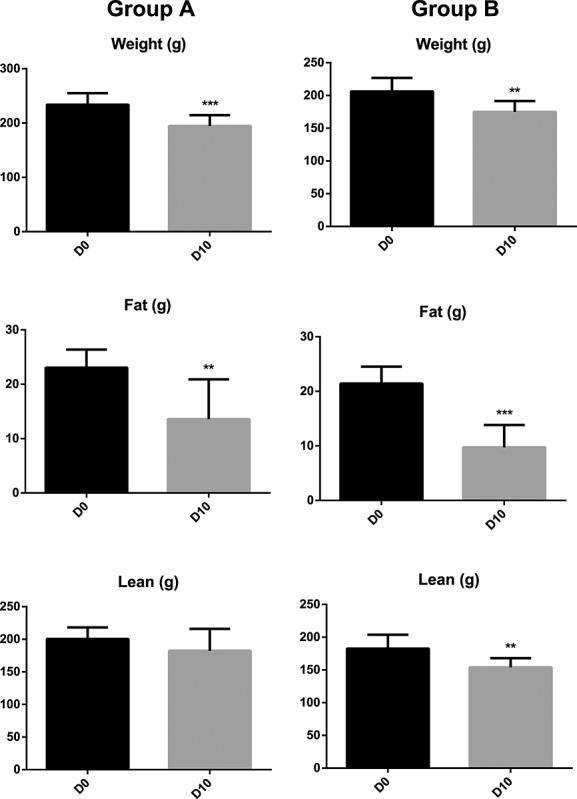
Nine male Wistar-Han rats received a single oral dose of midazolam and propranolol (markers of hepatic metabolism), and 10 rats received single intravenous dose of iohexol, a marker of glomerular filtration rate. After drug delivery, multiple dried blood samples were obtained within 2 h post-dose to evaluate drug pharmacokinetic profiles. After baseline sampling (D0), rats were injected with tumour cells. Drug application and blood sampling were repeated when rats developed tumours (Day 5-D5), and when rats were severely cachectic (Day 10-D10). Clearance (CL) and volume of distribution (Vd) of drugs were assessed with non-linear mixed effects modelling. Weight and body composition were measured on D0 and D10 and were related to pharmacokinetic parameters.
RESULTS
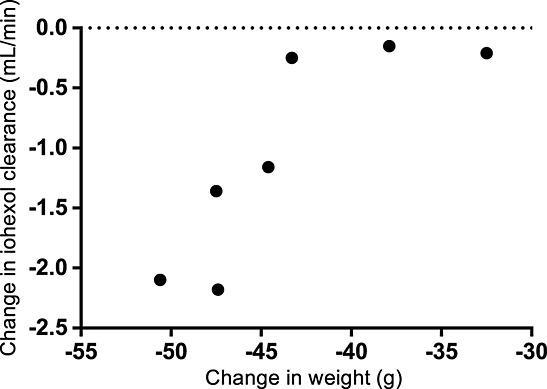
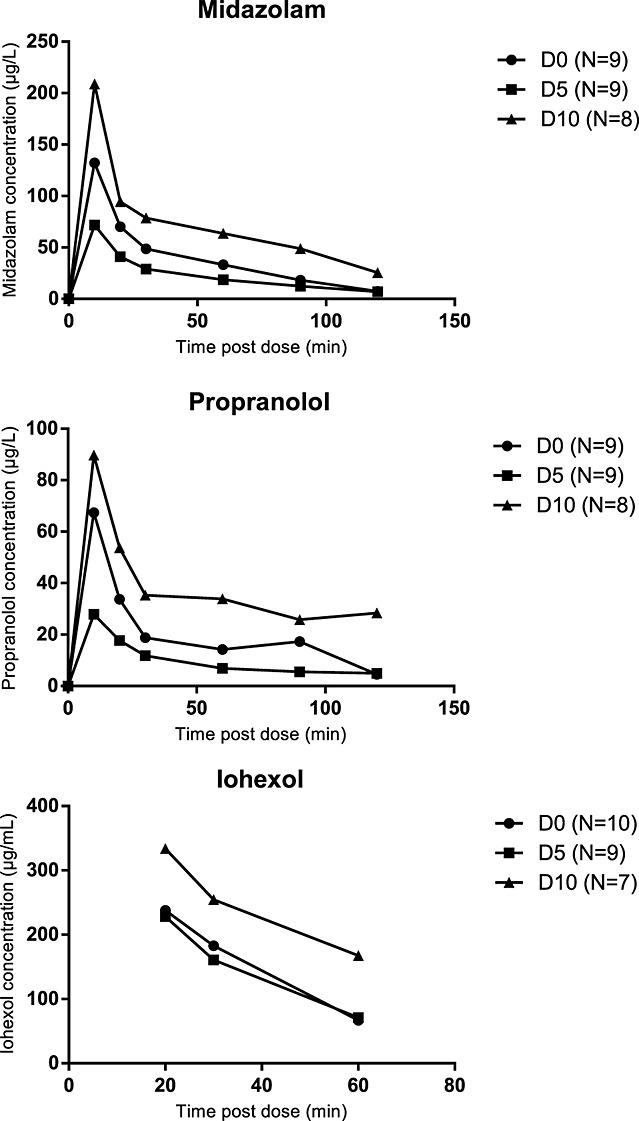
All three drugs showed non-significant trend towards increased CL and Vd on D5. On D10, midazolam and propranolol CL and midazolam Vd significantly decreased from baseline (-80.5%, -79.8%, and -72.0%, respectively, P < 0.05 for all). Iohexol CL decreased by 29.8% from baseline value on D10, which was related to body weight loss (Pearson's r = 0.837, P = 0.019).
CONCLUSIONS
Hepatic metabolism and renal drug elimination are significantly reduced in cachexia, which could increase risk of dose-related adverse events.
背景
身体消瘦和恶病质会改变身体组成和器官功能,影响药物的药代动力学。本研究旨在探讨癌症和癌症恶病质如何改变大鼠的肝脏代谢和肾脏药物清除率。
方法
9只雄性Wistar-Han大鼠单次口服咪达唑仑和普萘洛尔(肝脏代谢标志物),10只大鼠单次静脉注射碘海醇(肾小球滤过率标志物)。给药后,在给药后2小时内采集多个干血样以评估药物药代动力学特征。在基线采样(D0)后,给大鼠注射肿瘤细胞。当大鼠出现肿瘤时(第5天-D5)以及当大鼠出现严重恶病质时(第10天-D10),重复给药和采血。用非线性混合效应模型评估药物的清除率(CL)和分布容积(Vd)。在D0和D10测量体重和身体组成,并将其与药代动力学参数相关联。
结果
所有三种药物在D5时CL和Vd均呈现无统计学意义的增加趋势。在D10时,咪达唑仑和普萘洛尔的CL以及咪达唑仑的Vd较基线值显著降低(分别为-80.5%、-79.8%和-72.0%,均P<0.05)。碘海醇的CL在D10时较基线值降低了29.8%,这与体重减轻有关(Pearson相关系数r=0.837,P=0.019)。
结论
恶病质时肝脏代谢和肾脏药物清除率显著降低,这可能增加剂量相关不良事件的风险。
 Zotero 插件