
致癌性癌/睾丸抗原:免疫疗法的主要候选对象。
Oncogenic cancer/testis antigens: prime candidates for immunotherapy.
作者信息
Gjerstorff Morten F, Andersen Mads H, Ditzel Henrik J
机构信息
Department of Cancer and Inflammation Research, University of Southern Denmark, Odense, Denmark.
Department of Haematology, Center for Cancer Immune Therapy (CCIT), Copenhagen University Hospital, Herlev, Denmark.
出版信息
Oncotarget. 2015 Jun 30;6(18):15772-87. doi: 10.18632/oncotarget.4694.
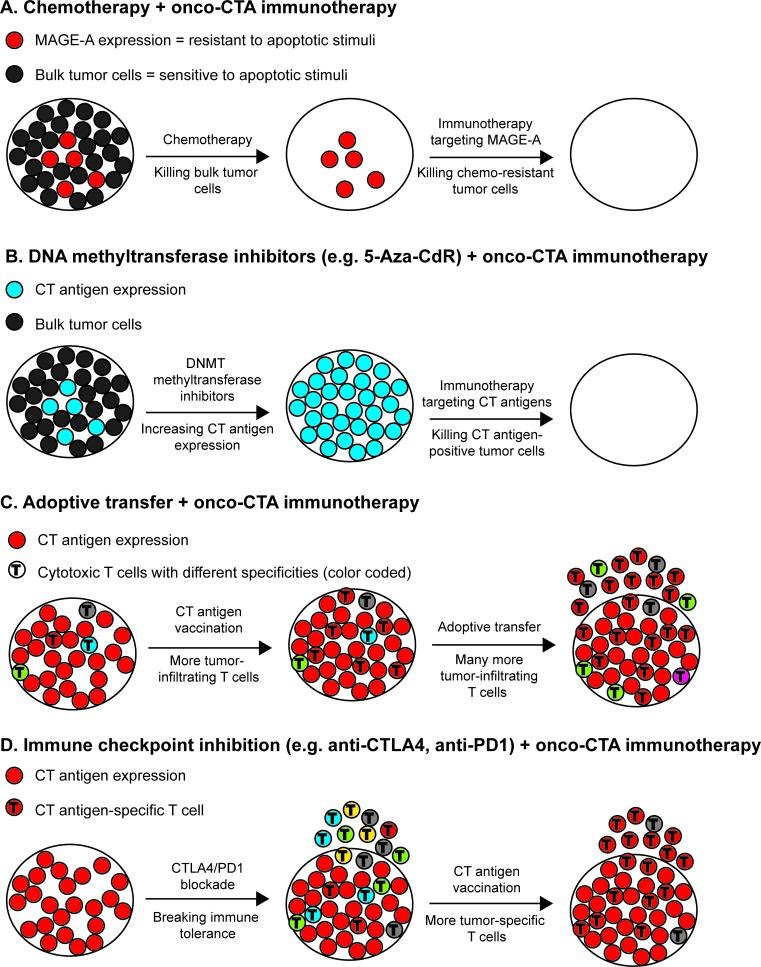
Recent developments have set the stage for immunotherapy as a supplement to conventional cancer treatment. Consequently, a significant effort is required to further improve efficacy and specificity, particularly the identification of optimal therapeutic targets for clinical testing. Cancer/testis antigens are immunogenic, highly cancer-specific, and frequently expressed in various types of cancer, which make them promising candidate targets for cancer immunotherapy, including cancer vaccination and adoptive T-cell transfer with chimeric T-cell receptors. Our current understanding of tumor immunology and immune escape suggests that targeting oncogenic antigens may be beneficial, meaning that identification of cancer/testis antigens with oncogenic properties is of high priority. Recent work from our lab and others provide evidence that many cancer/testis antigens, in fact, have oncogenic functions, including support of growth, survival and metastasis. This novel insight into the function of cancer/testis antigens has the potential to deliver more effective cancer vaccines. Moreover, immune targeting of oncogenic cancer/testis antigens in combination with conventional cytotoxic therapies or novel immunotherapies such as checkpoint blockade or adoptive transfer, represents a highly synergistic approach with the potential to improve patient survival.
近期的进展为免疫疗法作为传统癌症治疗的补充奠定了基础。因此,需要付出巨大努力来进一步提高疗效和特异性,尤其是确定用于临床试验的最佳治疗靶点。癌胚抗原具有免疫原性、高度癌症特异性,且在多种类型的癌症中频繁表达,这使其成为癌症免疫疗法(包括癌症疫苗接种和嵌合T细胞受体的过继性T细胞转移)的有前景的候选靶点。我们目前对肿瘤免疫学和免疫逃逸的理解表明,靶向致癌抗原可能有益,这意味着鉴定具有致癌特性的癌胚抗原具有高度优先性。我们实验室和其他机构最近的研究工作提供了证据,表明许多癌胚抗原实际上具有致癌功能,包括支持生长、存活和转移。这种对癌胚抗原功能的新见解有可能带来更有效的癌症疫苗。此外,将致癌性癌胚抗原的免疫靶向与传统细胞毒性疗法或新型免疫疗法(如检查点阻断或过继性转移)相结合,是一种具有高度协同作用的方法,有可能提高患者生存率。


 Zotero 插件