
家庭血压监测能否改善患者预后?一项比较家庭血压监测与动态血压监测对血压控制及患者预后影响的系统评价。
Does home blood pressure monitoring improve patient outcomes? A systematic review comparing home and ambulatory blood pressure monitoring on blood pressure control and patient outcomes.
作者信息
Breaux-Shropshire Tonya L, Judd Eric, Vucovich Lee A, Shropshire Toneyell S, Singh Sonal
机构信息
Vascular Biology and Hypertension Program, Cardiovascular Disease, School of Medicine, University of Alabama at Birmingham, Birmingham, AL, USA ; Veterans Administration, Birmingham, AL, USA.
Vascular Biology and Hypertension Program, Cardiovascular Disease, School of Medicine, University of Alabama at Birmingham, Birmingham, AL, USA.
出版信息
Integr Blood Press Control. 2015 Jul 3;8:43-9. doi: 10.2147/IBPC.S49205. eCollection 2015.
OBJECTIVE
Our objective was to compare the clinical effectiveness of home blood pressure monitoring (HBPM) and 24-hour ambulatory blood pressure monitoring (ABPM) on blood pressure (BP) control and patient outcomes.
DESIGN
A systematic review was conducted. We also appraised the methodological quality of studies.
DATA SOURCES
PubMed, Scopus, CINAHL, and the Cochrane Central Register of Control Trials (CENTRAL).
INCLUSION CRITERIA
Randomized control trials, prospective and retrospective cohort studies, observational studies, and case-control studies published in English from any year to present that describe HBPM and 24-hour ABPM and report on systolic and/or diastolic BP and/or heart attack, stroke, kidney failure and/or all-cause mortality for adult patients. Due to the nature of the question, studies with only untreated patients were not considered.
RESULTS
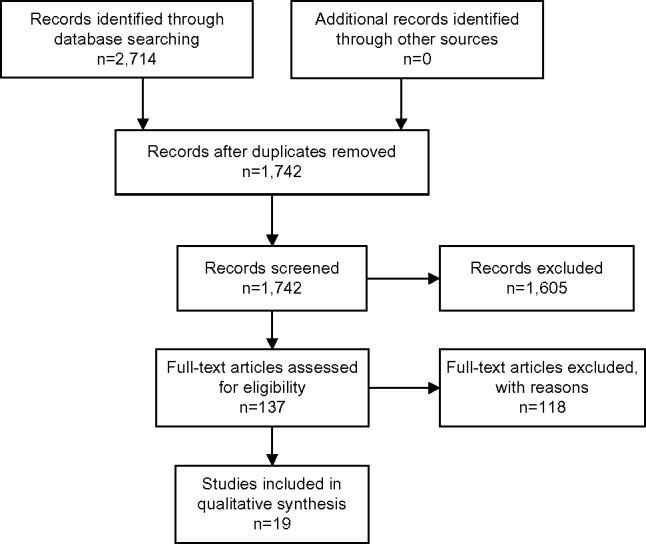
Of 1,742 titles and abstractions independently reviewed by two reviewers, 137 studies met predetermined criteria for evaluation. Nineteen studies were identified as relevant and included in the paper. The common themes were that HBPM and ABPM correlated with cardiovascular events and mortality, and targeting HBPM or ABPM resulted in similar outcomes. Associations between BP measurement type and mortality differed by study population. Both the low sensitivity of office blood pressure monitoring (OBPM) to detect optimal BP control by ABPM and the added association of HBPM with cardiovascular mortality supported the routine use of HBPM in clinical practice. There was insufficient data to determine the benefit of using HBPM as a measurement standard for BP control.
CONCLUSION
HBPM encourages patient-centered care and improves BP control and patient outcomes. Given the limited number of studies with both HBPM and ABPM, these measurement types should be incorporated into the design of randomized clinical trials within hypertensive populations.
目的
我们的目的是比较家庭血压监测(HBPM)和24小时动态血压监测(ABPM)在血压(BP)控制及患者预后方面的临床效果。
设计
进行了一项系统评价。我们还评估了研究的方法学质量。
数据来源
PubMed、Scopus、CINAHL以及Cochrane对照试验中央注册库(CENTRAL)。
纳入标准
从当年至现在以英文发表的随机对照试验、前瞻性和回顾性队列研究、观察性研究以及病例对照研究,这些研究描述了HBPM和24小时ABPM,并报告了成年患者的收缩压和/或舒张压以及/或心脏病发作、中风、肾衰竭和/或全因死亡率。由于问题的性质,仅纳入未治疗患者的研究未被考虑。
结果
两名评审员独立评审了1742篇标题和摘要,137项研究符合预定的评估标准。确定了19项相关研究并纳入本文。共同主题是HBPM和ABPM与心血管事件及死亡率相关,针对HBPM或ABPM产生的结果相似。血压测量类型与死亡率之间的关联因研究人群而异。诊室血压监测(OBPM)检测ABPM最佳血压控制的低敏感性以及HBPM与心血管死亡率的额外关联支持了HBPM在临床实践中的常规使用。没有足够的数据来确定将HBPM用作血压控制测量标准的益处。
结论
HBPM鼓励以患者为中心的护理,并改善血压控制和患者预后。鉴于同时涉及HBPM和ABPM的研究数量有限,这些测量类型应纳入高血压人群随机临床试验的设计中。
 Zotero 插件