
S-亚硝基谷胱甘肽介导的信号转导和转录激活因子3(STAT3)调控在头颈部鳞状细胞癌放疗和顺铂治疗疗效中的作用
S-Nitrosoglutathione-mediated STAT3 regulation in efficacy of radiotherapy and cisplatin therapy in head and neck squamous cell carcinoma.
作者信息
Kaliyaperumal Kolanjiappan, Sharma Anand K, McDonald Daniel G, Dhindsa Jasdeep S, Yount Caroline, Singh Avtar K, Won Je-Seong, Singh Inderjit
机构信息
Departments of Radiation Oncology, Medical University of South Carolina, Charleston, SC 29425, USA.
Pediatrics, Medical University of South Carolina, Charleston, SC 29425, USA.
出版信息
Redox Biol. 2015 Dec;6:41-50. doi: 10.1016/j.redox.2015.07.001. Epub 2015 Jul 2.
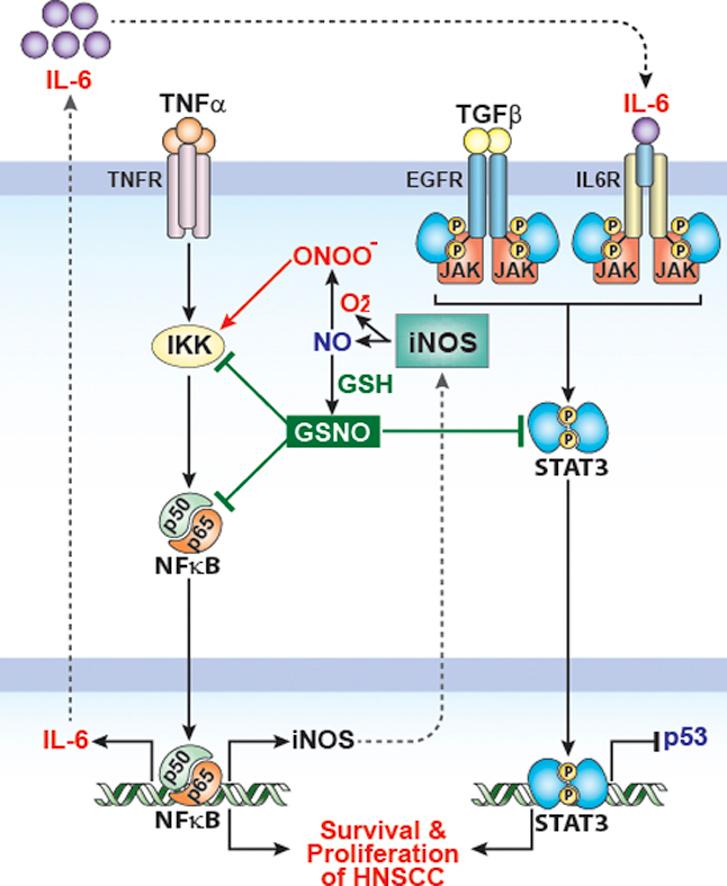
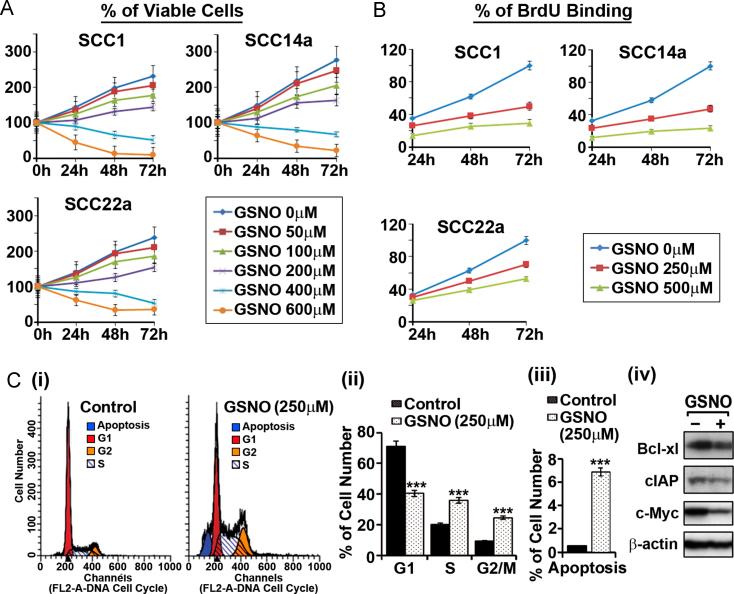
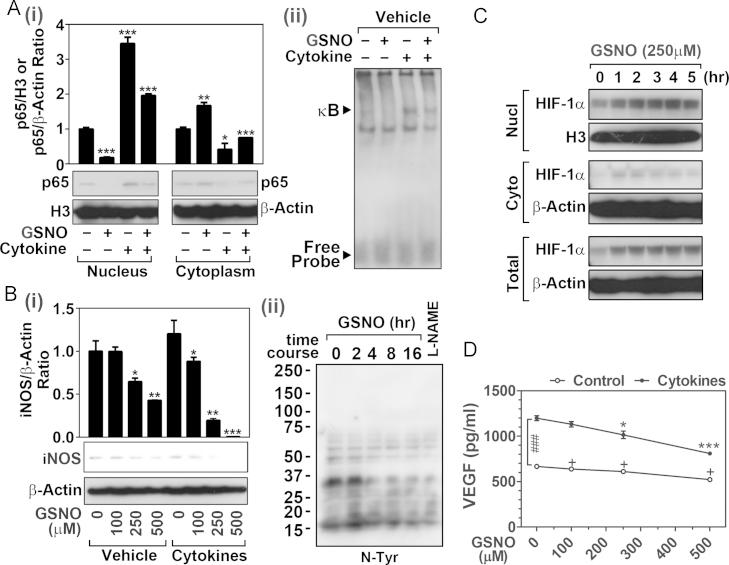
S-nitrosoglutathione (GSNO) is an endogenous nitric oxide (NO) carrier that plays a critical role in redox based NO signaling. Recent studies have reported that GSNO regulates the activities of STAT3 and NF-κB via S-nitrosylation dependent mechanisms. Since STAT3 and NF-κB are key transcription factors involved in tumor progression, chemoresistance, and metastasis of head and neck cancer, we investigated the effect of GSNO in cell culture and mouse xenograft models of head and neck squamous cell carcinoma (HNSCC). For the cell culture studies, three HNSCC cell lines were tested (SCC1, SCC14a and SCC22a). All three cell lines had constitutively activated (phosphorylated) STAT3 (Tyr(705)). GSNO treatment of these cell lines reversibly decreased the STAT3 phosphorylation in a concentration dependent manner. GSNO treatment also decreased the basal and cytokine-stimulated activation of NF-κB in SCC14a cells and reduced the basal low degree of nitrotyrosine by inhibition of inducible NO synthase (iNOS) expression. The reduced STAT3/NF-κB activity by GSNO treatment was correlated with the decreased cell proliferation and increased apoptosis of HNSCC cells. In HNSCC mouse xenograft model, the tumor growth was reduced by systemic treatment with GSNO and was further reduced when the treatment was combined with radiation and cisplatin. Accordingly, GSNO treatment also resulted in decreased levels of phosphorylated STAT3. In summary, these studies demonstrate that GSNO treatment blocks the NF-κB and STAT3 pathways which are responsible for cell survival, proliferation and that GSNO mediated mechanisms complement cispaltin and radiation therapy, and thus could potentiate the therapeutic effect in HNSCC.
S-亚硝基谷胱甘肽(GSNO)是一种内源性一氧化氮(NO)载体,在基于氧化还原的NO信号传导中起关键作用。最近的研究报道,GSNO通过S-亚硝基化依赖性机制调节STAT3和NF-κB的活性。由于STAT3和NF-κB是参与头颈部癌肿瘤进展、化疗耐药和转移的关键转录因子,我们在头颈部鳞状细胞癌(HNSCC)的细胞培养和小鼠异种移植模型中研究了GSNO的作用。对于细胞培养研究,测试了三种HNSCC细胞系(SCC1、SCC14a和SCC22a)。所有这三种细胞系都有组成性激活(磷酸化)的STAT3(Tyr(705))。用GSNO处理这些细胞系以浓度依赖性方式可逆地降低了STAT3磷酸化。GSNO处理还降低了SCC14a细胞中NF-κB的基础激活和细胞因子刺激的激活,并通过抑制诱导型一氧化氮合酶(iNOS)表达降低了基础低水平的硝基酪氨酸。GSNO处理降低的STAT3/NF-κB活性与HNSCC细胞增殖减少和凋亡增加相关。在HNSCC小鼠异种移植模型中,全身用GSNO治疗可减少肿瘤生长,当该治疗与放疗和顺铂联合使用时,肿瘤生长进一步减少。因此,GSNO治疗还导致磷酸化STAT3水平降低。总之,这些研究表明,GSNO治疗阻断了负责细胞存活、增殖的NF-κB和STAT3途径,并且GSNO介导的机制补充了顺铂和放射治疗,从而可以增强HNSCC的治疗效果。




 Zotero 插件