
基于表面活性剂功能化的部分还原氧化石墨烯的纳米载体系统的制备及其肿瘤细胞模型生物行为评价
Preparation and tumor cell model based biobehavioral evaluation of the nanocarrier system using partially reduced graphene oxide functionalized by surfactant.
作者信息
Wang Yimin, Liu Kunping, Luo Zewei, Duan Yixiang
机构信息
Research Center of Analytical Instrumentation, Key Laboratory of Bio-resource and Eco-environment, Ministry of Education, College of Life Science, Sichuan University, Chengdu, People's Republic of China.
Research Center of Analytical Instrumentation, Key Laboratory of Bio-resource and Eco-environment, Ministry of Education, College of Life Science, Sichuan University, Chengdu, People's Republic of China ; Faculty of Biotechnology Industry, Chengdu University, Chengdu, People's Republic of China.
出版信息
Int J Nanomedicine. 2015 Jul 20;10:4605-20. doi: 10.2147/IJN.S82354. eCollection 2015.
BACKGROUND
Currently, surfactant-functionalized nanomaterials are tending toward development of novel tumor-targeted drug carriers to overcome multidrug resistance in cancer therapy. Now, investigating the biocompatibility and uptake mechanism of specific drug delivery systems is a growing trend, but usually a troublesome issue, in simple pharmaceutical research.
METHODS
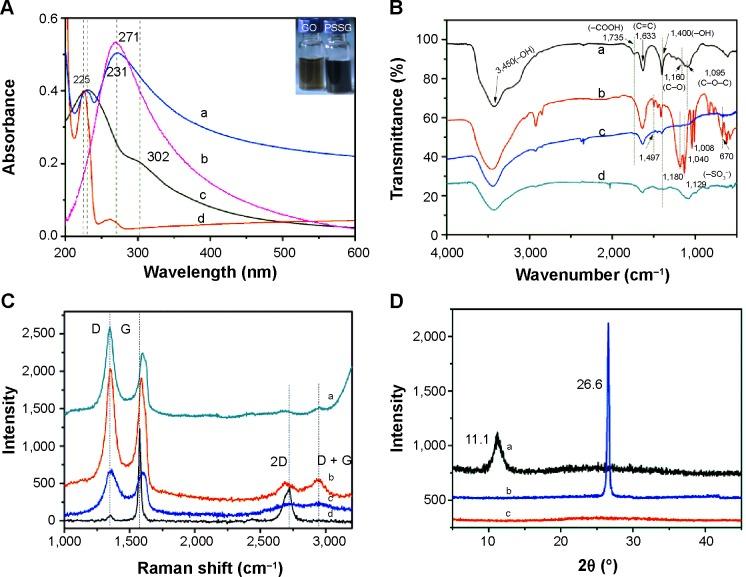
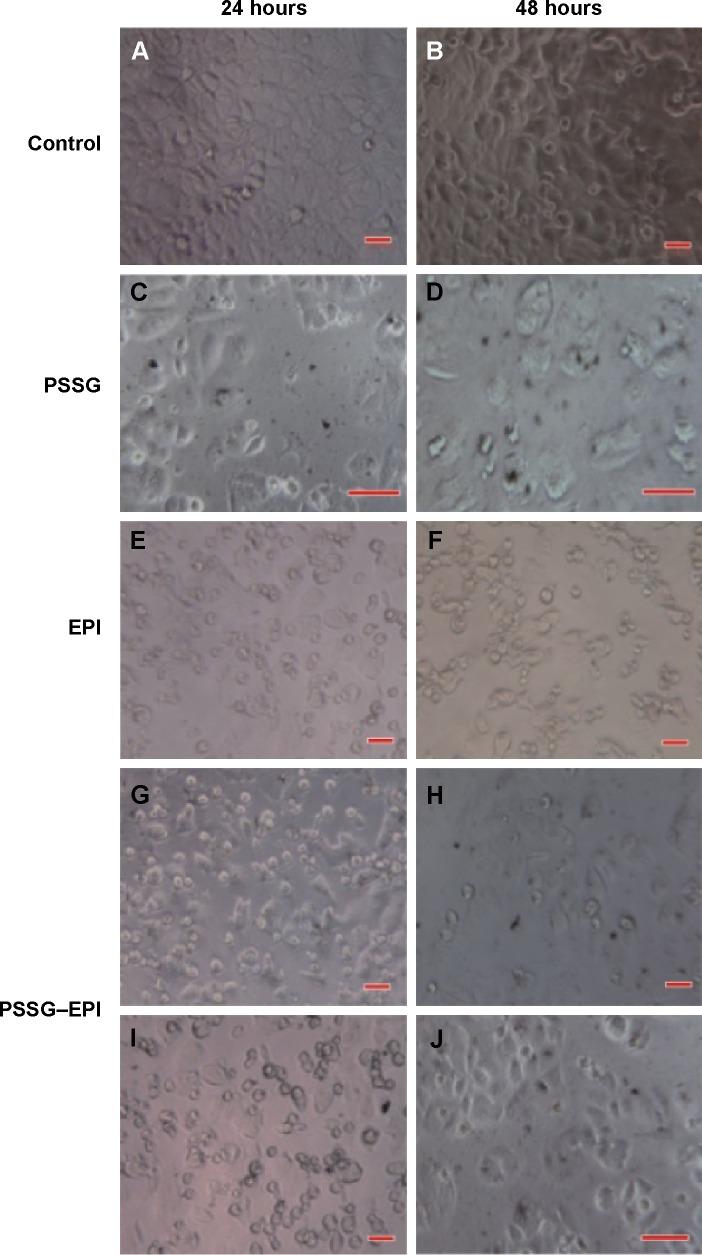
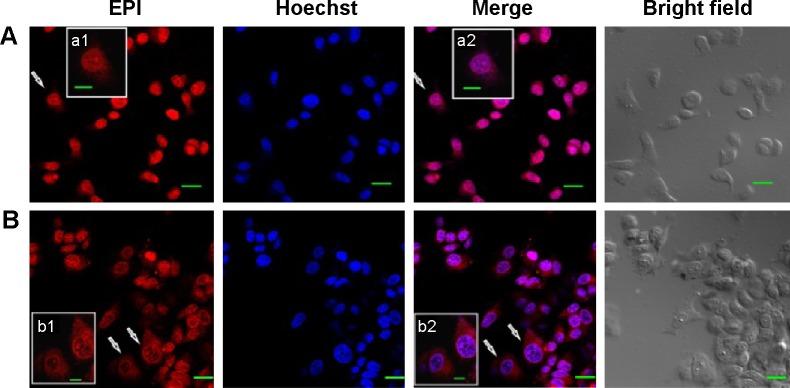
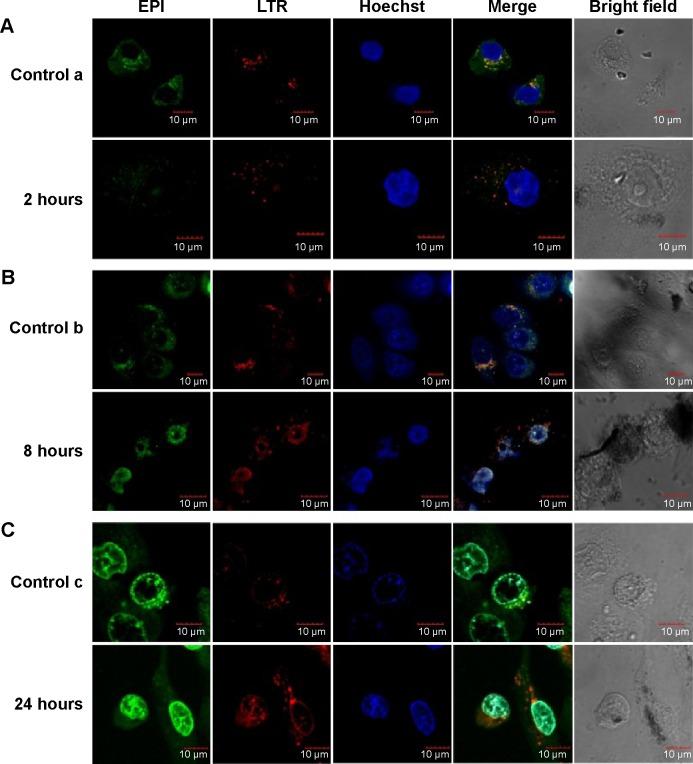
We first reported the partially reduced graphene oxide modified with poly(sodium 4-styrenesulfonate) (PSS) as a nanocarrier system. Then, the nanocarrier was characterized by atomic force microscope, scanning electron microscope, high-resolution transmission electron microscope, ultraviolet-visible (UV-vis) spectroscopy, Fourier transform infrared spectroscopy, X-Ray powder diffraction, and Raman spectroscopy. Epirubicin (EPI) was attached to PSSG via π-π stacking, hydrogen bonding, and physical absorption to form conjugates of PSSG-EPI. The adsorption and desorption profiles, cytotoxicity coupled with drug accumulation, and uptake of PSSG and PSSG-EPI were evaluated. Finally, the subcellular behaviors, distribution, and biological fate of the drug delivery system were explored by confocal laser scanning microscope using direct fluorescence colocalization imaging and transmission electron microscopy.
RESULTS
The partially reduced graphene oxide sheets functionalized by surfactant exhibit good dispersibility. Moreover, due to much less carboxyl groups retained on the edge of PSSG sheets, the nanocarriers exhibit biocompatibility in vitro. The obtained PSSG shows a high drug-loading capacity of 2.22 mg/mg. The complexes of PSSG-EPI can be transferred to lysosomes in 2 hours through endocytosis, then the drug is released in the cytoplasm in 8 hours, and ultimately EPI is delivered into cell nucleus to exhibit medicinal effects in 1 day.
CONCLUSION
The comprehensive exploration of the biological uptake mechanism of functional graphene-mediated tumor cell targeting model provides a typical protocol for evaluation of drug delivery system and will benefit the discovery of new surfactant-modified nanocarriers in nanomedicine.
背景
目前,表面活性剂功能化的纳米材料正朝着新型肿瘤靶向药物载体的方向发展,以克服癌症治疗中的多药耐药性。如今,在简单的药物研究中,研究特定药物递送系统的生物相容性和摄取机制是一个日益增长的趋势,但通常也是一个棘手的问题。
方法
我们首次报道了用聚(4-苯乙烯磺酸钠)(PSS)修饰的部分还原氧化石墨烯作为纳米载体系统。然后,通过原子力显微镜、扫描电子显微镜、高分辨率透射电子显微镜、紫外可见(UV-vis)光谱、傅里叶变换红外光谱、X射线粉末衍射和拉曼光谱对纳米载体进行表征。表柔比星(EPI)通过π-π堆积、氢键和物理吸附附着在PSSG上,形成PSSG-EPI缀合物。评估了PSSG和PSSG-EPI的吸附和解吸曲线、细胞毒性以及药物积累和摄取情况。最后,通过共聚焦激光扫描显微镜使用直接荧光共定位成像和透射电子显微镜探索了药物递送系统的亚细胞行为、分布和生物学命运。
结果
由表面活性剂功能化的部分还原氧化石墨烯片表现出良好的分散性。此外,由于PSSG片边缘保留的羧基少得多,纳米载体在体外表现出生物相容性。所获得的PSSG显示出2.22 mg/mg的高载药量。PSSG-EPI复合物可在2小时内通过内吞作用转移到溶酶体中,然后药物在8小时内在细胞质中释放,最终EPI在1天内被递送至细胞核以发挥药效。
结论
对功能化石墨烯介导的肿瘤细胞靶向模型的生物摄取机制进行全面探索,为评估药物递送系统提供了一个典型方案,并将有助于纳米医学中新型表面活性剂修饰纳米载体的发现。




 Zotero 插件