
通过调控香蕉根际微生物群实现巴拿马病的生物防治
Manipulating the banana rhizosphere microbiome for biological control of Panama disease.
作者信息
Xue Chao, Penton C Ryan, Shen Zongzhuan, Zhang Ruifu, Huang Qiwei, Li Rong, Ruan Yunze, Shen Qirong
机构信息
Jiangsu Collaborative Innovation Center for Solid Organic Waste Utilization and National Engineering Research Center for Organic-based Fertilizers, Department of Plant Nutrition, Nanjing Agricultural University, Nanjing, 210095, PR China.
College of Letters and Sciences, Faculty of Science and Mathematics, Arizona State University, Mesa, AZ, 85212, USA.
出版信息
Sci Rep. 2015 Aug 5;5:11124. doi: 10.1038/srep11124.
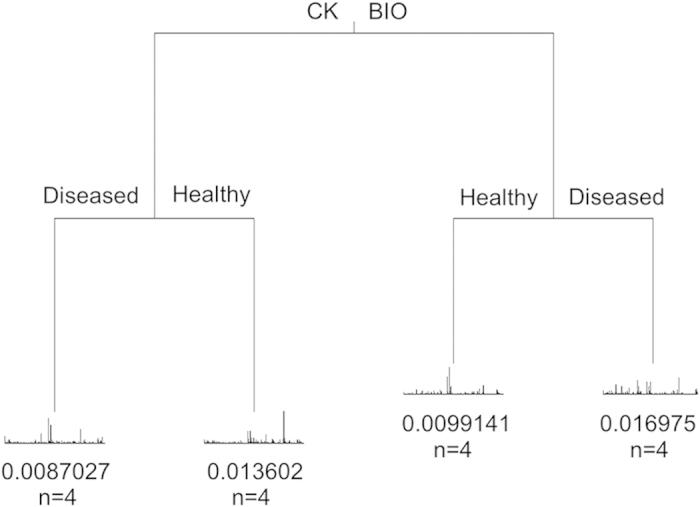
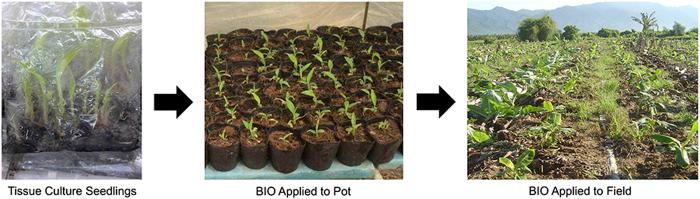
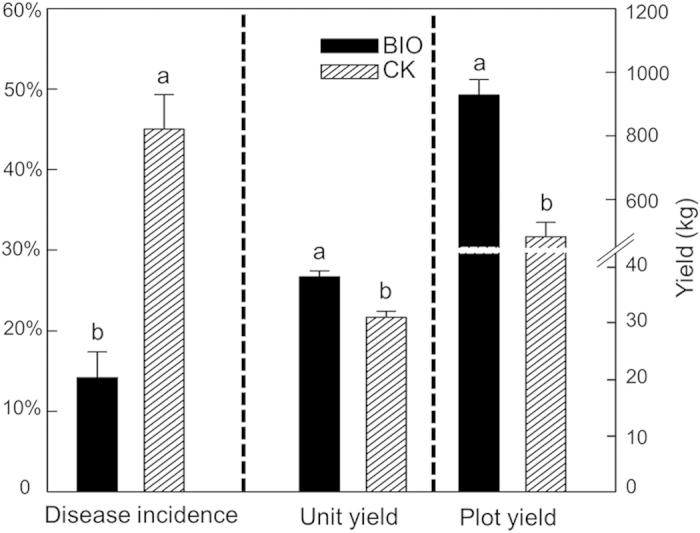
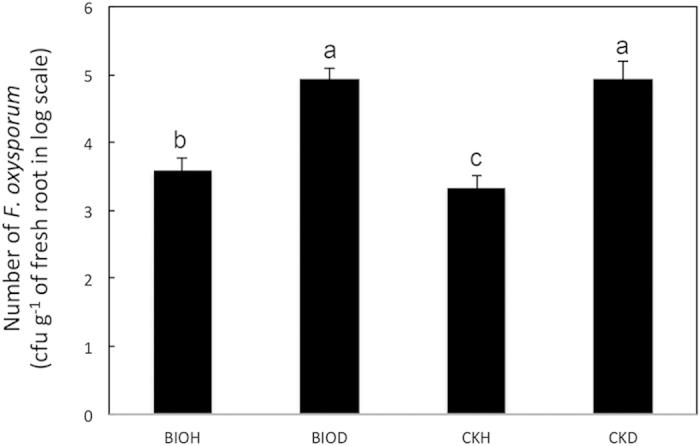
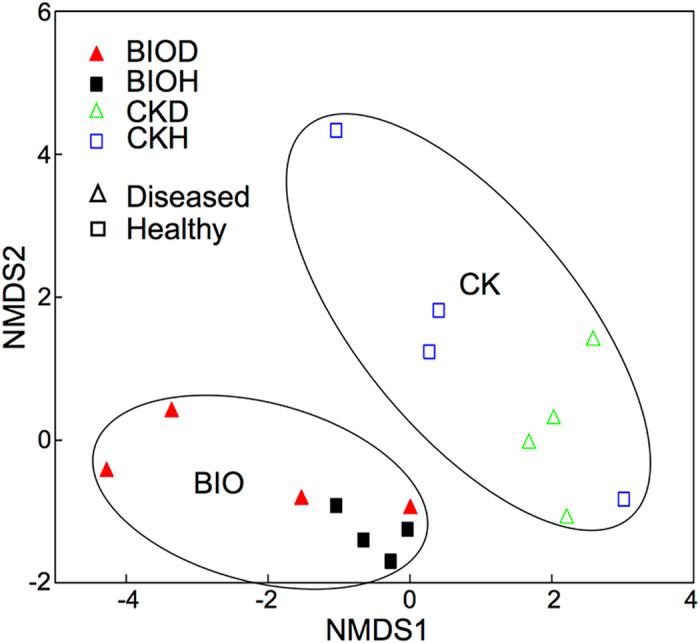
Panama disease caused by Fusarium oxysporum f. sp. cubense infection on banana is devastating banana plantations worldwide. Biological control has been proposed to suppress Panama disease, though the stability and survival of bio-control microorganisms in field setting is largely unknown. In order to develop a bio-control strategy for this disease, 16S rRNA gene sequencing was used to assess the microbial community of a disease-suppressive soil. Bacillus was identified as the dominant bacterial group in the suppressive soil. For this reason, B. amyloliquefaciens NJN-6 isolated from the suppressive soil was selected as a potential bio-control agent. A bioorganic fertilizer (BIO), formulated by combining this isolate with compost, was applied in nursery pots to assess the bio-control of Panama disease. Results showed that BIO significantly decreased disease incidence by 68.5%, resulting in a doubled yield. Moreover, bacterial community structure was significantly correlated to disease incidence and yield and Bacillus colonization was negatively correlated with pathogen abundance and disease incidence, but positively correlated to yield. In total, the application of BIO altered the rhizo-bacterial community by establishing beneficial strains that dominated the microbial community and decreased pathogen colonization in the banana rhizosphere, which plays an important role in the management of Panama disease.
由尖孢镰刀菌古巴专化型感染香蕉引起的巴拿马病正在全球范围内摧毁香蕉种植园。虽然已提出采用生物防治来抑制巴拿马病,但生物防治微生物在田间环境中的稳定性和存活率在很大程度上尚不清楚。为了制定针对这种病害的生物防治策略,利用16S rRNA基因测序来评估抑病土壤中的微生物群落。芽孢杆菌被鉴定为抑病土壤中的优势细菌类群。因此,从抑病土壤中分离出的解淀粉芽孢杆菌NJN-6被选为潜在的生物防治剂。将这种分离菌株与堆肥混合配制的生物有机肥(BIO)施用于育苗钵中,以评估对巴拿马病的生物防治效果。结果表明,BIO显著降低了68.5%的发病率,使产量翻了一番。此外,细菌群落结构与发病率和产量显著相关,芽孢杆菌的定殖与病原菌丰度和发病率呈负相关,但与产量呈正相关。总体而言,BIO的施用通过建立主导微生物群落的有益菌株改变了根际细菌群落,并减少了香蕉根际的病原菌定殖,这在巴拿马病的治理中发挥了重要作用。

 Zotero 插件